August 10, 2026
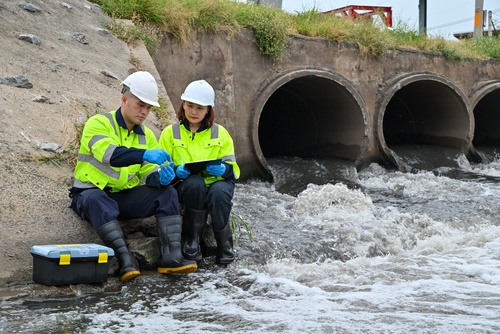
Wastewater surveillance can strengthen the fight against antimicrobial resistance.
OHT’s Dr. Ramanan Laxminarayan and colleagues highlight wastewater surveillance as a vital tool for monitoring antibiotic resistance, but only if designed around specific public health goals. Instead of gathering data for its own purpose, they suggest an objective-driven approach that ties monitoring to goals such as enhancing wastewater treatment and lowering exposure to resistant microorganisms, ultimately influencing antibiotic policies. This strategy can assist nations in developing more effective One Health programs to fight antibiotic resistance, emphasizing that different public health goals demand different surveillance techniques. [Nature Microbiology]
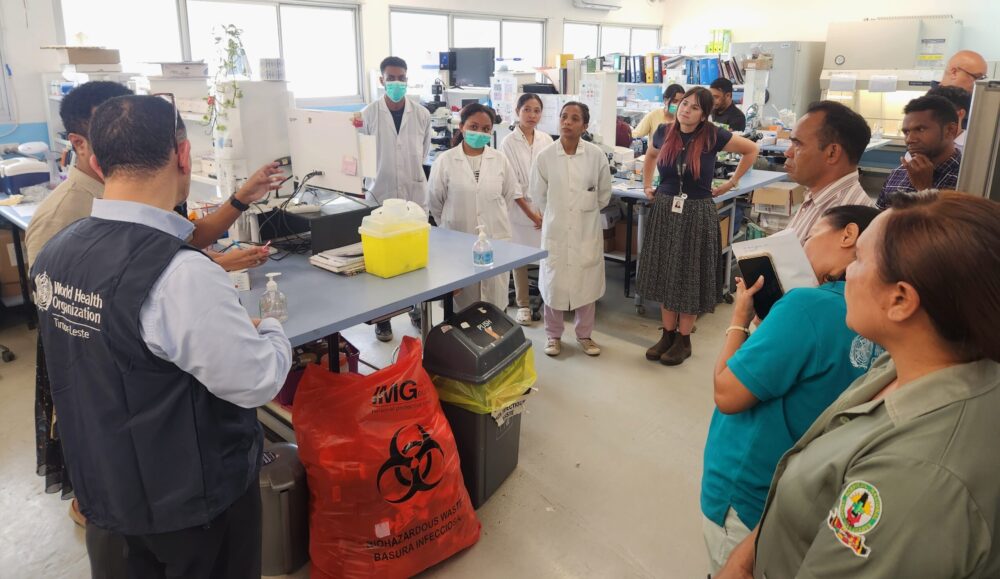
The effort to control antimicrobial resistance in Timor-Leste
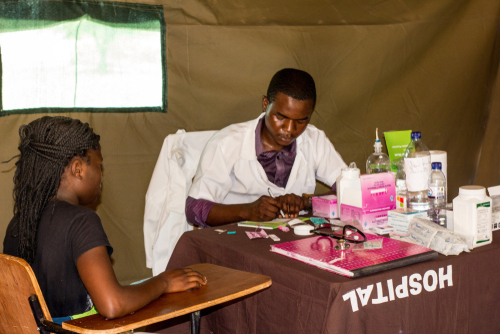
As part of OHT’s work as a World Health Organization collaborating centre (WHO CC) on antimicrobial resistance (AMR), OHT’s Rishiraj Bhagawati supported the WHO in conducting a workshop and field visits to assess the implementation of the National Action Plan on AMR in the south-eastern Asian island nation of Timor-Leste. Writing on OHT’s blog, Bhagawati notes that although Timor-Leste has built a solid foundation, including establishing national antibiotic treatment recommendations and expanding laboratory capacity, visits to the medical facilities demonstrated the real-world difficulty in putting AMR control policy into effect. Despite committed frontline workers, gaps in infection prevention, medical infrastructure and resources, and health system coordination continue to impede progress. To ensure that policies result in significant advancements in patient care and public health, sustained AMR action demands better funding, accountability, and local capacity building. [One Health Trust]
Unconditional cash support during pregnancy improves birth outcomes.
A study of Rx Kids in Flint, Michigan, the nation’s first universal unconditional cash transfer program for expectant mothers, found that financial assistance during pregnancy and infancy considerably improved birth outcomes. Alongside greater use of prenatal care, researchers found reductions in preterm deliveries, low birthweight, neonatal intensive care hospitalizations, and smoking during pregnancy. Black mothers and Medicaid beneficiaries benefited the most, indicating that addressing socioeconomic stress during the perinatal period can lessen health disparities. By addressing poverty as an upstream driver of health, unconditional cash transfers represent a scalable public health intervention to improve mother and infant health. [Lancet Public Health]
A silver-peroxide combo can mitigate drug-resistant E. coli in poultry waste.
Untreated poultry litter is a well-known reservoir for antibiotic-resistant bacteria and a two-phase study in Egypt shows how readily those bacteria escape into the environment. Despite this, a survey of 100 farms revealed most farmers were unaware litter could spread antibiotic resistance, with 90 percent applying no treatment before disposal, and 70 percent selling untreated waste directly to fish farms. Escherichia coli was detected in 72.4 percent of the 192 fresh litter samples collected from eight of those farms, including extensively drug-resistant strains resisting nearly every drug tested. However, a composite of silver nanoparticles and hydrogen peroxide proved four times as potent as peroxide alone against these bacterial isolates, halting growth at 3.125 µg/mL and eliminating the bacteria within 24 hours without regrowth. The authors caution, however, that organic-rich litter and biofilms could weaken the effect on working farms, leaving field validation as the essential next step. [Scientific Reports]
Why does bird flu trigger mass mortality events in seals and whales?
Aquatic mammals have suffered increasingly frequent mass mortality events from avian influenza virus over the past decades. Older low-pathogenic strains tended to produce self-limiting respiratory outbreaks in seals, but the current threat is graver: the highly pathogenic H5N1 strain now sweeping the globe causes severe and often fatal brain infections in seals and whales. Sequencing has repeatedly revealed mammalian-adaptation mutations that can raise the virus’s infectivity in mammals, including humans, though clear mammal-to-mammal spread remains hard to confirm. Exposed seals show little lasting immunity, so a reintroduced virus could spark fresh outbreaks. Given the stakes for endangered species and public health, the authors call for sustained surveillance linking mortality data, genomic markers, and wild-bird monitoring. [Current Opinion in Virology]
How does reshaping freshwater habitats affect host-parasite dynamics?
Human disruption of freshwater ecosystems reshapes their parasite communities with major public health implications, a review finds. Although restoring degraded streams allows parasite diversity to partly recover, the community stays incomplete with simpler, generalist taxa returning first ahead of specialists. Dams create still ponds that concentrate snails, mosquitoes, and hosts, amplifying diseases such as schistosomiasis and malaria. Agriculture and urbanization can also impact parasites in freshwater habitats since nutrient runoff can boost transmission while pesticides and light pollution suppress sensitive parasites and favor disturbance-tolerant ones. In that regard, effective ecosystem management calls for integrated approaches that weigh the full range of roles parasites play. [Parasitology Research]
Letting bed net use slip undermines malaria control.
Long-lasting insecticidal nets (LLINs) are critical to malaria prevention, but their value erodes as households stop using them and as mosquitoes evolve resistance to the pyrethroids they carry. To evaluate the impact of LLIN utilization on malaria and resistance dynamics, researchers built a model tracking both mosquito genetics and human infection, then simulated nine years of Ugandan campaigns under faster and slower declines in net use. Even starting from 81 percent coverage, protection faded within each three-year campaign, and it faded faster when usage dropped sooner. In the first campaign, protection fell from 51 percent under steady use to just 22 percent when nets went unused within a year. Nets treated with pyrethroid piperonyl butoxide, which blunts mosquitoes’ resistance, helped only when people kept sleeping under them, leading the authors to argue that sustained use and PBO-based rotation are what hold malaria in check. [PLOS One]
Border-crossing habits can substantially distort early Ebola outbreak estimates.
When a new epidemic is detected and early local data are limited, epidemiologists estimate the total case burden through cases that surface in neighboring regions, in what’s called a “geographic spread” approach. However, this approach may be misleading if it ignores border crossings. In the 2026 Bundibugyo virus disease epidemic in the Democratic Republic of Congo (DRC), all 15 cases confirmed in Uganda were nationals traveling for care—violating the assumption that travel is unrelated to infection. Moreover, most DRC-Uganda trips last under a day, so infected travelers return home before detection. Accounting for these two factors widens the range sharply, highlighting the need to consider local epidemiological contexts and to stay aware of potential biases in estimates for early epidemic responses. [Nature Health]
India’s new health research policy needs accountability to succeed.
In his column, Vital Signs, OHT’s Dr. Ramanan Laxminarayan writes that India’s draft National Health Research Policy offers a more robust roadmap for advancing health research than earlier iterations, with measures to improve research evaluation, streamline funding, expand shared infrastructure, fortify data systems, and develop the research workforce. Many of these policies appeared in previous policies, but they were never fully implemented. For the reforms to result in significant advancements rather than another unrealized political goal, he argues, their success will depend on consistent funding, transparent institutional accountability, and independent scrutiny. [Hindustan Times]
Treated wastewater could become India’s most reliable water source.
In the Hindustan Times, Dr. Ramanan Laxminarayan makes the case for treated wastewater to be a key component of India’s water security as groundwater keeps depleting and rainfall grows less reliable under a warming climate. Drawing on Bengaluru’s extensive wastewater reuse initiatives, he emphasizes how treated wastewater may replenish aquifers, revitalize lakes, and offer a consistent supply of water for drinking and agriculture while lessening the strain on freshwater resources. While challenges remain, including nutrient pollution and the requirement for stricter monitoring and improved treatment, he argues that increasing wastewater reuse offers a workable and durable path to improve India’s long-term water security. [Hindustan Times]
Main image from Shutterstock