September 08, 2026
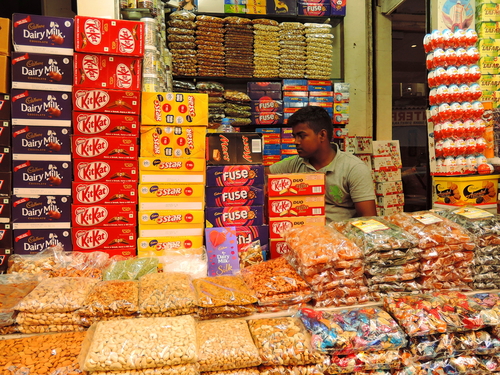
India’s food taxes make healthy food the more costly option.
A political-economy study by OHT researchers, based on interviews and a scoping review, explores the impact of nutrition-focused fiscal policies (taxes and subsidies) in India. The authors show that current policies do little to make healthy choices more affordable. Fragmented policies, industry lobbying, vague definitions, and regulatory loopholes – such as adding minimum fruit content to avoid higher taxes – and cultural preferences make processed food relatively cheap, while nutrient dense foods such as fruits and vegetables remain expensive. The authors advocate for more precise definitions of nutrition-based taxes, stronger government coordination, health taxes from which the proceeds fund nutrition programs, incentives for healthier products, and targeted subsidies to increase access to healthy meals. [Health Policy and Planning]
One Health needs to move from a broad vision to measurable action.
In a Correspondence in the Lancet, OHT’s Dr. Ramanan Laxminarayan argues that One Health has reached a significant political turning point, with France putting it at the center of its 2026 G7 presidency. However, he cautions that the concept risks becoming too expansive to guide meaningful action. He calls for a more precise framework that clearly defines the trade-offs between the health of humans, animals, and ecosystems, and asks whether interventions improve human health in measurable ways, at what cost, and with what trade-offs. Dr. Laxminarayan argues that if One Health’s current momentum is to produce long-lasting effects, it must become more precise in its priorities, equity considerations, measurement, and accountability. [The Lancet]
AMR cannot be tackled without confronting inequity.
One Health Trust researchers and collaborators examined how socioeconomic, environmental, and healthcare disparities impact the emergence and spread of antimicrobial resistance (AMR). Drawing on discussions from a two-day interdisciplinary workshop in Bengaluru, India, the authors explored how gender, caste, and climate change interact with infection risk, health-seeking behaviors, and access to antibiotics and high-quality treatment. In addition to advocating for AMR surveillance, evidence generation, and policies that better account for inequities, the authors offer a conceptual framework for understanding how caste-based discrimination influences antibiotic use and AMR in India and other South Asian countries. [Cambridge University Press]
Climate change is intensifying the vulnerabilities faced by adolescent girls.
A study using thematic analysis of group discussions explores how teenage girls in climate-vulnerable communities in Kilifi County, Kenya, experience heightened vulnerabilities in the context of climate change. Based on discussions with 36 girls between 14 and 17, the authors identified interrelated effects on health, safety, education, and livelihoods. Food and water insecurity limited access to healthcare, infectious diseases, malnutrition, unintended pregnancies, and higher susceptibility to HIV and other infections were all linked to climate-related stressors. As household obligations and financial constraints increased, girls reported greater risks of underage marriage, sexual exploitation, and abuse, as well as disruptions to their education. The authors call for targeted actions to improve access to vital resources, healthcare, and education, in order to address these overlapping vulnerabilities. [Discover Public Health]
London’s Ultra Low-Emission Zone appears to have boosted children’s lung function growth.
Traffic-related air pollution impairs lung development, but a new natural experiment study demonstrates that clean air zones can reverse these deficits. The Children’s Health in London and Luton (CHILL) study compared 3,414 primary school children in central London, which implemented the Ultra Low Emission Zone – the world’s largest clean air zone – with peers in Luton, a comparison site without a clean air zone. At baseline, London children endured higher nitrogen dioxide exposure and exhibited lower lung volumes. Over four years of follow-up, however, children in London experienced significantly faster lung function growth, reaching parity with Luton students. Concurrently, the proportion of children with clinically impaired lung function declined significantly, offering compelling evidence to support the wider adoption of clean air zones to protect children’s long-term respiratory health. [The Lancet Public Health]
Community engagement could be key to preventing recurrent Nipah outbreaks.
With no approved vaccines or treatments for Nipah virus, outbreak prevention in South Asia relies heavily on addressing behavioral and ecological drivers, such as the consumption of contaminated raw date palm sap. A recent viewpoint adapts a World Health Organization framework to propose engagement strategies for Nipah virus prevention, with four escalating levels of engagement, from community-oriented risk communication to full community ownership of interventions. The framework emphasizes the importance of culturally tailored approaches in improving public trust and outbreak response, calling for the direct involvement of community members in surveillance, stigma reduction, and vaccine trial planning. [Journal of Global Health]
Should frontline Ebola responders be exempt from placebo-controlled prevention trials?
A clinical trial evaluating the oral antiviral Obeldesivir as a post-exposure intervention for Ebola is currently recruiting in the Democratic Republic of the Congo and Uganda. However, the current trial protocol could result in exposed frontline workers receiving a placebo, despite occupational exposures that differ biologically and ethically from community exposures. In a Nature Africa commentary, the authors call for a dedicated, non-randomized access pathway for occupationally exposed responders, citing precedents from prior outbreaks and existing accommodations in the trial for pregnant women and children. Because these workers risk their lives to protect public safety, the authors argue that they should have guaranteed access to the experimental drug in a way that doesn’t compromise the trial’s scientific integrity. [Nature Africa]
Older age, severe dehydration, and vomiting predict cholera mortality in Haiti.
A retrospective cohort study examined predictors of death during Haiti’s 2022-2024 cholera resurgence, which caused 88,087 suspected cases and 1,324 deaths through December 2024. Researchers analyzed 17,912 suspected cholera cases treated at 15 cholera treatment centers in Haiti’s Artibonite and Centre regions using mixed-effects logistic regression. After adjusting for facility-level differences, they found that patients aged 60 or older faced six-fold higher odds of death. Severe dehydration and vomiting at presentation were associated with five-fold and three-fold increases in mortality, respectively. Based on these findings, the authors call for better routine data on comorbidities and dehydration status to help identify high-risk patients in future outbreaks. [PLOS Neglected Tropical Diseases]
India could leverage solar power to become a global hub for AI data centers.
In his Vital Signs column, OHT’s Dr. Ramanan Laxminarayan argues that India’s push to lead in artificial intelligence (AI) may depend less on algorithms and more on electricity. India’s vast solar energy potential overlaps significantly with its major technology corridors, giving the country a potential edge in powering AI data centers. However, daytime solar surpluses must be paired with massive energy storage investments along with advanced planning for water consumption and noise reduction. With clear regulatory frameworks on energy costs, water use, and noise, paired with investment in storage, he concludes that India could become an important node in global AI infrastructure. [Hindustan Times]
India’s ethanol push may favor political interests over climate goals.
In the Hindustan Times, OHT’s Dr. Ramanan Laxminarayan explores the political economy behind India’s push for ethanol blending. He argues that the policy may do more to protect the interests of shareholders in politically significant crops than to address climate change, energy security, or farmer incomes. Although the program initially created a new market for excess sugarcane, growth is now increasingly benefiting growers of rice and maize as the share of sugar-based ethanol is capped. Dr. Laxminarayan emphasizes the significant land and water requirements of crop-based ethanol, especially in a country with limited water resources, and argues that more effective alternatives could include electric vehicles, second-generation ethanol produced from crop waste, or direct assistance to farmers. [Hindustan Times]
Main image from Shutterstock