August 24, 2026
Antibiotics: use more wisely, not simply less
Africa’s antibiotic access problem extends from essential drugs to last-resort treatments.
A World Health Organization report used stakeholder roundtables and a survey to investigate obstacles to antibiotic access in the African region. The findings demonstrate that access issues differ significantly across types of antibiotics. While nitrofurantoin encountered supply-chain and diagnostic challenges, amoxicillin was generally available despite ongoing stockouts. While access to newer Reserve antibiotics such as ceftazidime-avibactam and cefiderocol were restricted by high costs, unfamiliarity, and lack of registration, meropenem and vancomycin were limited by cost and availability. To increase antibiotic access while promoting their prudent use, the authors suggest the implementation of measures such as pooled procurement, revised treatment recommendations and lists of essential medicines, improved physician training, and regulatory reforms. [WHO]
Hospital janitors may be an overlooked reservoir of antimicrobial resistance.
Researchers in Ethiopia conducted a comparative cross-sectional study investigating the exposure of janitors who work in and near medical institutions to antimicrobial-resistant (AMR) bacteria. Of the 385 janitors included in the study, 3.6 percent had carbapenemase-producing Enterobacteriaceae (CPE) and 21.6 percent had extended-spectrum beta-lactamase-producing Enterobacteriaceae (ESBL-PE) carriage. Hospital janitors had much higher carriage rates than non-hospital janitors (28.6 percent versus 13.7 percent for ESBL-PE and 5.9 percent versus 1.1 percent for CPE). The findings highlight the many dimensions of AMR surveillance, infection prevention, and antimicrobial stewardship programs, and the need to expand the list of stakeholders involved in these programs. [PLOS One]
Temperature is the strongest predictor of dengue risk in Thailand.
Dengue forecasting has long relied on rainfall data, but a machine learning analysis suggests that temperature carries most of the predictive signal. Researchers trained an eXtreme Gradient Boosting model on two decades (2003-2022) of dengue hemorrhagic fever surveillance data across 77 Thai provinces, integrating 54 environmental, climatic, and socioeconomic variables. Temperature was identified as the dominant predictor of transmission risk, with critical thresholds near 21°C for minimum temperatures and 32°C for maximum temperatures. Model performance degraded significantly during the COVID-19 pandemic due to unmeasured behavioral changes. The findings demonstrate that future forecasting systems must integrate behavioral and surveillance indicators alongside climate data for robust predictions. [PLOS Neglected Tropical Diseases]
Structural failures and funding cuts are driving Nigeria’s recurrent cholera outbreaks.
A perspective piece examines the structural determinants behind the massive 2026 cholera outbreak in Borno State, Nigeria, which resulted in over 8,400 suspected cases and at least 85 deaths by mid-June. The authors argue the outbreak was not accidental: the Alau Dam, which collapsed in September 2024, destroyed vital water infrastructure and remains unrepaired, while the 2025 cut-off of U.S. humanitarian funding drastically reduced water, sanitation, and hygiene (WASH) programs for the region’s 1.7 million displaced people. Although emergency treatment centers, water chlorination, and surveillance support are saving lives, they remain temporary fixes. The authors call for immediate prioritization of water infrastructure reconstruction, restoring of WASH funding, and the development of a state-level cholera elimination roadmap aligned with a Global Task Force on Cholera Control 2030 targets. [The Lancet Regional Health – Africa]
Measles vaccination tracks most closely with infant survival across BRICS countries.
Brazil, Russia, India, China, and South Africa (BRICS) are home to more than 40 percent of the global population, yet infant mortality remains uneven across these nations, with determinants typically studied in isolation. A new analysis examined associations between DPT (diphtheria, tetanus, and pertussis) and measles immunization coverage, health spending, GDP per capita, and urbanization from 2000 to 2025. Testing relationships across low- and high-mortality settings, researchers found measles coverage showed the most consistent association: each additional percentage point corresponded to roughly one fewer infant death per 1,000 live births. GDP per capita was similarly protective, whereas DPT coverage was only significant at the very bottom of the distribution. Curiously, higher health expenditure tracked with higher infant mortality; the authors suggest this indicates that spending often reacts to poor outcomes, highlighting that resource allocation matters more than raw funding volume. [Scientific Reports]
Respiratory syncytial virus prefusion F vaccine would be cost-effective for older adults in the Netherlands.
The rollout of respiratory syncytial virus (RSV) vaccines for at-risk individuals aged 60 to 74 and all adults over 75 in The Netherlands has stalled over uncertainties around immunity duration. A recent cost-effectiveness model analyzed the clinical and economic impact of implementing a bivalent RSV prefusion F protein-based vaccine (RSVpreF) program for these populations. The model projects that a single-dose RSVpreF would prevent 84,228 cases of lower respiratory tract disease and 2,304 related deaths over a lifetime. At a cost of 17,740 euros per quality-adjusted life-year gained from a societal perspective, the intervention falls well below the country’s willingness-to-pay threshold (50,000 euro). Despite caveats regarding industry funding and extrapolated long-term effectiveness, findings indicate that the strategy would substantially reduce the clinical burden of RSV while remaining highly cost-effective. [Infectious Diseases and Therapy]
Stock-outs of essential medicines in low- and middle-income countries stem from fixable health system failures.
A systematic review of 56 studies identified causes, consequences, and solutions for drug stock-outs in HIV, tuberculosis, and malaria programs across low- and middle-income countries. Stock-outs were primarily driven by preventable health system failures, including supply chain inefficiencies, procurement delays, funding shortfalls, weak governance, and poor demand forecasting, rather than disease-specific factors. These disruptions led to severe consequences, such as treatment interruptions, greater out-of-pocket costs, increased drug resistance, and significantly higher mortality rates. Because the underlying failures are shared across all three programs, the authors argue that strengthening one national supply chain pays large dividends in ensuring uninterrupted access to life-saving medicines. [eClinicalMedicine]
Airport screening alone cannot keep Ebola out of India.
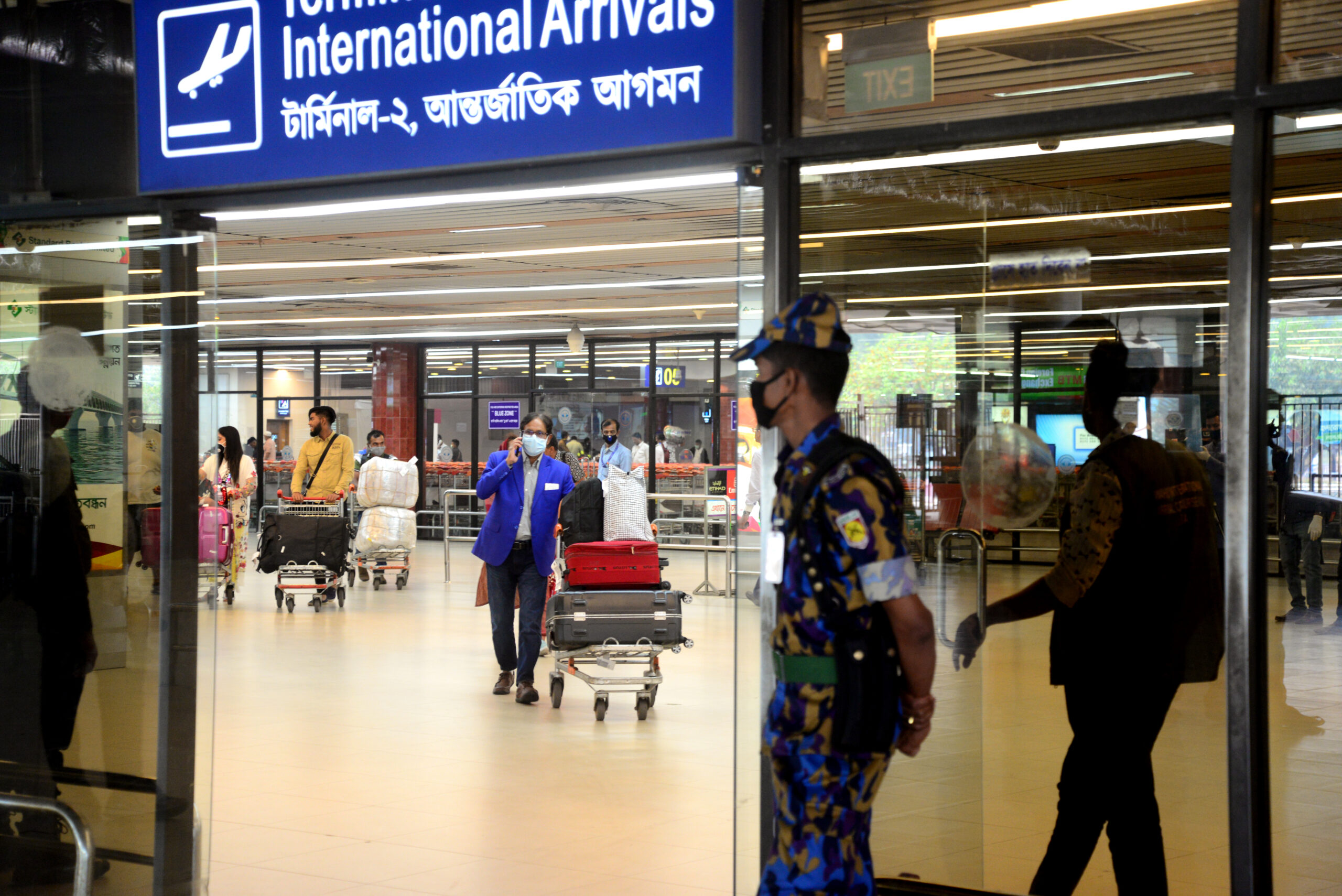
In his column, Vital Signs, OHT’s Dr. Ramanan Laxminarayan affirms that health screening and airport health forms are unlikely to stop Ebola from entering India or other countries on their own. Ensuring that health systems can promptly detect, isolate, test, and treat suspected cases once they arise is the more significant obstacle. Therefore, consistent investment in domestic preparedness, including improved surveillance, capacity strengthening of healthcare personnel and laboratory infrastructure, and infection prevention control, alongside open communication with communities, is a more effective strategy to lower the danger of Ebola transmission. [Hindustan Times]
India can put cervical cancer on the path to elimination with HPV vaccination.
In the Hindustan Times, Dr. Ramanan Laxminarayan makes the case that India has the means to significantly lower the number of deaths from cervical cancer, but it will need to combine human papillomavirus (HPV) vaccination with far more robust screening and treatment programs. Evidence from Australia, Scotland, and England demonstrates the long-term benefits of immunizing girls against HPV, but India continues to account for about 25 percent of all cervical cancer fatalities worldwide. The universal deployment of HPV vaccination to almost 11.5 million 14-year-old girls annually is significant progress. However, the impact of vaccination today will be visible in the decades to come, and safeguarding women currently at risk requires expanding HPV-based screening and improving treatment access. [Hindustan Times]
Main image from Shutterstock