June 19, 2026
New livestock policies can help curb AMR.
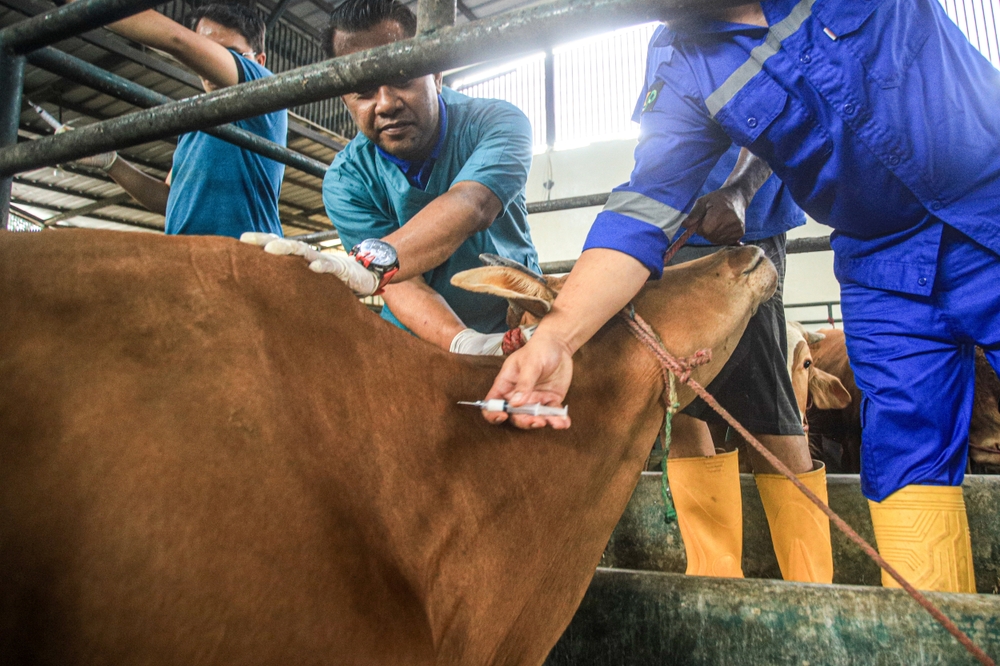
Governments can implement livestock policies to reduce antibiotic use on farms without compromising animal health and productivity. In a new Food and Agriculture Organization (FAO) report, authors, including OHT’s Dr. Ramanan Laxminarayan, map how countries can move away from routine antibiotic use in food-animal production through incentives, regulations, better veterinary care, and improved farm management. Because antimicrobial resistance (AMR) threatens both animal and human health, the report argues, progress demands coordinated action among sectors. It highlights strategies that promote vaccination, biosecurity, disease prevention, and antibiotic stewardship that enhance food systems while reducing the need for antibiotics. Smarter livestock policy is critical to long-term global efforts to control the spread of AMR. [Food and Agriculture Organisation of the United Nations]
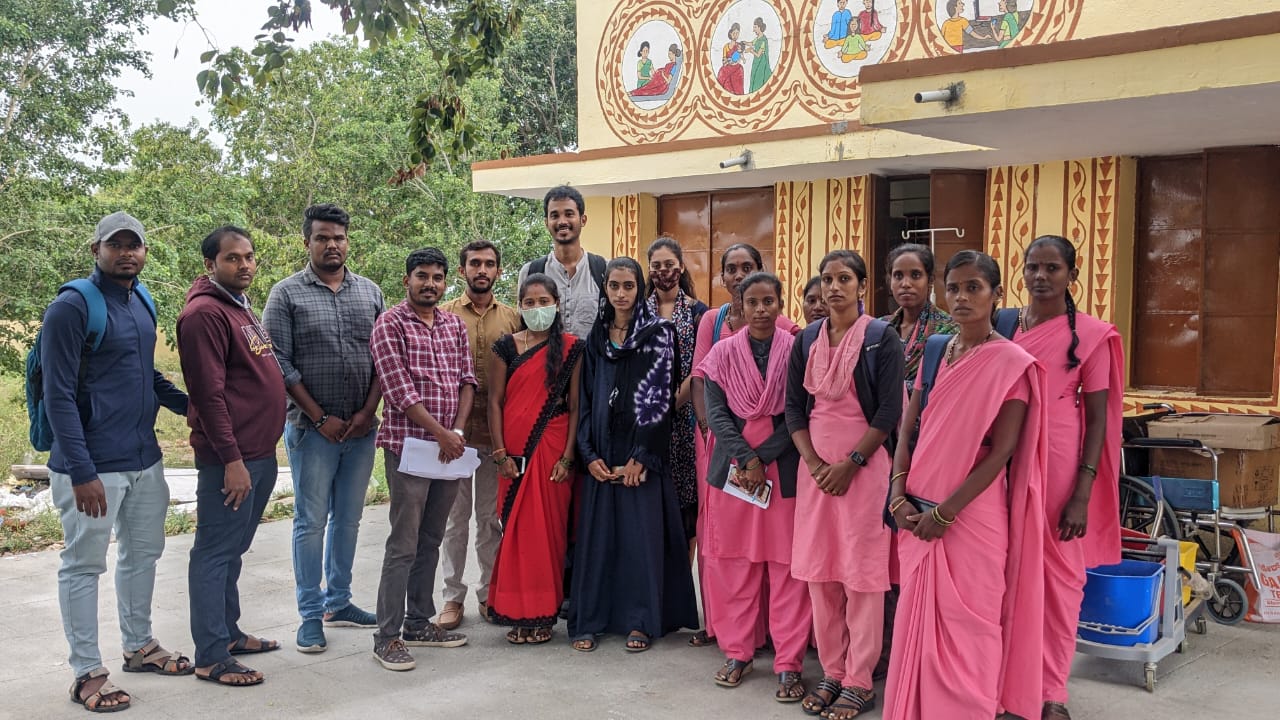
One Health Trust researchers with local healthcare workers in Chikkaballapur during 2021 fieldwork on vaccine hesitancy
What drives persistent vaccine hesitancy in highly vaccinated rural India?
Even in districts with some of India’s highest COVID-19 vaccine coverage, vaccine hesitancy persists. A new One Health Trust mixed methods study set out to find out why. Surveying 1,469 households across 50 villages in Chikkaballapur district, Karnataka, alongside interviews with 9 local health officials, researchers found fear of injections to be the most common reason for skipping vaccination, cited by more than 60 percent of unvaccinated women and nearly 45 percent of unvaccinated men. Low vaccine confidence, complacency about COVID-19, and distance to vaccination centers also played a role. However, education; employment; and trust in community leaders, social workers, and government authorities were all strongly tied to future vaccine acceptance, pointing to where outreach could focus next. [Vaccine: X]
Missed vaccinations carry costs far beyond individual infections.
A One Health Trust and icddr,b-led Global Antibiotic Resistance Partnership (GARP)-Bangladesh policy brief, and the news coverage it generated, examine the wider effects of falling vaccination rates. Beyond leaving individuals unprotected, missed vaccinations increase the risk of vaccine-preventable outbreaks, straining health systems and driving up treatment costs for families and governments alike. Vaccines do more than reduce disease and death; they safeguard productivity, reduce healthcare costs, and build economic resilience. The risk is especially high in low- and middle-income countries, where disruptions to routine immunization can erase years of progress. As governments juggle tight budgets and shifting health priorities, the authors argue, sustaining high coverage remains one of the most cost-effective investments in population health and long-term development. [The Daily Star]
Iran pilots WHO’s new vaccine introduction prioritization and sequencing framework
Deciding which new vaccines to roll out next is a complicated decision for countries facing limited budgets and competing health priorities. The recent WHO New Vaccine Introduction Prioritization and Sequencing Toolkit (NVI-PST), promises to support countries in making transparent, evidence-based decisions about which vaccines to introduce. A new study in Iran applied this framework to evaluate 7 vaccines against 17 criteria to determine which should come first between 2025 and 2030. The human papillomavirus vaccine ranked highest overall, followed by the pneumococcal conjugate vaccine and seasonal influenza vaccine for high-risk groups; the respiratory syncytial virus and varicella vaccines were deprioritized for the next five years. With some streamlining, the authors suggest the toolkit could become a routine planning tool across the region. [BMJ Open]
Climate change is accelerating antibiotic resistance in Salmonella.
Antimicrobial resistance and climate change are often treated as separate crises, but growing evidence suggests they’re deeply connected. A new longitudinal study analyzing 488,232 Salmonella genomes from 139 countries between 1940 and 2023 found that warming temperatures and shifting precipitation patterns were associated with a higher abundance of antimicrobial resistance genes (ARGs), with global ARG abundance in Salmonella rising 38 percent over the study period. Researchers identified a non-linear relationship between climate change and ARGs, finding that climate change was linked to a 10 percent observed rise across 82 of 100 countries analyzed. Scenario analysis suggests that meeting Paris Agreement targets alongside stronger antimicrobial stewardship could significantly cut Salmonella resistance genes by 24 percent, indicating a need for more integrated climate and health policies. [The Lancet Planetary Health]
A scalable framework for antibiotic stewardship in Latin America
Antibiotic overuse in hospitals fuels resistance and worsens patient outcomes, but building effective stewardship programs to address this issue is challenging, particularly in resource-constrained settings. A Pan American Health Organization (PAHO)-led initiative across six Latin American countries tested a scalable approach to strengthening antimicrobial stewardship programs by combining point-prevalence surveys, self-assessment checklists, continuous online education programs, and individual facility meetings. Surveys across 67 hospitals found that 47.9 percent of patients were being treated with antibiotics, with only 63 percent of prescriptions deemed appropriate. A checklist completed by 121 hospitals identified monitoring as the strongest stewardship component and education as the weakest. The framework offers practical steps for hospitals and health systems, but the authors emphasize that sustained government support and clear national policies are critical for long-term success. [Antibiotics]
Why bovine leukemia virus deserves more attention
Bovine leukemia virus (BLV) infects over 80 percent of dairy herds in many countries, but its wider effects are often overlooked. A narrative review examines BLV through a One Health lens, finding that infected cows produce less milk with lower fat, protein, and bioactive components such as lactoferrin and casein. That’s a concern for populations that depend on dairy, particularly young children and households in low- and middle-income countries. BLV also leaves cows more prone to udder infections and shortens their productive lifespan, pushing up dairy prices while reducing environmental sustainability. There’s no proof the virus spreads to humans, but traces have been found in human tissue samples, enough, the authors argue to merit closer study. [The Journal of Nutrition]
India’s missing data create blind spots in public policy.
In his column in Hindustan Times, OHT’s Dr. Ramanan Laxminarayan argues that gaps in India’s health data and civil registration systems continue to undermine effective governance. When large numbers of births, deaths, and causes of death go unrecorded or are misclassified, governments lose the ability to set health priorities, allocate resources, and measure progress. He emphasizes that reliable registration systems are the cornerstone of evidence-based decision-making, especially in times of public health crises and demographic shifts. Without trustworthy data, major health burdens go unnoticed, resulting in poorly targeted interventions and missed opportunities. Strengthening registration and data systems, Dr. Laxminarayan concludes, is essential for better governance, more responsive public services, and improved population health. [Hindustan Times]
Low taxes on bidis in India undermine public health goals.
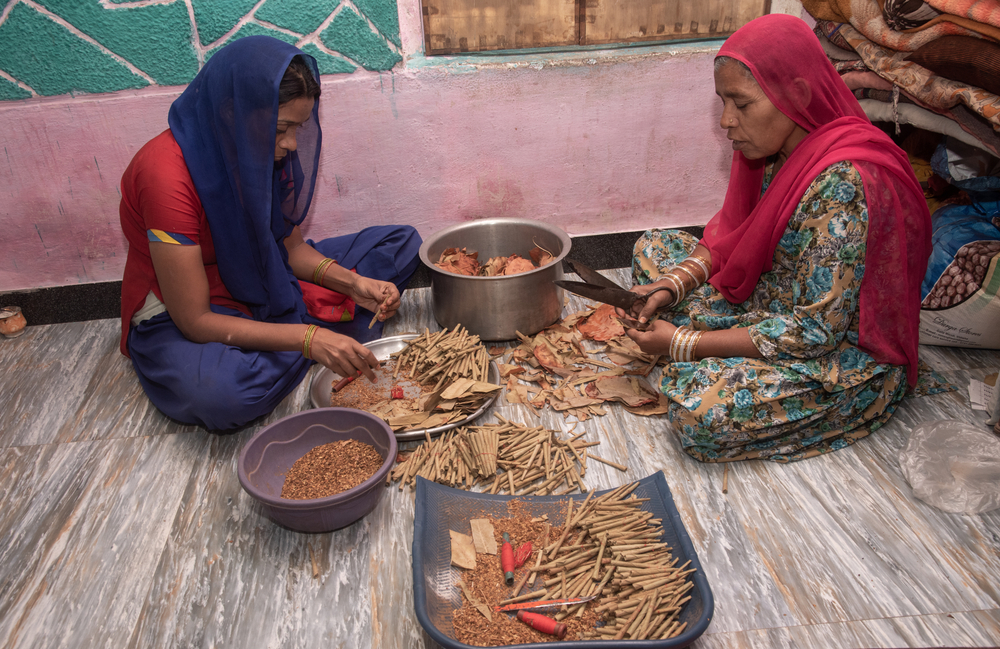
In his column, Vital Signs, OHT’s Dr. Ramanan Laxminarayan argues that India’s favorable tax treatment of bidis (small hand-rolled cigarettes), undermines tobacco control initiatives while providing the impoverished with very few advantages. Low bidi taxes are often justified as protecting low-income consumers and workers, but cheaper tobacco simply encourages continuous use and exposes disadvantaged groups to serious health risks. Poorer households already bear a disproportionate share of cancer, cardiovascular disease, and respiratory illness, alongside the financial repercussions that follow. Aligning bidi taxes more closely with those on other tobacco products, Dr. Laxminarayan argues, would help curb consumption, improve health outcomes, and advance India’s broader public health goals. [Hindustan Times]
Higher crop yields do not always translate to better agricultural productivity.
OHT’s Dr. Ramanan Laxminarayan challenges the common assumption that rising crop yields inevitably indicate agricultural success. Focusing on Indian agriculture, he makes the case that yield-based metrics often ignore important factors such as water consumption, environmental degradation, input prices, nutritional value, and farmer incomes. Policies built around maximizing output can mask deep inefficiencies while encouraging overuse of fertilizers, groundwater, and subsidies. True productivity, he contends, should be judged by how effectively resources generate environmental, nutritional, and economic value, not by volume alone. Dr. Laxminarayan calls for a more holistic approach to measuring agricultural performance that prioritizes long-term well-being, resilience, and sustainability over sheer product. [Hindustan Times]
Main image from Shutterstock