July 07, 2026
Higher bidi taxes could save lives and strengthen India’s economy.
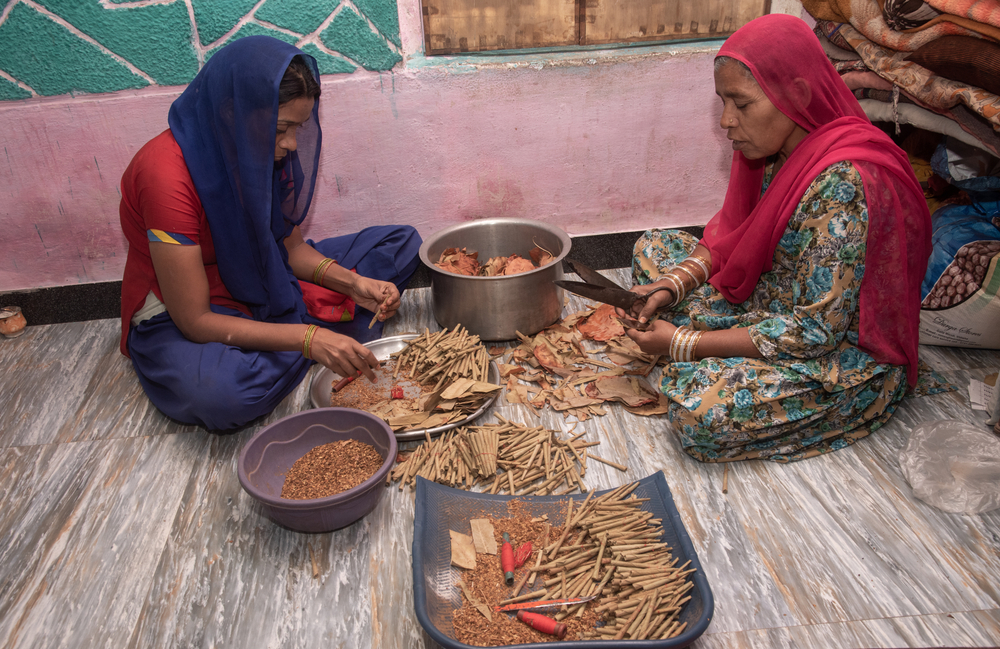
Bidis, the most commonly used smoked tobacco product in India, are harmful to health. Yet bidi taxation remains low, and there are tax exemptions for small producers. An OHT modeling study investigated the long-term health implications of removing these tax advantages. The reduction in smoking projected from a 30 percent tax-induced price increase could result in nearly 48 million extra years of life over 50 years and more than INR 5.5 trillion in economic benefits through lower healthcare costs, reduced productivity loss, and fewer premature deaths. Additionally, the reforms could reduce consumer spending on bidis while raising government tax income. [Tobacco Control]
Nanoparticles offer a new tool to control drug resistance.
As emerging multidrug-resistant bacteria outpace new antibiotics, researchers are turning to nanotechnology for alternatives. A recent review examines how engineered nanoparticles (metallic, organic, carbon-based, and hybrid) kill bacteria through routes that bypass conventional resistance: generating reactive oxygen species, rupturing membranes, releasing metal ions, disabling efflux pumps, and penetrating biofilms. Furthermore, these particles can work synergistically with existing antibiotics, lowering the doses needed. However, despite the tremendous potential in improving the fight against multidrug-resistant infections, concerns around safety, scalability, and regulatory compliance remain to be addressed. [Discover Nano]
Can mRNA vaccine technology be used against resistant bacteria?
With antimicrobial resistance implicated in roughly 1.27 million deaths a year and projected to reach 10 million by 2050, vaccines could ease pressure on the race for new antibiotic development. A review surveys efforts to adapt messenger ribonucleic acid (mRNA) vaccine technology to bacterial targets. Although bacteria are more challenging than viruses due to complex antigens, mucosal infection sites, and a need for balanced T-cell responses, early preclinical work is encouraging: mRNA candidates against Pseudomonas aeruginosa, Mycobacterium tuberculosis, and Staphylococcus aureus achieved high survival in mouse challenge models, and two Lyme disease vaccines have reached Phase 2 trials. [Drug Development Research]
Treating swine waste reduces but doesn’t eliminate resistance genes.
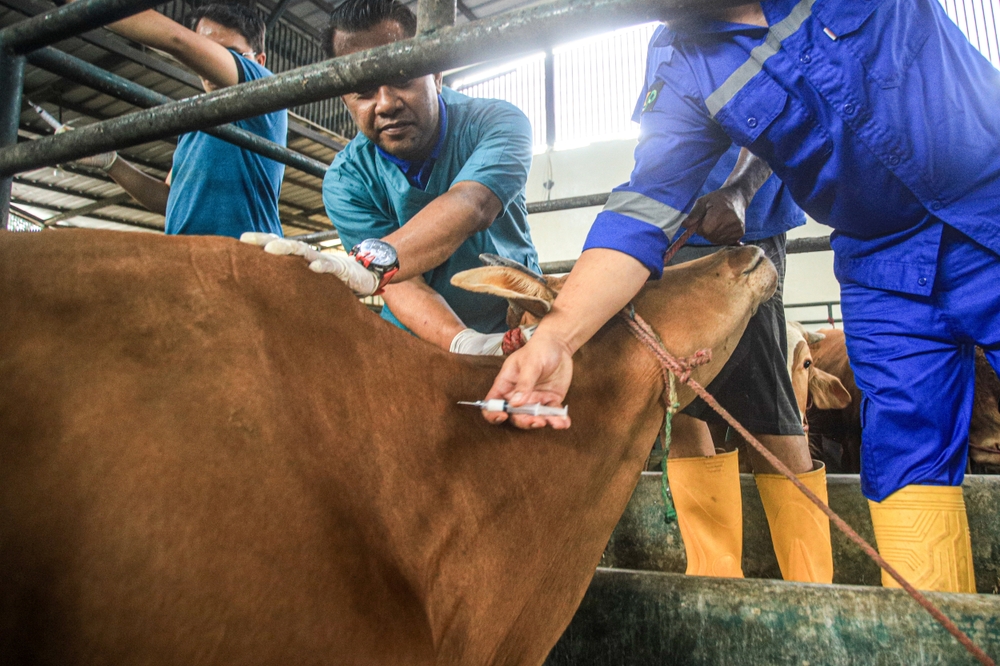
Livestock waste is a major route by which antibiotic resistance escapes into the environment, yet what happens to resistance genes during manure treatment is poorly understood. Using shotgun metagenomics, which sequences all the DNA in a sample, researchers analyzed 80 samples from 20 swine farms in southern Brazil. They found that waste stabilization ponds built for wastewater treatment cut microbial diversity and resistance-gene abundance, but never fully eliminated them. Manure-fertilized soils also carried more resistance genes, suggesting that the application of digested waste contributes to further propagation of environmental AMR. These findings highlight the need for routine resistome surveillance of waste systems and farmland. [Current Microbiology]
Why did malaria cases decline in Ecuador but surge in Venezuela?
Between 2000 and 2023, as Ecuador approached malaria elimination, Venezuela suffered one of the worst resurgences in modern history. A recent comparative ecological study applied joinpoint regression to national case data alongside political stability, health spending, and oil price series to understand this stark difference in the path towards malaria eradication. While Ecuador was able to cut cases by 99.3 percent, Venezuela saw cases rise 1,217 percent, with the 2014 turning point coinciding with the global oil-price collapse and the simultaneous return of diphtheria, measles, and tuberculosis. Although due to the close relationship between economic and political indicators, it is not possible to attribute these differences to any specific factor. The findings suggest that technical interventions alone are inadequate without stable governance, financing, and institutional continuity. [Malaria Journal]
Drug resistance is undermining the treatment of invasive Salmonella in poorer countries.
As antimicrobial resistance rises, Invasive non-typhoidal Salmonella (iNTS), a leading cause of bloodstream infection and meningitis in low- and middle-income countries, is getting harder to treat. Despite this challenge, systematic data on iNTS resistance is scarce. A new meta-analysis assessed data from 45 studies from 19 developing countries across Africa and Asia, including 11,447 iNTS isolates sampled between 2000 and 2026. Resistance patterns varied widely by region and were highest for the older first-line drugs such as ampicillin (50.5 percent) and co-trimoxazole (39.4 percent). These findings suggest that controlling iNTS will require region-tailored intervention, stronger surveillance, and the development of serogroup-specific vaccines. [Journal of Global Antimicrobial Resistance]
A One Health approach could strengthen chikungunya control.
Climate change, urbanization, increased travel, and the spread of Aedes mosquitoes are all contributing factors to the resurgence of chikungunya as a major global health threat. A review highlights that conventional outbreak strategies targeting specific populations or mosquito control are insufficient to manage the disease. Instead, there is a need for a One Health framework that combines climatic data and an artificial intelligence-based early warning system with surveillance across all sectors. The review identifies persistent issues, such as pesticide resistance, dispersed surveillance systems, and restricted access to immunizations, which warrant coordinated, prevention-focused initiatives. [Animals and Zoonoses]
Gender-transformative WASH interventions are needed to reduce violence against women.
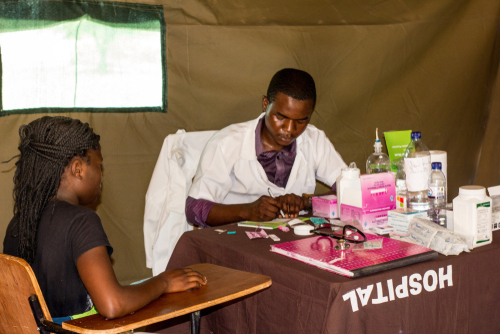
Access to water, sanitation, and hygiene (WASH) services for women in rural Ghana can be jeopardized by gender-based violence. In a qualitative study assessing the experiences of 36 women, researchers found that they were subjected to physical, psychological, sexual, and infrastructural violence while using sanitary facilities, gathering water, and even in their own homes. Women were solely responsible for collecting water due to patriarchal norms, which also discouraged reporting abuse, perpetuating cycles of inequity and violence. To produce long-lasting health and social gains, the authors conclude that enhancing WASH infrastructure alone is insufficient. Instead, interventions must address patriarchal gender norms, enhance safety near water and sanitation facilities, and effectively incorporate women in water governance. [Social science and medicine]
Andhra Pradesh is an example for the next Green Revolution.
In his Hindustan Times column, OHT’s Dr. Ramanan Laxminarayan argues that the next Green Revolution should move beyond increasing crop yields to increase the focus on minimizing environmental harm. He draws attention to Andhra Pradesh’s initiatives to support environmentally friendly farming methods that enhance soil health, reduce reliance on chemical inputs, and increase climate resilience. Dr. Laxminarayan highlights that long-term economic, environmental, and nutritional outcomes, not production alone, should be used to measure agricultural success. Andhra Pradesh serves as an example of how building a more resilient agricultural system can strengthen food security while protecting natural resources and public health through innovation, efficient resource management, and farmer-centered policies. [Hindustan Times]
A circular economy could help ease India’s fertilizer dependence.
In his column, Vital Signs, Dr. Ramanan Laxminarayan examines how recovering nutrients from organic waste can help India become less dependent on imported fertilizers. To create a circular economy that increases resource efficiency while lowering waste and environmental degradation, he contends that agricultural residues, food waste, livestock manure, and sewage may be converted into useful fertilizers. Dr. Laxminarayan argues that if backed by suitable investments and legislation, increasing the use of waste-to-fertilizer technology could contribute to the development of a more sustainable agricultural sector while furthering objectives related to food security and the environment. [Hindustan Times]
Main image from Shutterstock