October 07, 2026
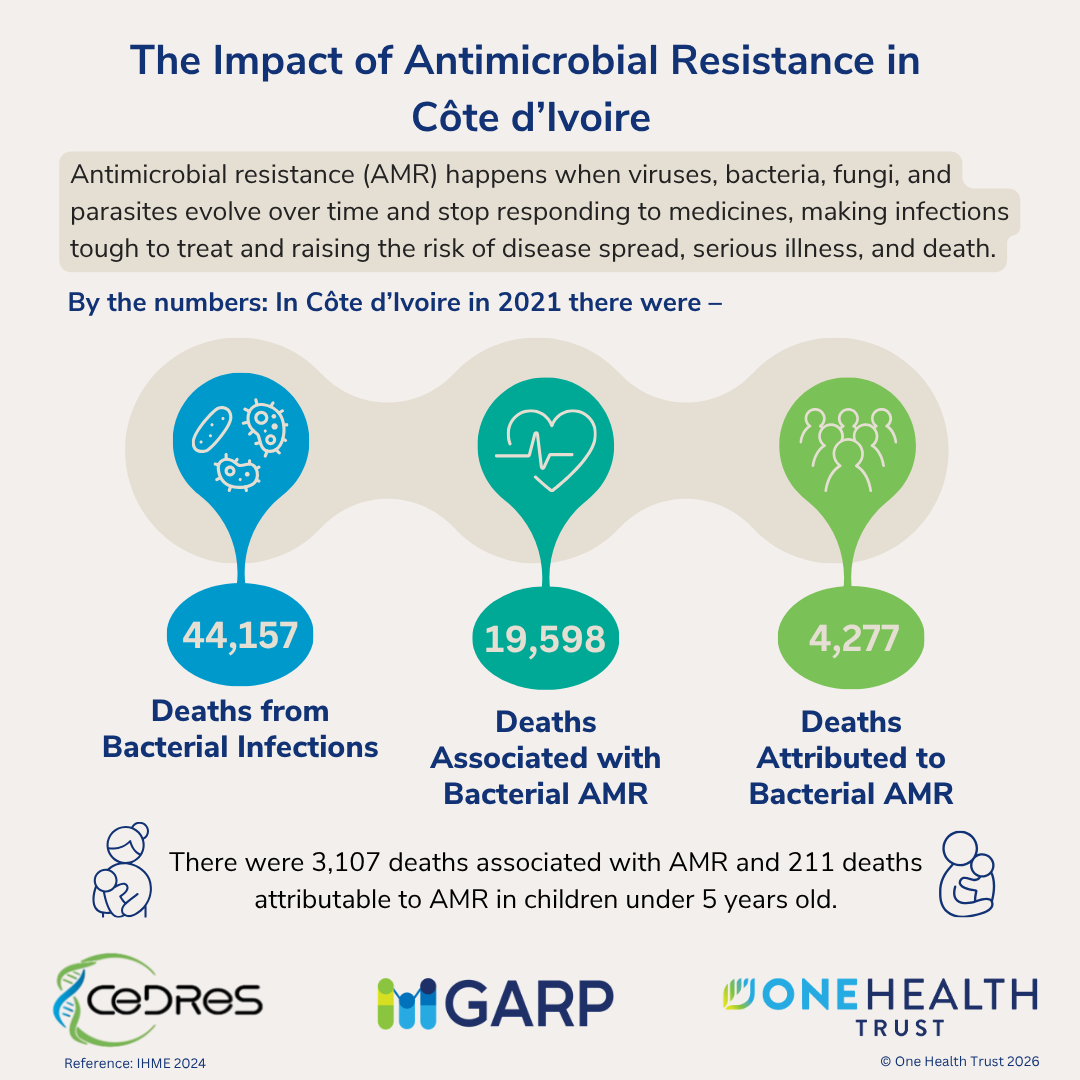
The Impact of Antimicrobial Resistance in Côte d’Ivoire
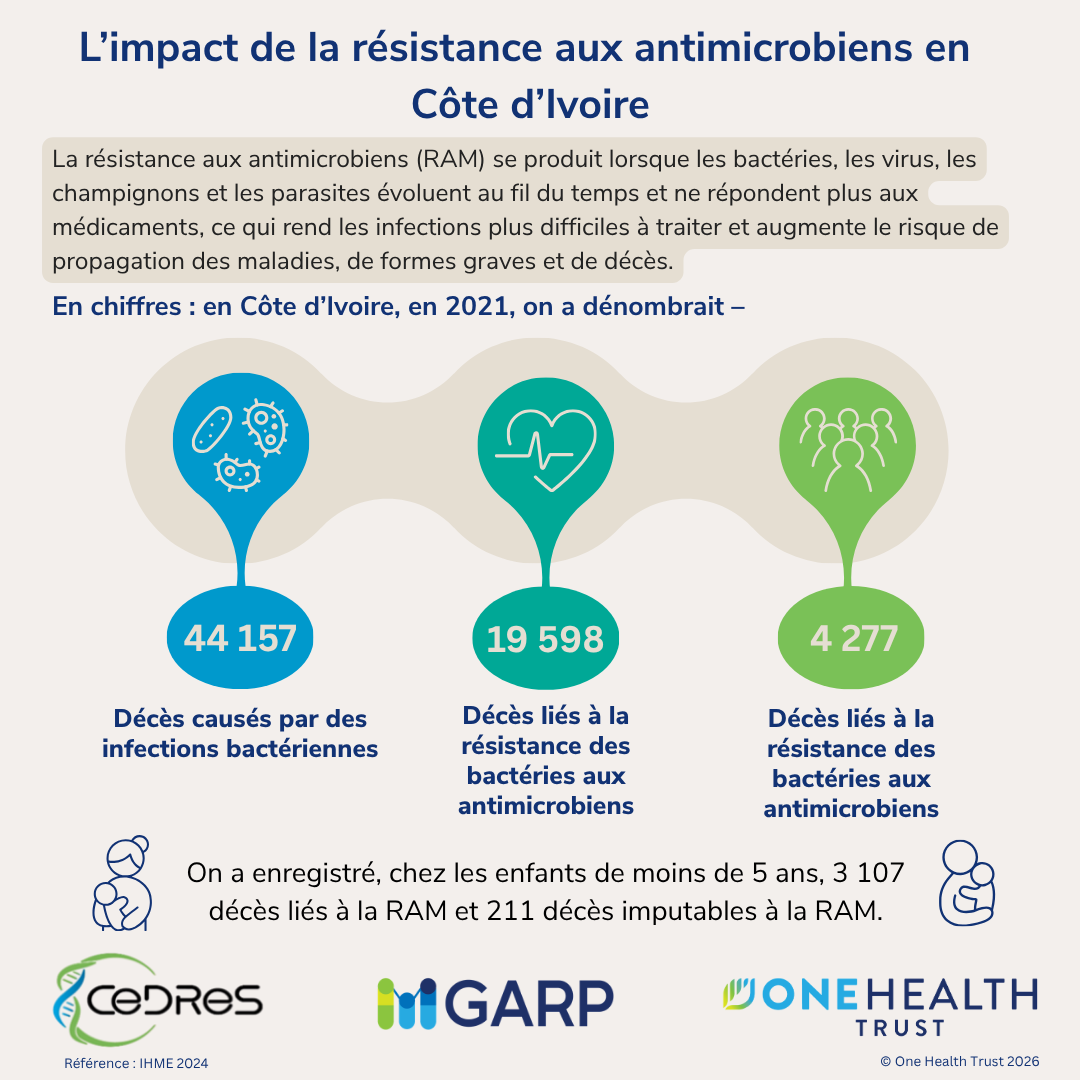
Antimicrobial resistance (AMR) happens when viruses, bacteria, fungi, and parasites evolve over time and stop responding to medicines, making infections tough to treat and raising the risk of disease spread, serious illness, and death.
By the numbers: In Côte d’Ivoire in 2021 there were –
- 44,157 Deaths from Bacterial Infections
- 19,598 Deaths Associated with Bacterial AMR
- 4,277 Deaths Attributed to Bacterial AMR
There were 3,107 deaths associated with AMR and 211 deaths attributable to AMR in children under 5 years old.
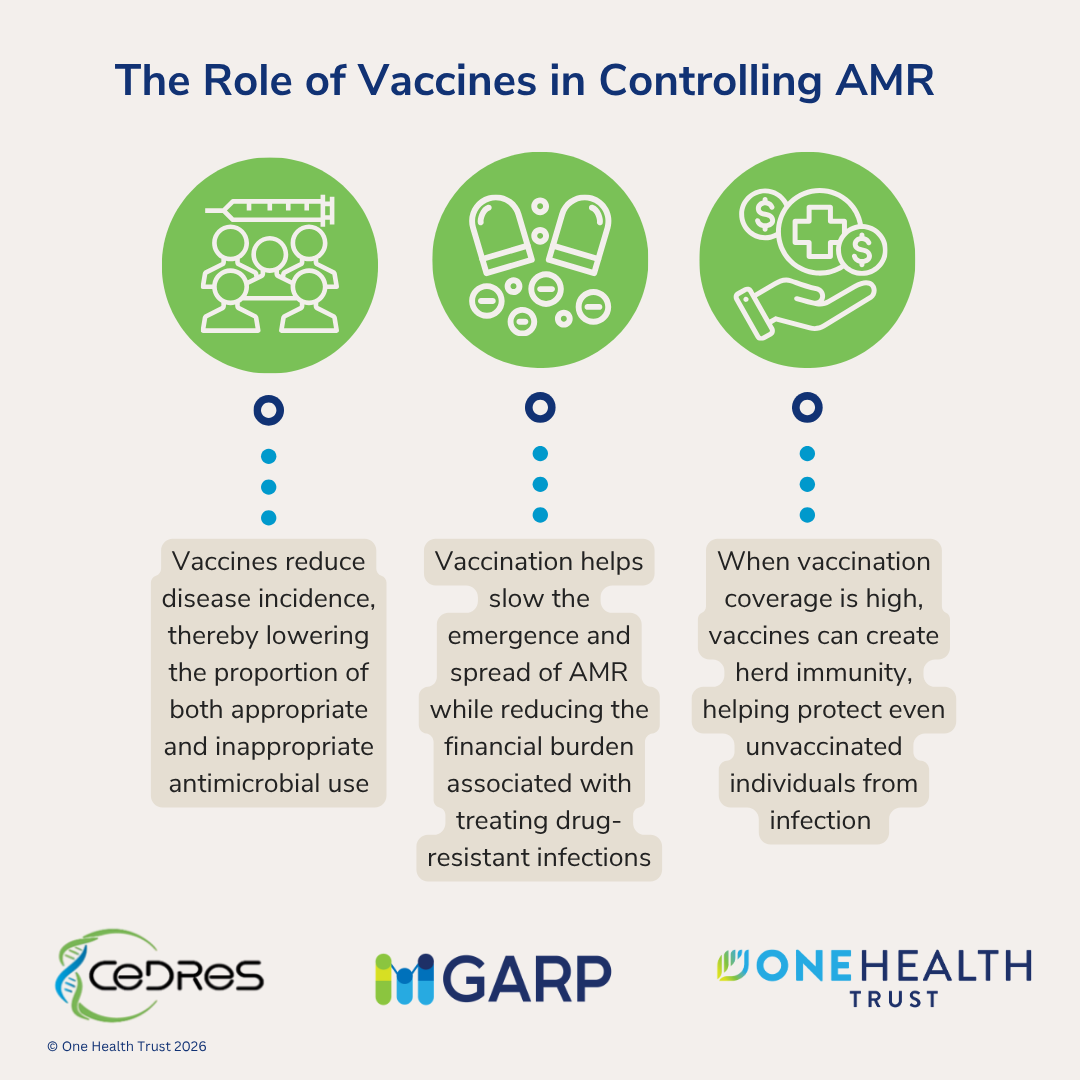
The Role of Vaccines in Controlling AMR
- Vaccines reduce disease incidence, thereby lowering the proportion of both appropriate and inappropriate antimicrobial use
- Vaccination helps slow the emergence and spread of AMR while reducing the financial burden associated with treating drug-resistant infections
- When vaccination coverage is high, vaccines can create herd immunity, helping protect even unvaccinated individuals from infection
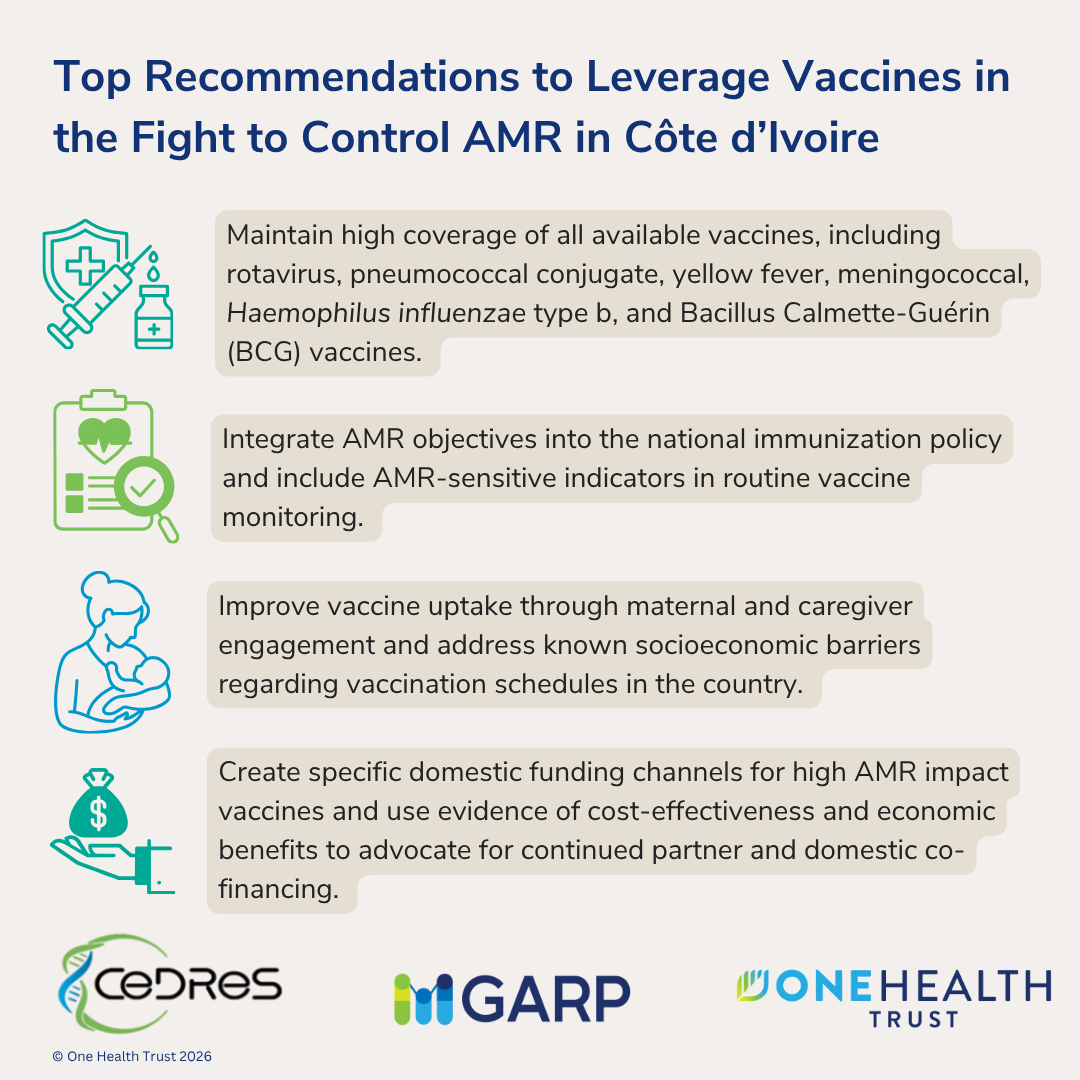
Top Recommendations to Leverage Vaccines in the Fight to Control AMR in Côte d’Ivoire
- Maintain high coverage of all available vaccines, including rotavirus, pneumococcal conjugate, yellow fever, meningococcal, Haemophilus influenzae type b, and Bacillus Calmette-Guérin (BCG) vaccines.
- Integrate AMR objectives into the national immunization policy and include AMR-sensitive indicators in routine vaccine monitoring.
- Improve vaccine uptake through maternal and caregiver engagement and address known socioeconomic barriers regarding vaccination schedules in the country.
- Create specific domestic funding channels for high AMR impact vaccines and use evidence of cost-effectiveness and economic benefits to advocate for continued partner and domestic co-financing.
Read the GARP- Côte d’Ivoire policy brief, ” The Value of Vaccines to Mitigate Antimicrobial Resistance in Côte d’Ivoire,” here.