November 12, 2026
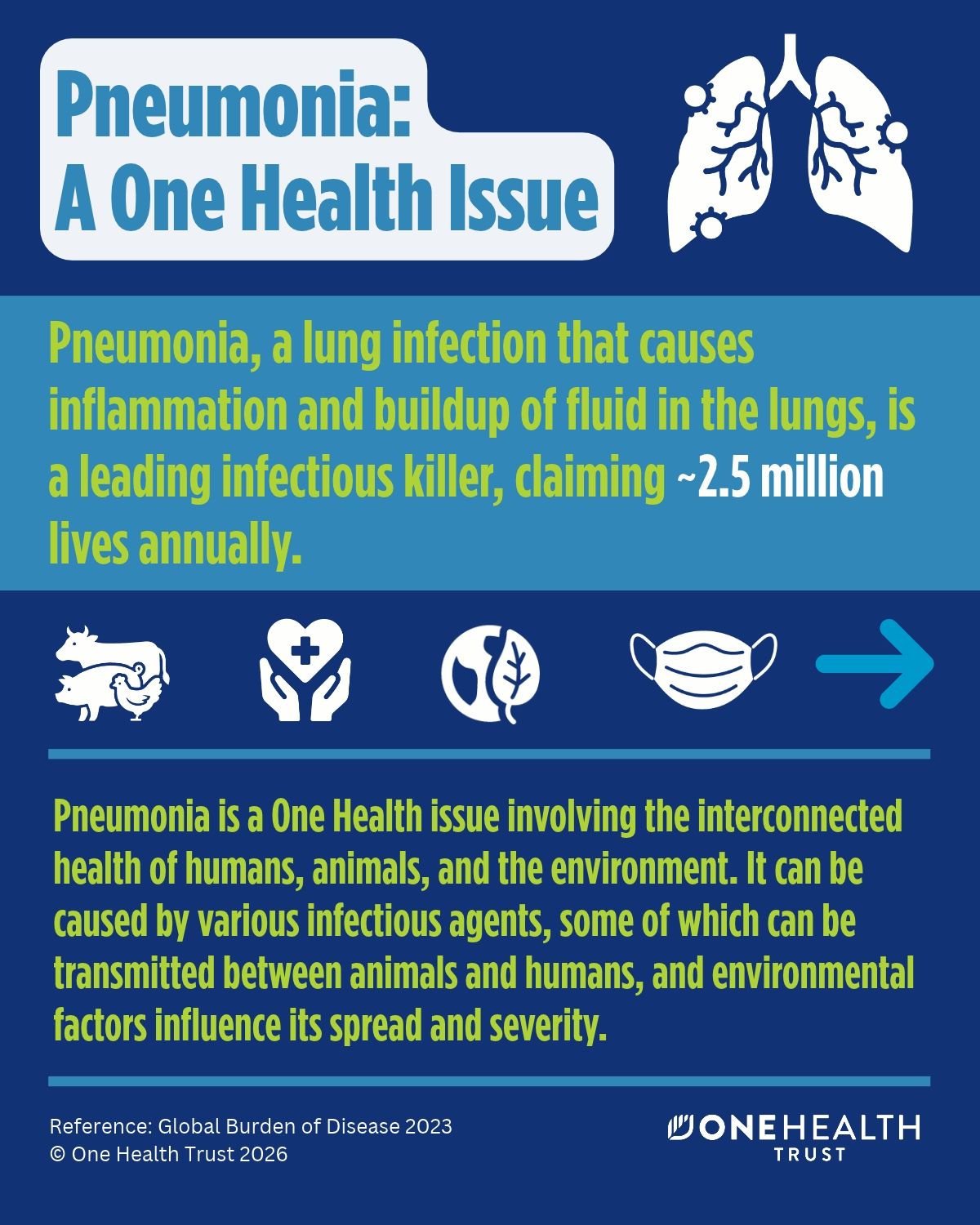
Pneumonia, a lung infection that causes inflammation and buildup of fluid in the lungs, is a leading infectious killer, claiming ~2.5 million lives annually.
Pneumonia is a One Health issue involving the interconnected health of humans, animals, and the environment. It can be caused by various infectious agents, some of which can be transmitted between animals and humans, and environmental factors influence its spread and severity.
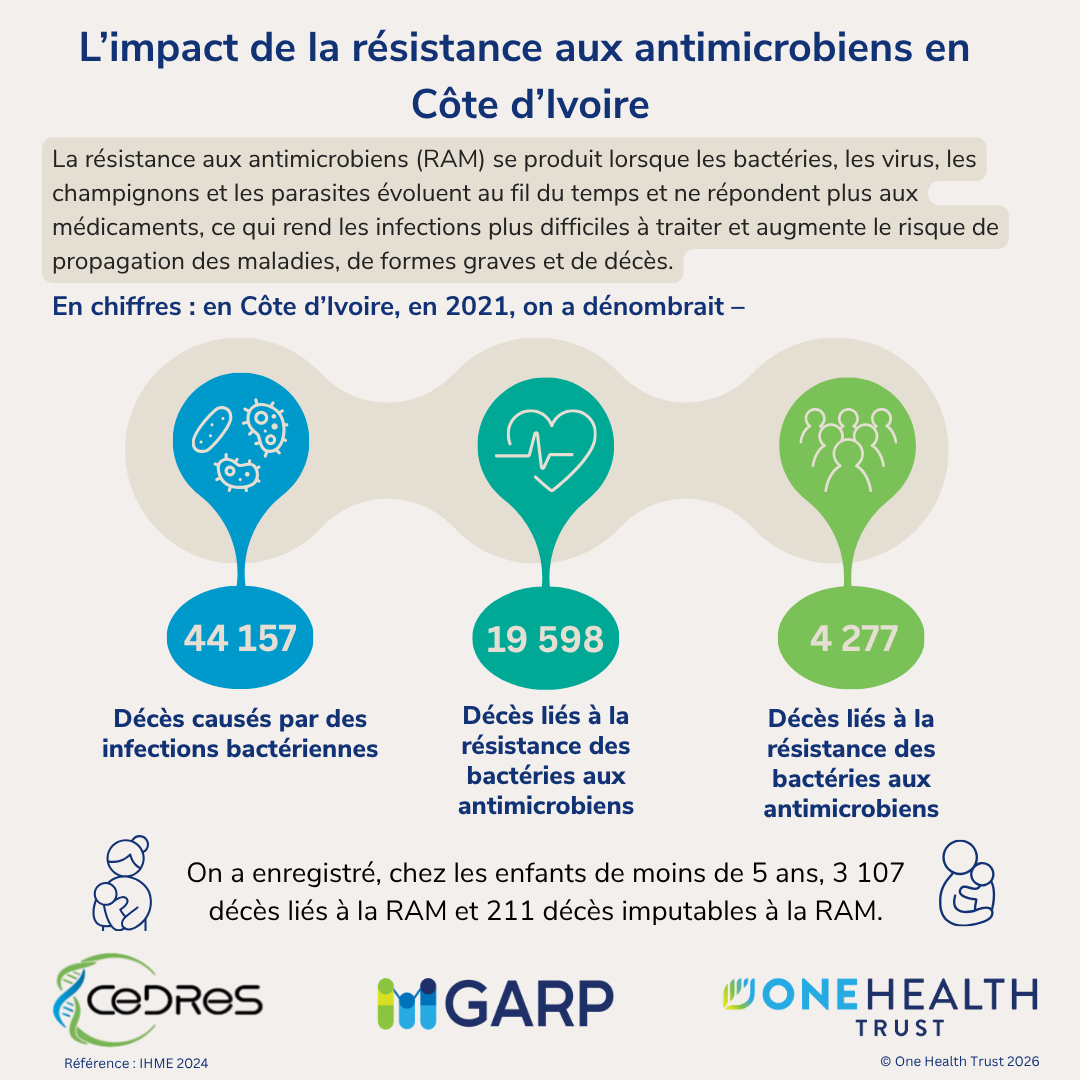
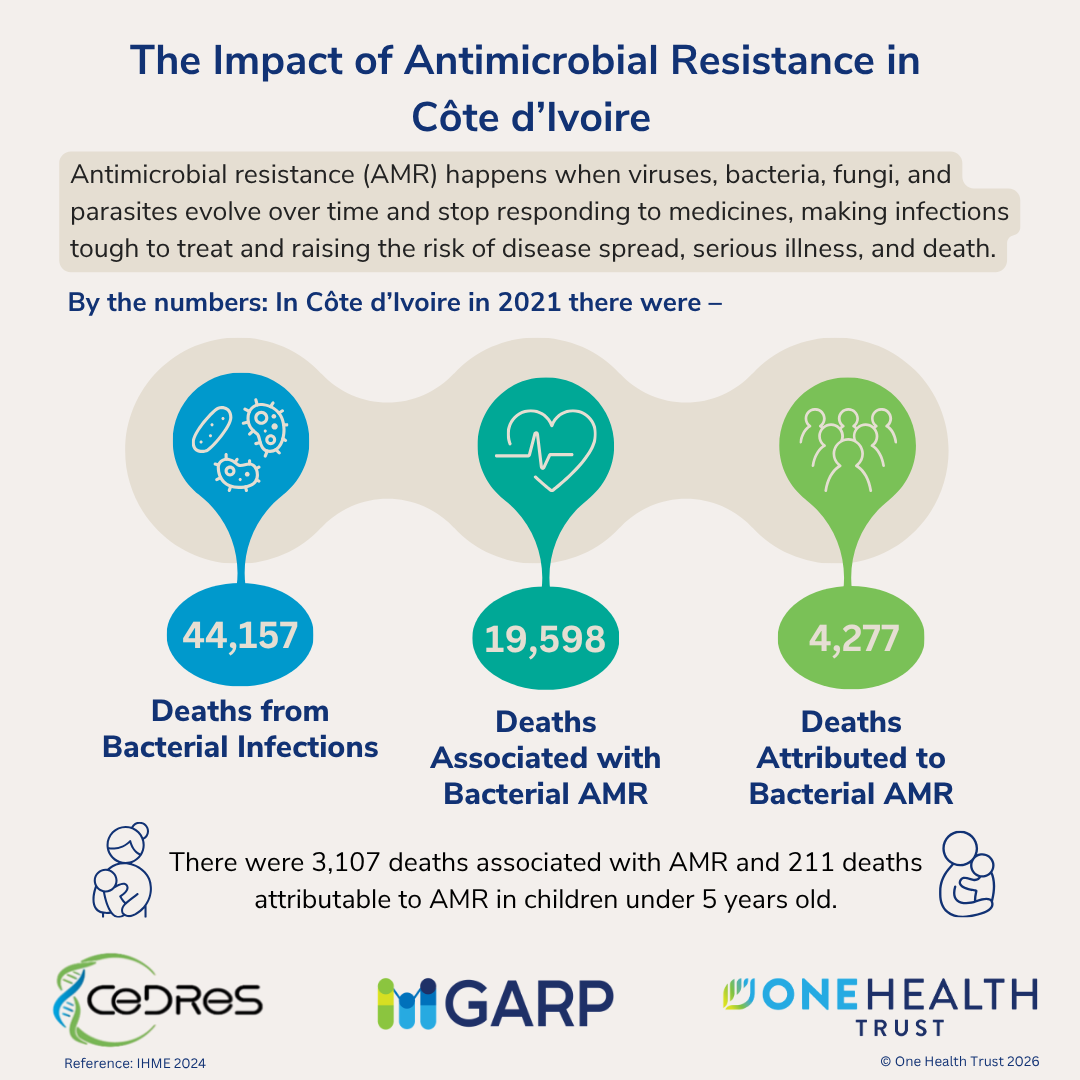
Antimicrobial Resistance
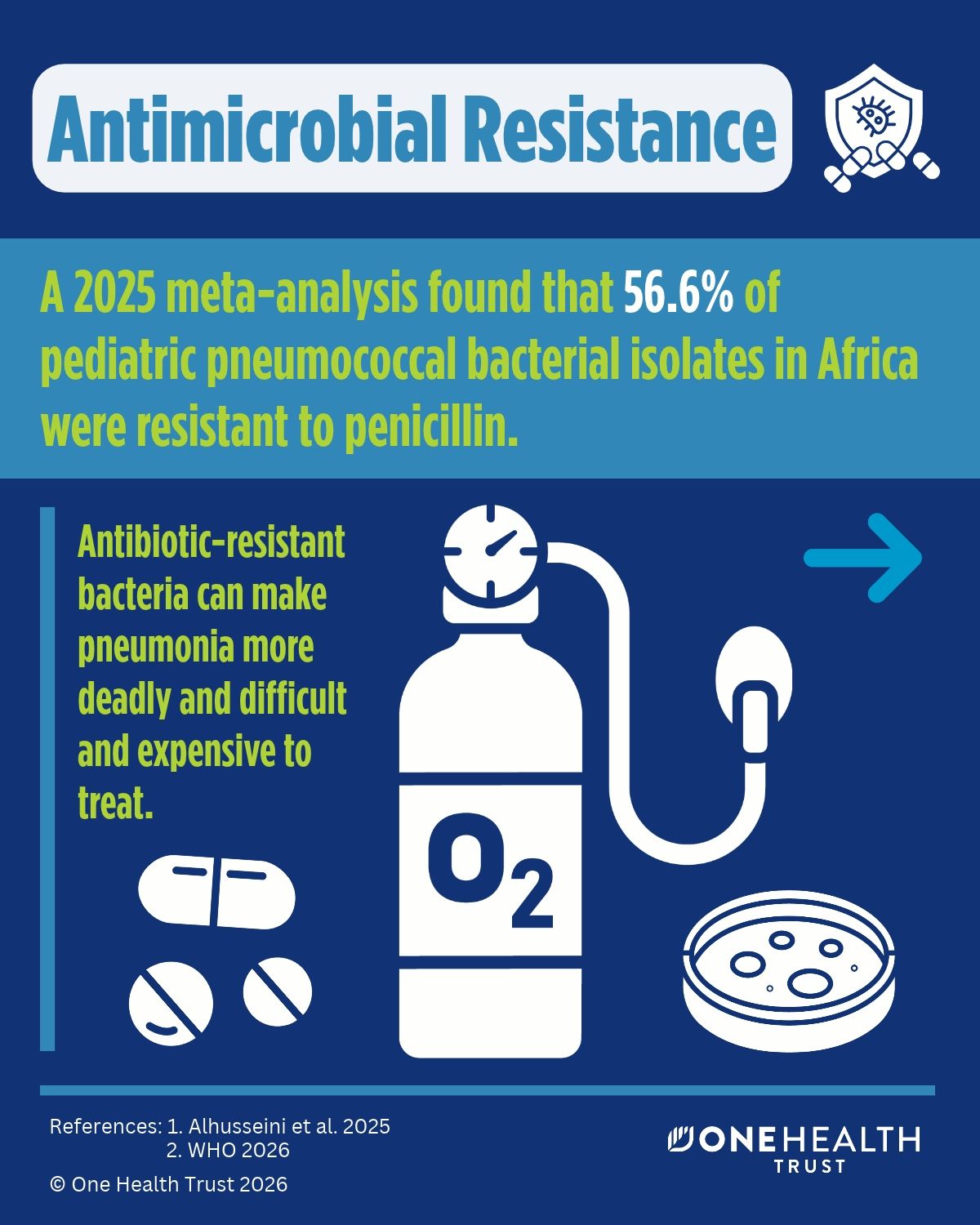
A 2025 meta-analysis found that 56.6% of pediatric pneumococcal bacterial isolates in Africa were resistant to penicillin.
Antibiotic-resistant bacteria can make pneumonia more deadly and difficult and expensive to treat.
Air Pollution
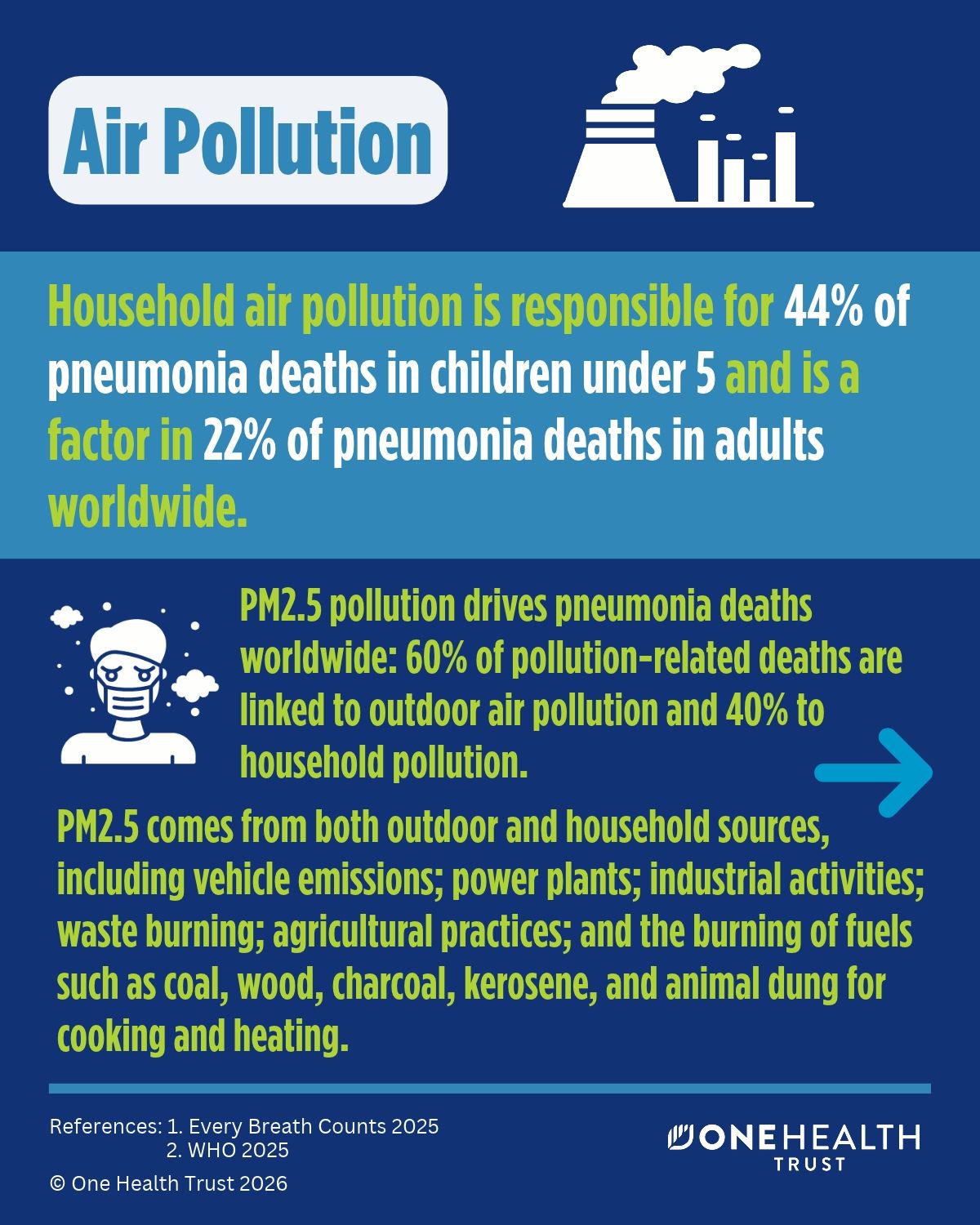
Household air pollution is responsible for 44% of pneumonia deaths in children under 5 and is a factor in 22% of pneumonia deaths in adults worldwide.
PM2.5 pollution drives pneumonia deaths worldwide: 60% of pollution-related deaths are linked to outdoor air pollution and 40% to household pollution.
PM2.5 comes from both outdoor and household sources, including vehicle emissions; power plants; industrial activities; waste burning; agricultural practices; and the burning of fuels such as coal, wood, charcoal, kerosene, and animal dung for cooking and heating.
Climate Change
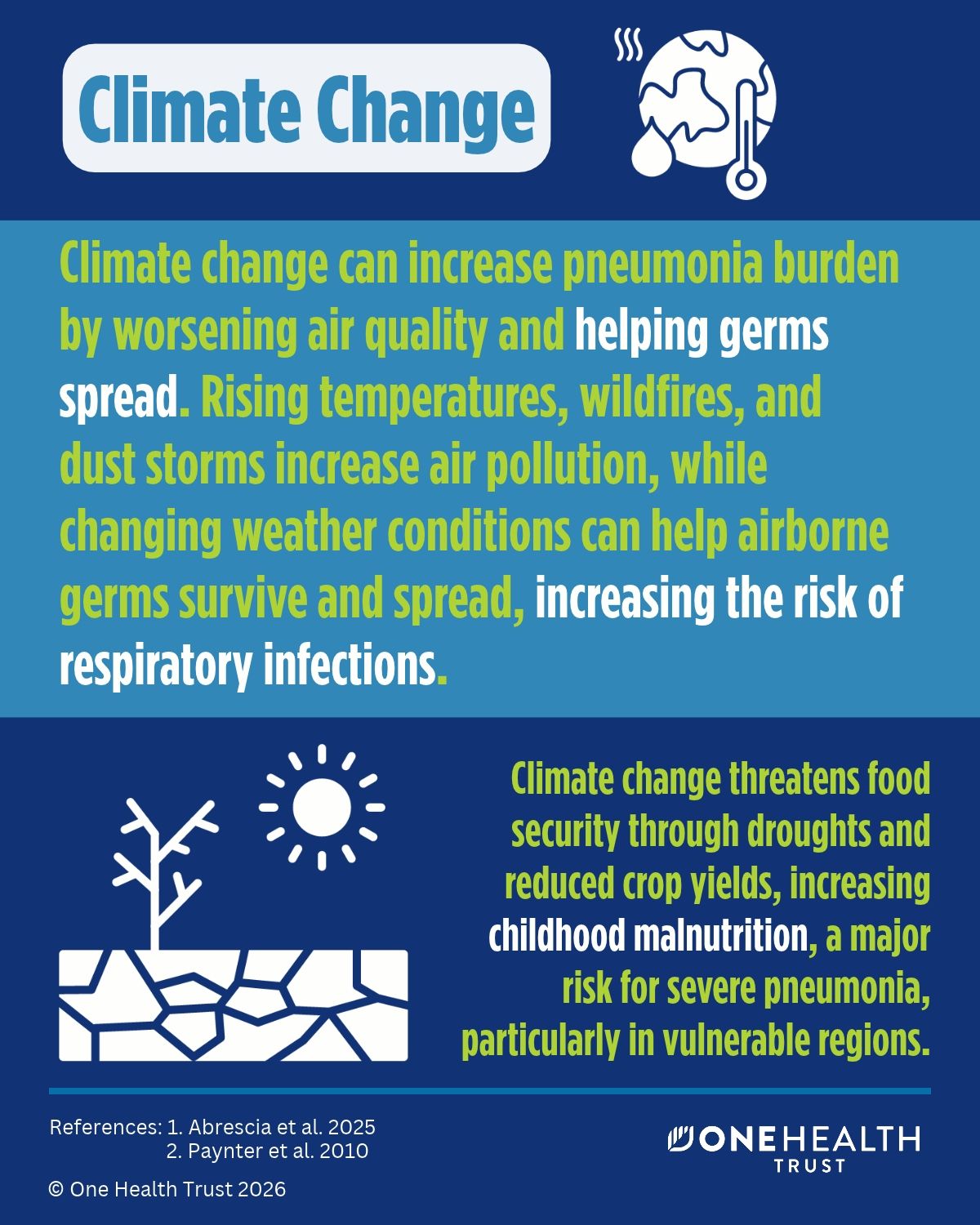
Climate change can increase pneumonia burden by worsening air quality and helping germs spread. Rising temperatures, wildfires, and dust storms increase air pollution, while changing weather conditions can help airborne germs survive and spread, increasing the risk of respiratory infections.
Climate change threatens food security through droughts and reduced crop yields, increasing childhood malnutrition, a major risk for severe pneumonia, particularly in vulnerable regions.
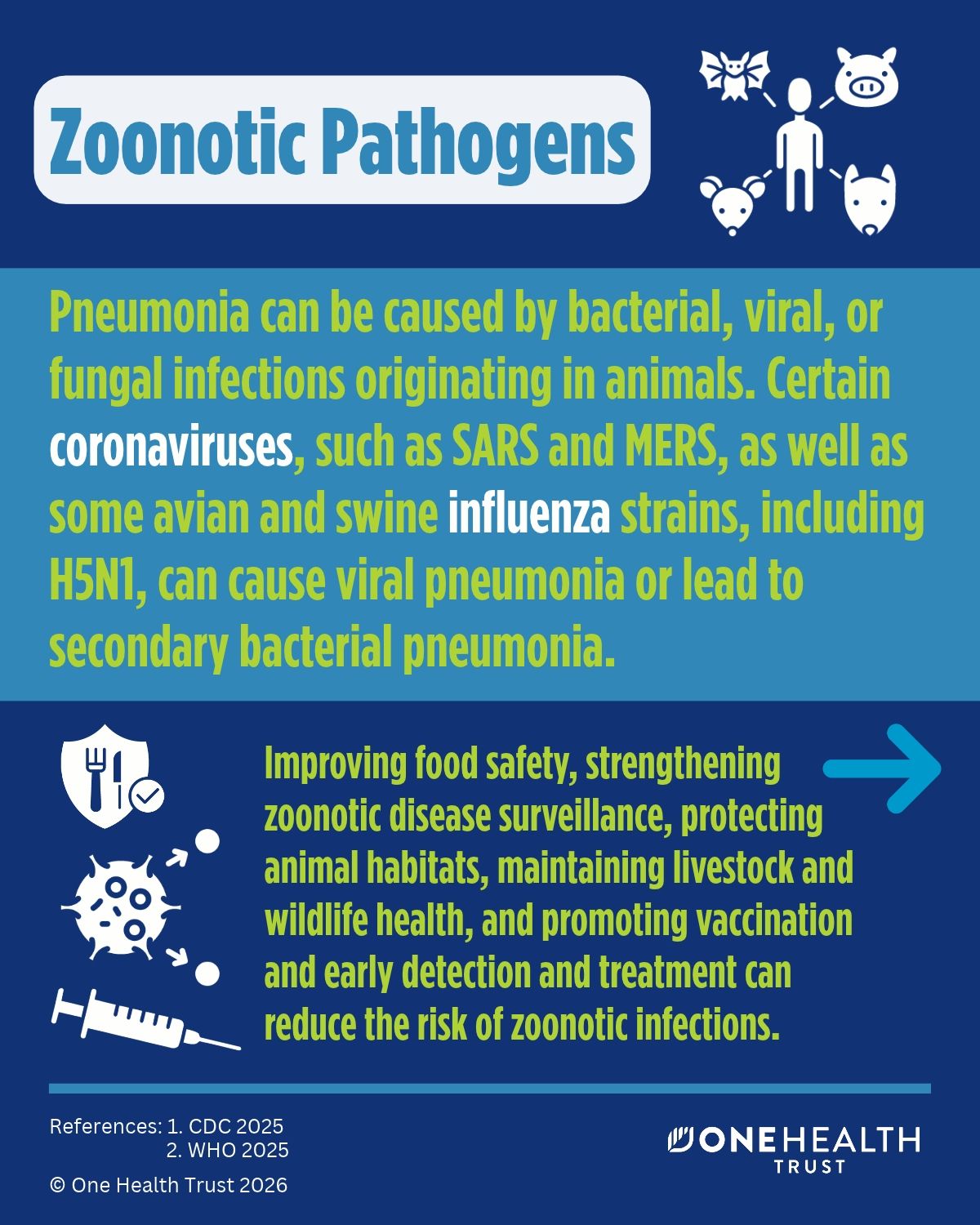
Zoonotic Pathogens
Pneumonia can be caused by bacterial, viral, or fungal infections originating in animals. Certain coronaviruses, such as SARS and MERS, as well as some avian and swine influenza strains, including H5N1, can cause viral pneumonia or lead to secondary bacterial pneumonia.
Improving food safety, strengthening zoonotic disease surveillance, protecting animal habitats, maintaining livestock and wildlife health, and promoting vaccination and early detection and treatment can reduce the risk of zoonotic infections.
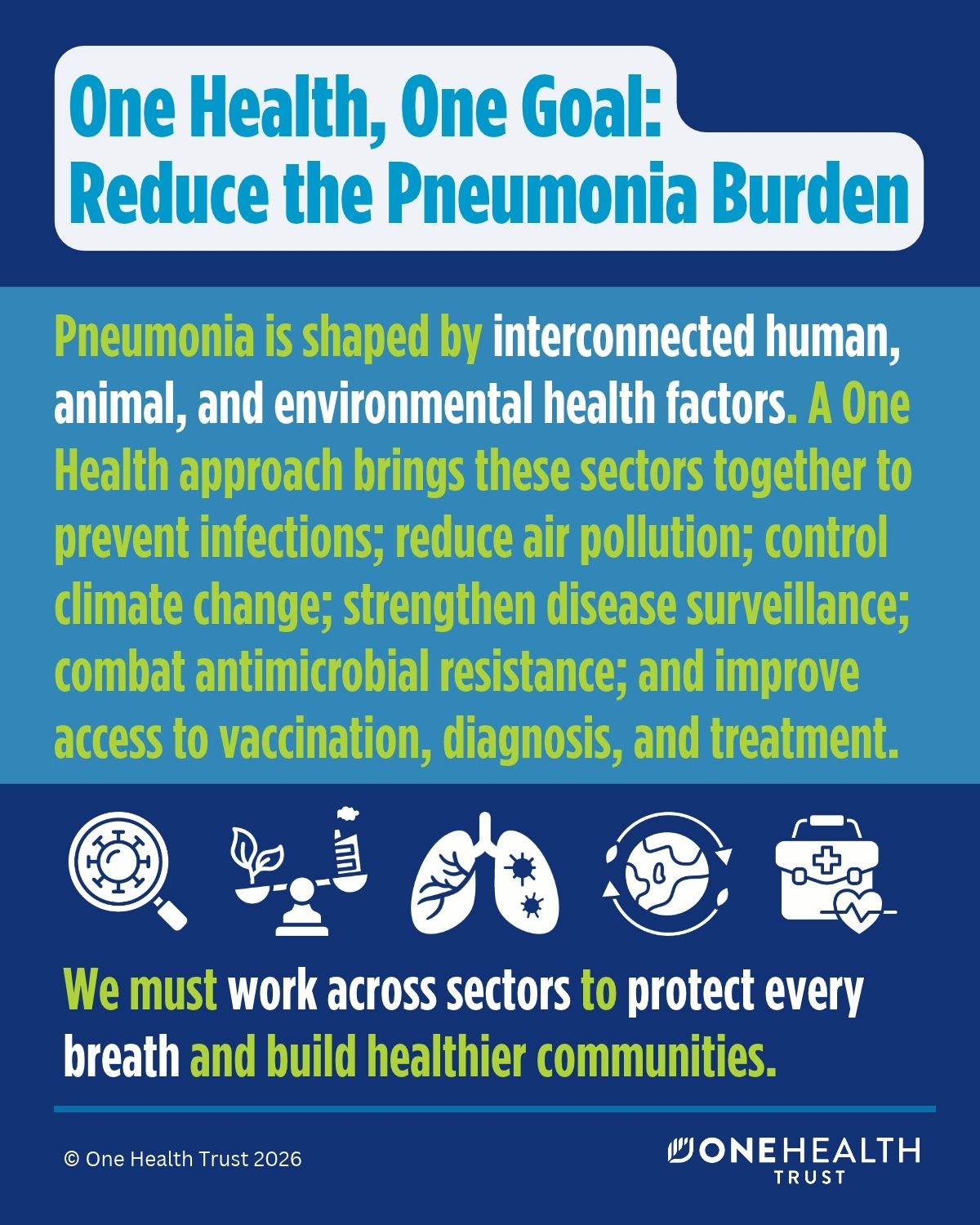
One Health, One Goal: Reduce the Pneumonia Burden
Pneumonia is shaped by interconnected human, animal, and environmental health factors. A One Health approach brings these sectors together to prevent infections; reduce air pollution; control climate change; strengthen disease surveillance; combat antimicrobial resistance; and improve access to vaccination, diagnosis, and treatment.
We must work across sectors to protect every breath and build healthier communities.
References:
- Global Burden of Disease 2023
- Alhusseini et al. 2025
- WHO 2026
- Every Breath Counts 2025
- WHO 2025
- Abrescia et al. 2025
- Paynter et al. 2010
- CDC 2025