November 16, 2026
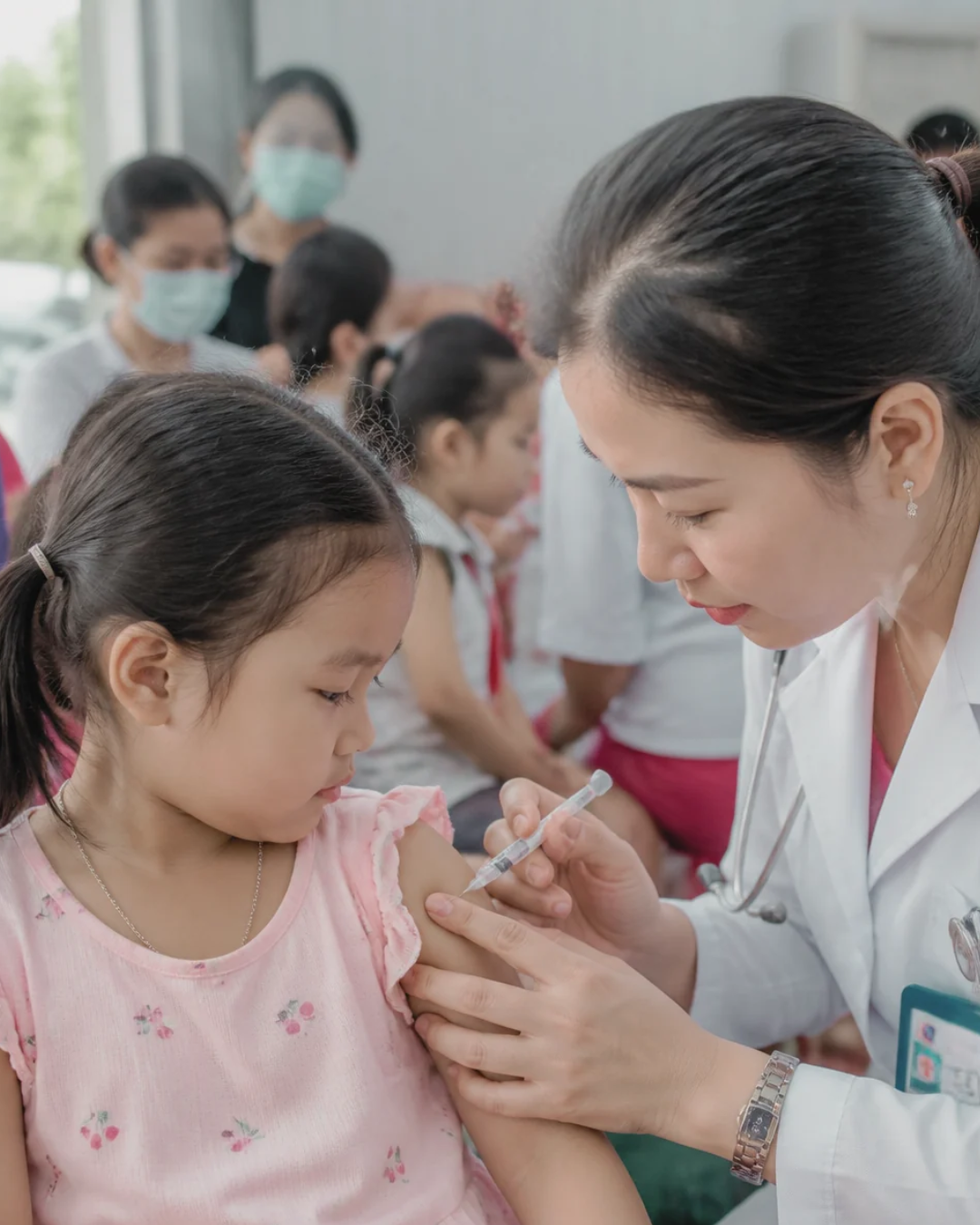
Antimicrobial resistance (AMR) is a growing health threat in Viet Nam, driven by a high burden of infectious disease and extensive antimicrobial use. Vaccination can help address AMR by preventing infections in the first place, reducing antibiotic use and slowing the emergence and transmission of resistance. Viet Nam’s Expanded Programme on Immunization provides a strong foundation for this approach, but vaccination is not yet explicitly integrated into the country’s national AMR policy. Drawing on a review of scientific literature, relevant policies and regulations, and consultations with the Global Antibiotic Resistance Partnership (GARP)-Viet Nam Technical Working Group, this brief examines the contribution of vaccines to AMR mitigation and recommends closer alignment between immunization and AMR strategies, sustained routine vaccine coverage, timely introduction of priority vaccines, and stronger evidence generation and institutional coordination.
Executive Summary
AMR poses a critical threat to the health and well-being of populations worldwide. In Viet Nam, an estimated 14,434 deaths were attributable to, and 56,466 deaths were associated with AMR in 2021, out of a total of 703,526 deaths from all causes. Because continuous exposure to antimicrobials creates selection pressure that favours resistant organisms, sustainable solutions need to include both new therapies and novel interventions to reduce the incidence of infectious diseases and the use of antibiotics. Vaccines are critical, yet undervalued tools in addressing the growing public health challenge of AMR. Therefore, strengthening immunization efforts in alignment with AMR strategies could increase the impact of vaccination and strengthen the AMR response, ultimately curbing the spread of resistant infections and reducing reliance on antibiotics.
Vaccines can mitigate AMR by preventing primary and secondary infections, thereby reducing the need for antibiotic use. Additionally, adequate vaccination coverage can promote herd immunity and curb the transmission of drug-resistant pathogens. As a result, vaccines play a crucial role in preserving the efficacy of antibiotics, slowing the spread of AMR, and reducing the burden on health and the economy. In the World Health Organization (WHO) Global Action Plan on AMR published in 2015, vaccines were listed as one of the key tools for mitigating AMR and associated infections. Their role has been further reaffirmed as a strategic priority in the updated WHO Global Action Plan on AMR for 2026–2036.
Vaccines have been identified as one of the three most effective interventions to reduce the burden of bacterial AMR globally, alongside infection prevention and control (IPC) and water, sanitation, and hygiene (WASH) interventions. It is estimated that 4.2 percent of AMR-related deaths in low- and middle-income countries could be prevented by prioritizing paediatric vaccines. Acknowledging the importance of vaccines in AMR mitigation, the 2024 Political Declaration of the High-level Meeting on Antimicrobial Resistance hosted by the United Nations emphasized their role as invaluable prevention tools.
By reducing the burden of infections and antibiotic use, vaccines can also alleviate the economic burden exacerbated by AMR, as demonstrated by evidence from the impacts of the pneumococcal conjugate vaccine and Haemophilus influenzae type b vaccine. This policy brief, informed by literature review and expert consultation on the infectious disease burden in Viet Nam, assesses antibiotic access and consumption in the country, the evidence on the role of vaccines in AMR mitigation, relevant policies and institutions, challenges with policy implementation, and offers policy recommendations to highlight the potential of effective immunization program in controlling AMR.
This publication was prepared by the Global Antibiotic Resistance Partnership (GARP)-Viet Nam, a group of experts led by the One Health Trust (OHT) and the Oxford University Clinical Research Unit (OUCRU).
GARP Technical Working Group members:
Assoc. Prof. Tran Dac Phu, Chairman, National Immunization Technical Advisory Group (NITAG) Viet Nam (Chair)
Prof. H. Rogier van Doorn, Director, Oxford University Clinical Research Unit (OUCRU)-Hanoi
Dr. Pham Ngoc Thach, Director, Chairman of Viet Nam Society for Infectious Diseases, National Hospital for Tropical Diseases
Prof. Nguyen Van Kinh, Vice President, Viet Nam Medical Association
Dr. Nguyen Minh Hang, Vice Head of Viet Nam Food Safety Authority, Ministry of Health
Dr. Trinh Xuan Tung, Center for Food and Nutrition Training, National Institute of Nutrition, Ministry of Health
Dr. Binh Le, Immunization Team Lead, Immunization Division/ Global Health Center, US Centers for Disease Control and Prevention (US CDC) Viet Nam
Dr. Pham Quang Thai, Vice head of Infectious Diseases Control Department, Head of the Expanded Programme on Immunization Northern Office, National Institute of Hygiene and Epidemiology
Dr. Dang Thi Thanh Huyen, Epidemiologist, Immunization specialist
Assoc. Prof. Nguyen Vu Trung, Director, Pasteur Institute of Ho Chi Minh City
Dr. Do Thai Hung, Director, Pasteur Nha Trang
Dr. Le Quoc Phong, Acting Head, Center for Training, Research management and International Cooperation (CTRIC), Pasteur Nha Trang
Dr. Vien Chinh Chien, Director, Tay Nguyen Institute of Hygiene and Epidemiology
Dr. Le Van Tuan, Vice Director, Tay Nguyen Institute of Hygiene and Epidemiology
Ms. Tran Thi Tuyet Luong, Public Health Specialist
Dr. Nguyen To Nhu, Programme Director, Pandemic Preparedness and Response, PATH Viet Nam
Ms. Pham Huong Lien, Senior Programme Officer, Emergency Preparedness and Response (EPR) Viet Nam Country Programme, PATH Viet Nam
Dr. Pharm. Do Thi Thuy Nga, Oxford University Clinical Research Unit (OUCRU)
Pharm. Nguyen Thi Hong, Oxford University Clinical Research Unit (OUCRU) (GARP Coordinator)
One Health Trust:
Mr. Rishiraj Bhagawati, Ms. Simran More, Dr. Oluwatosin Ajayi, Dr. Erta Kalanxhi
Download the full policy brief here.
Download the short version of the policy brief here.