August 12, 2026
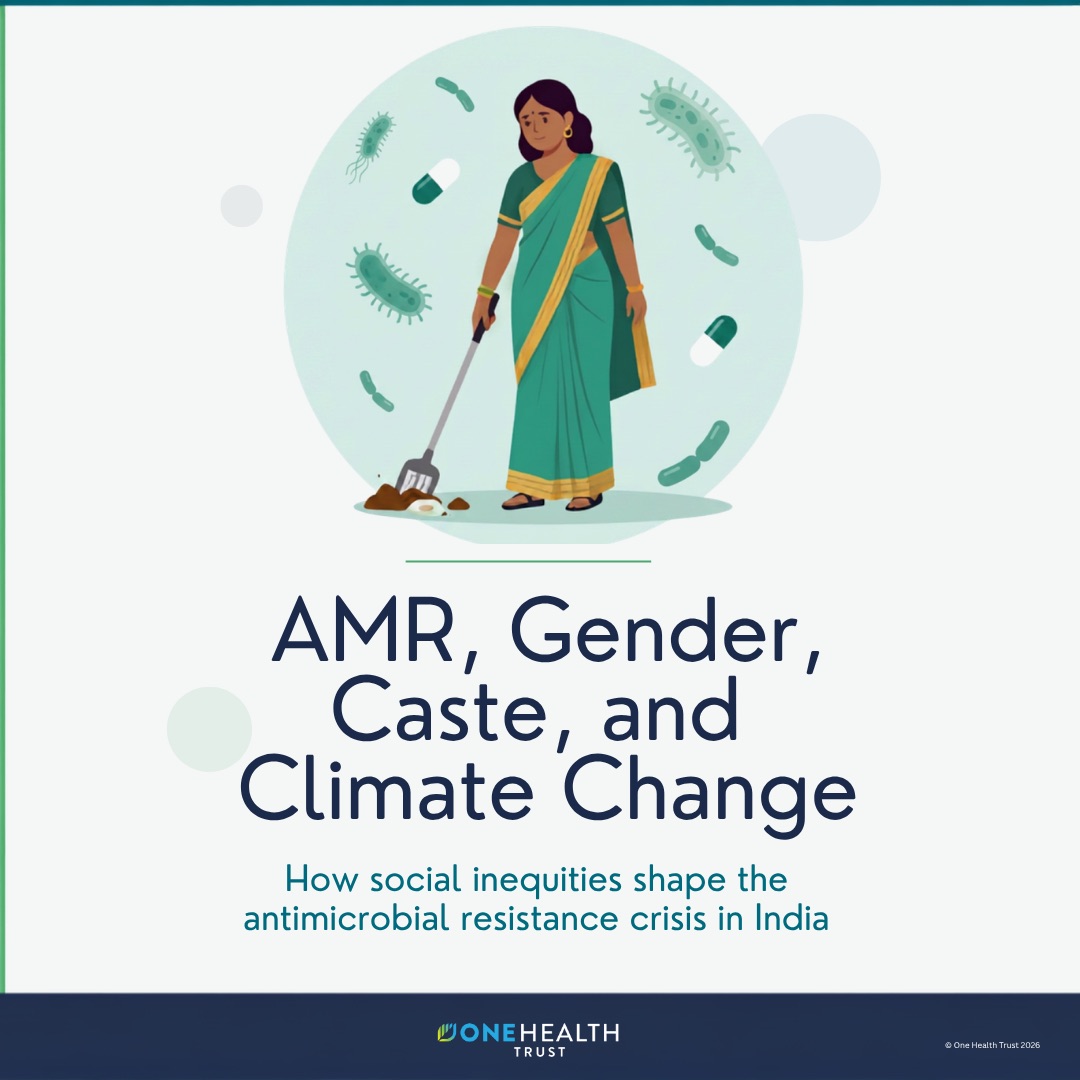
How social inequities shape the antimicrobial resistance crisis in India.
What is AMR?
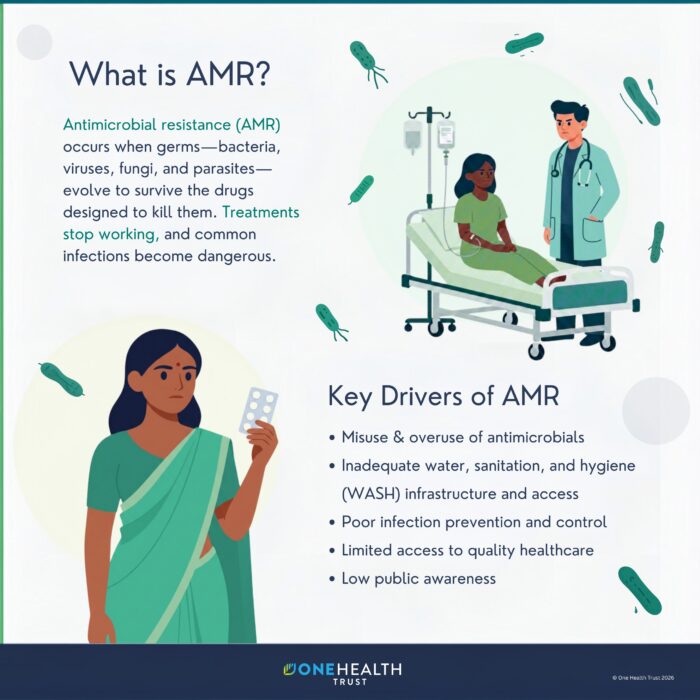
Antimicrobial resistance (AMR) occurs when germs—bacteria, viruses, fungi, and parasites—evolve to survive the drugs designed to kill them. Treatments stop working, and common infections become dangerous.
Key Drivers of AMR
- Misuse & overuse of antimicrobials
- Inadequate water, sanitation, and hygiene (WASH) infrastructure and access
- Poor infection prevention and control
- Limited access to quality healthcare
- Low public awareness
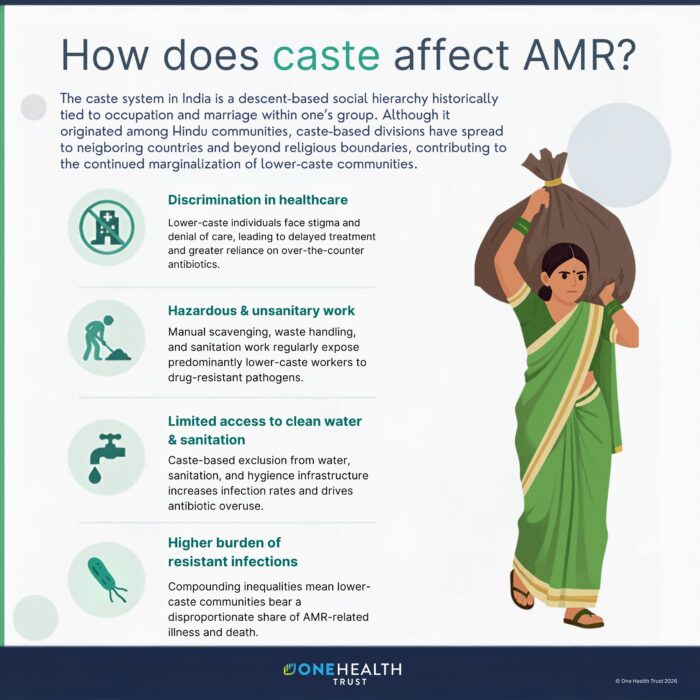
How does caste affect AMR?
The caste system in India is a descent-based social hierarchy historically tied to occupation and marriage within one’s group. Although it originated among Hindu communities, caste-based divisions have spread to neighboring countries and beyond religious boundaries, contributing to the continued marginalization of lower-caste communities.
- Discrimination in healthcare
Lower-caste individuals face stigma and denial of care, leading to delayed treatment and greater reliance on over-the-counter antibiotics.
- Hazardous & unsanitary work
Manual scavenging, waste handling, and sanitation work regularly expose predominantly lower-caste workers to drug-resistant pathogens.
- Limited access to clean water & sanitation
Caste-based exclusion from water, sanitation, and hygiene infrastructure increases infection rates and drives antibiotic overuse.
- Higher burden of resistant infections
Compounding inequalities mean lower-caste communities bear a disproportionate share of AMR-related illness and death.
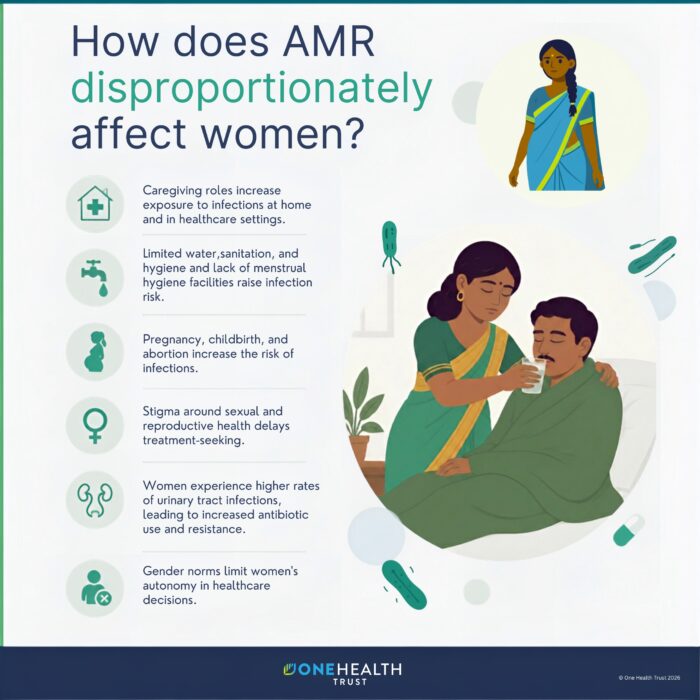
How does AMR disproportionately affect women?
- Caregiving roles increase exposure to infections at home and in healthcare settings.
- Limited water, sanitation, and hygiene, and lack of menstrual hygiene facilities raise infection risk.
- Pregnancy, childbirth, and abortion increase the risk of infections.
- Stigma around sexual and reproductive health delays treatment-seeking.
- Women experience higher rates of urinary tract infections, leading to increased antibiotic use and resistance.
- Gender norms limit women’s autonomy in healthcare decisions.
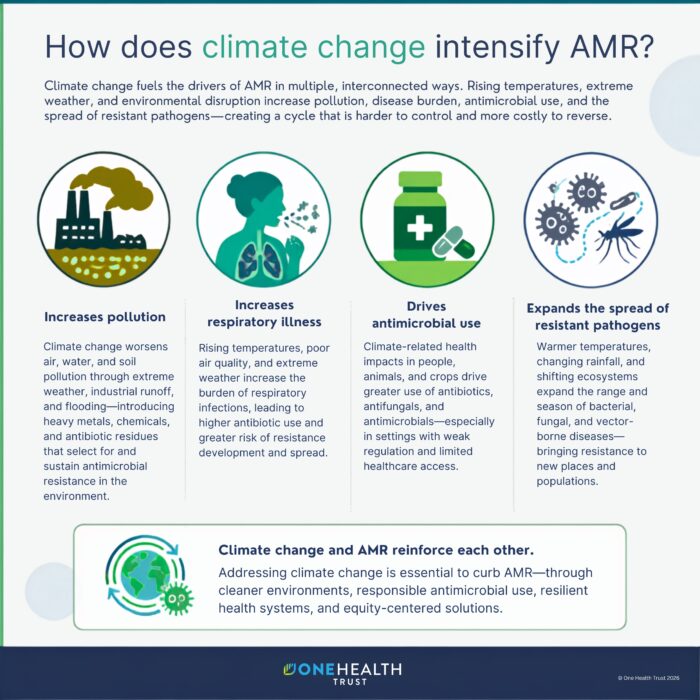
How does climate change intensify AMR?
Climate change fuels the drivers of AMR in multiple, interconnected ways. Rising temperatures, extreme weather, and environmental disruption increase pollution, disease burden, antimicrobial use, and the spread of resistant pathogens—creating a cycle that is harder to control and more costly to reverse.
- Increases pollution
Climate change worsens air, water, and soil pollution through extreme weather, industrial runoff, and flooding—introducing heavy metals, chemicals, and antibiotic residues that select for and sustain antimicrobial resistance in the environment.
- Increases respiratory illness
Rising temperatures, poor air quality, and extreme weather increase the burden of respiratory infections, leading to higher antibiotic use and greater risk of resistance development and spread.
- Drives antimicrobial use
Climate-related health impacts in people, animals, and crops drive greater use of antibiotics, antifungals, and antimicrobials—especially in settings with weak regulation and limited healthcare access.
- Expands the spread of resistant pathogens
Warmer temperatures, changing rainfall, and shifting ecosystems expand the range and season of bacterial, fungal, and vector-borne diseases—bringing resistance to new places and populations.
- Climate change and AMR reinforce each other.
Addressing climate change is essential to curb AMR—through cleaner environments, responsible antimicrobial use, resilient health systems, and equity-centered solutions.
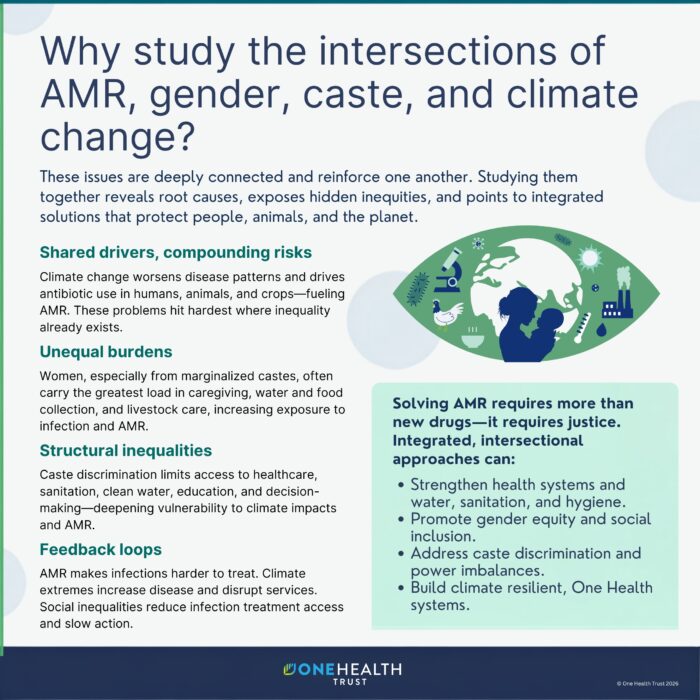
Why study the intersections of AMR, gender, caste, and climate change?
These issues are deeply connected and reinforce one another. Studying them together reveals root causes, exposes hidden inequities, and points to integrated solutions that protect people, animals, and the planet.
- Shared drivers, compounding risks
Climate change worsens disease patterns and drives antibiotic use in humans, animals, and crops—fueling AMR. These problems hit hardest where inequality already exists.
- Unequal burdens
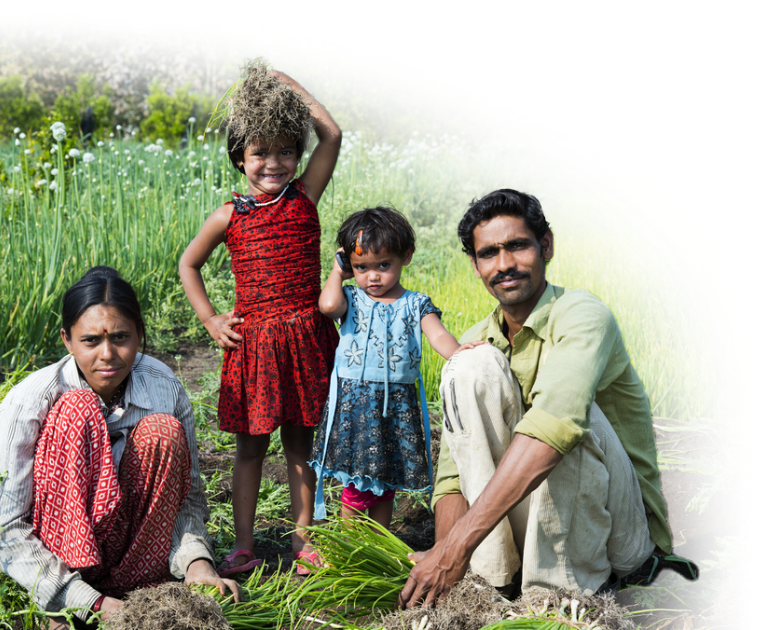
Women, especially from marginalized castes, often carry the greatest load in caregiving, water and food collection, and livestock care, increasing exposure to infection and AMR.
- Structural inequalities
Caste discrimination limits access to healthcare, sanitation, clean water, education, and decision-making—deepening vulnerability to climate impacts and AMR.
- Feedback loops
AMR makes infections harder to treat. Climate extremes increase disease and disrupt services. Social inequalities reduce infection treatment access and slow action.
Solving AMR requires more than new drugs—it requires justice. Integrated, intersectional approaches can:
- Strengthen health systems and water, sanitation, and hygiene.
- Promote gender equity and social inclusion.
- Address caste discrimination and power imbalances.
- Build climate-resilient One Health systems.
Learn more in the collaborative One Health Trust publication, “Understanding the Socio-economic and Environmental Determinants of Antimicrobial Resistance.”
Out now in Public Humanities. Read it here.