January 29, 2026

Can Ayurveda contribute to population health strategies?
In a column in the Hindustan Times, OHT’s Dr. Ramanan Laxminarayan weighs in on whether Ayurveda, a traditional health system with a focus on individualized care that originated in India, can contribute meaningfully to population health in India. Dr. Laxminarayan points out that while Ayurveda’s strengths lie in prevention, improved lifestyle, and long-term well-being, translating these principles into large-scale public health interventions requires rigorous evidence suited to complexity. He offers the example of how Ayurveda’s holistic approach to digestion, nutrition, and systemic balance provides insights into why standardized programs to address maternal anemia often fail for many subgroups. However, Dr. Laxminarayan stresses that better research quality, safety oversight, and regulatory standards are necessary for Ayurveda to gain public health credibility. Integrating traditional systems with modern scientific rigor and regulation could create more adaptive and inclusive population health strategies in India. [Hindustan Times]
Safe tap water is a true measure of national development.
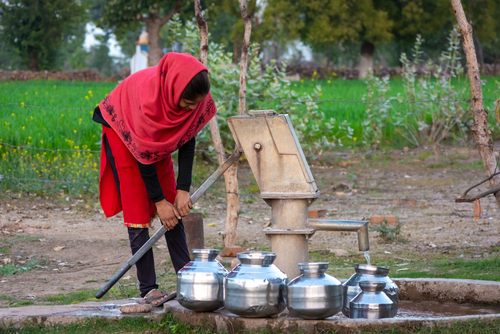
A nation’s ability to provide safe drinking tap water for its population may be a better marker for development than the country’s gross domestic product. This view, shared by OHT’s Dr. Ramanan Laxminarayan in his column, Vital Signs, in the Hindustan Times, highlights a problem many Indians face today. While piped water is widely available, a large portion of this supply remains unsafe or unreliable, causing millions of people to rely on expensive and ineffective alternatives to public infrastructure, such as purifiers, bottled water, and tankers. Dr. Laxminarayan emphasizes that chlorination, pressurized systems, and stringent maintenance helped other nations to attain safe tap water more than a century ago, significantly reducing disease spread. Instead of portraying drinkable tap water as an aspirational luxury, he urges India to make it a national priority. [Hindustan Times]
WHO mission trip supports Angola in developing national plan to combat antimicrobial resistance
OHT’s Dr. Oluoma Agiri joined a World Health Organization mission to Angola to support the country’s efforts to develop a national action plan for antimicrobial resistance (AMR) mitigation. The four-day mission included hospital visits and workshops with stakeholders from all One Health sectors, revealing progress in infection control but significant gaps in coordination, funding, and enforcement of medicine use regulations. During the workshop, participants identified key priorities for addressing AMR across sectors. The mission successfully engaged stakeholders, revealed strong local commitment to addressing AMR, and gathered important data to inform Angola’s upcoming national action plan. [One Health Trust]
Wild birds and the global spread of avian influenza
Researchers reviewed ecological and evolutionary studies to map the global transmission routes of highly pathogenic avian influenza (HPAI) H5 viruses from 2020 to 2023. Migrating waterfowl – particularly ducks, geese, and swans – acted as important carriers, spreading the virus from Asia to Europe, Africa, and the Americas. More than 500 bird species were affected. Seabird colonies, such as gannets and terns, experienced significant die-offs, with mortality rates rising above 70 percent in some populations. Researchers caution that the virus may be becoming endemic in wild birds due to year-round viral circulation and disease spillover into mammals, highlighting the need for worldwide surveillance and One Health coordination to stop future outbreaks. [NPJ Biodiversity]
Sex and social determinants influencing tuberculosis outcomes
Researchers from the Italian South Tuberculosis Network (ISTB-net) examined sex-based disparities in TB outcomes among 982 patients treated in 16 hospitals between 2021 and 2025. Women had lower rates of treatment termination and loss to follow-up, and they spent an average of 22 percent less time in the hospital than men. Clinical outcomes such as sputum conversion and adverse events were comparable between the sexes, suggesting that discrepancies are shaped by social and behavioral factors rather than biological differences. Overall, migrants experienced worse outcomes, including longer hospital stays and greater loss of follow-up. Researchers stressed that to provide equitable and effective TB care, programs must integrate community support, address structural hurdles that impede treatment continuity, and adequately address important factors such as gender and migration. [Infection]
Global primary care research has grown but remains unevenly distributed worldwide.
A literature review of over 5,000,000 publications from the past 50 years shows that while primary care research has expanded rapidly (especially since 2015), it still represents a small share (about 5.5 percent) of all medical research. Most publications come from a handful of high-income countries, meaning that evidence guiding primary care policy often reflects wealthier settings rather than the communities with the greatest health needs. The authors argue that investing in equitable, locally driven primary care research is essential to improve prevention, chronic disease care, and health equity worldwide. [The Lancet Global Health]
Non-invasive malaria tests are highly appealing, but trust, accuracy, and context matter.
Researchers explored how communities in Indonesia, Peru, and Rwanda perceive non-invasive malaria diagnostic tools that use saliva, exhaled breath, or skin scans instead of blood draws. Through interviews and focus groups, the study found that non-invasive tests were welcomed for their comfort and ease of use, particularly for children who fear needles. Participants valued the devices’ portability and rapid results, especially for remote areas lacking laboratory infrastructure. However, concerns emerged about test accuracy, inability to distinguish between malaria species, and skepticism about diagnosing malaria without blood samples. The findings highlight the importance of early community engagement when developing new diagnostic technologies to ensure they meet real-world needs. [PLOS One]
Single-dose HPV vaccination is projected to be as effective as two doses in reducing cervical cancer in the United States.
Matching the effectiveness of two doses, single-dose human papillomavirus (HPV) vaccination could nearly eliminate HPV-16 infections and reduce cervical cancer incidence by over 90 percent by the end of the century. These are the findings that emerged from two mathematical models evaluating the switch from a two-dose to a single-dose HPV vaccine schedule. Even under pessimistic assumptions—such as vaccine protection lasting only 25 years or efficacy dropping to 90 percent—cervical cancer rates increased by less than two percentage points compared to the two-dose program. The findings suggest single-dose vaccination could maintain substantial public health benefits while simplifying vaccination programs and potentially freeing resources for other preventive services. [The Lancet Regional Health – Americas]
Prolonged antibiotic use in preterm babies without infections is linked to worse health outcomes.
Researchers in Australia analyzed over 3,000 very preterm infants without confirmed infections over 10 years. While antibiotic use decreased from 2012 to 2022, 26 percent of infants still received 5 or more days of antibiotics despite negative blood cultures. Longer antibiotic exposure was associated with increased mortality, brain injury, chronic lung disease, eye problems, and bowel complications. The harmful effects were strongest when antibiotics were given consecutively rather than in separate short courses. The findings suggest that disruption of beneficial gut bacteria may cause long-term complications. Researchers emphasize the need for strategies to reduce unnecessary antibiotic use in premature babies. [Pediatric Research]
Antimicrobial resistance databases offer powerful tools for surveillance but face key challenges.
Researchers from the World Health Organization (WHO) reviewed eight antimicrobial resistance databases that help identify drug-resistant bacteria from genetic sequences. These databases catalog the specific genes and mutations that make bacteria resistant to antibiotics, supporting disease surveillance, outbreak detection, new diagnostic tests, and treatment decisions. However, substantial challenges limit their usefulness: databases primarily reflect resistance patterns from wealthier countries, curation is inconsistent, naming systems vary between databases, and multiple overlapping databases create confusion. The authors emphasize the need for collaborative efforts to standardize databases, improve global representation, and develop centralized resources to support the WHO’s Global Antimicrobial Resistance Surveillance System. [npj Antimicrobials and Resistance]
Image from Canva