January 11, 2026
Vaccines can significantly reduce antimicrobial resistance burden in Pakistan.
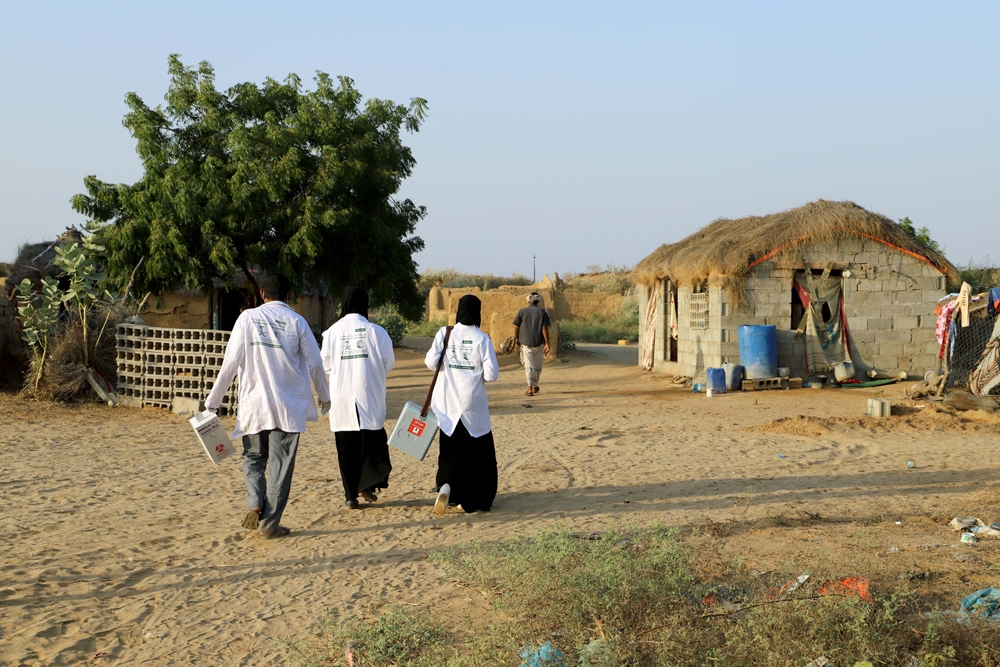
A new policy brief from the OHT and Shifa Tameer-e-Millat University-coordinated Global Antibiotic Resistance Partnership in Pakistan provides evidence-based recommendations on how vaccines can combat the country’s growing antimicrobial resistance (AMR) crisis. While Pakistan’s Expanded Program on Immunization has reduced childhood mortality from diseases including tuberculosis and pneumonia, significant gaps remain. The authors recommend expanding vaccination coverage to include varicella, mumps, and hepatitis A and establishing adult immunization programs targeting influenza, pneumococcal infections, and typhoid—particularly for elderly populations with comorbidities. [One Health Trust]
Low vaccination coverage in food animals for high-risk diseases worldwide
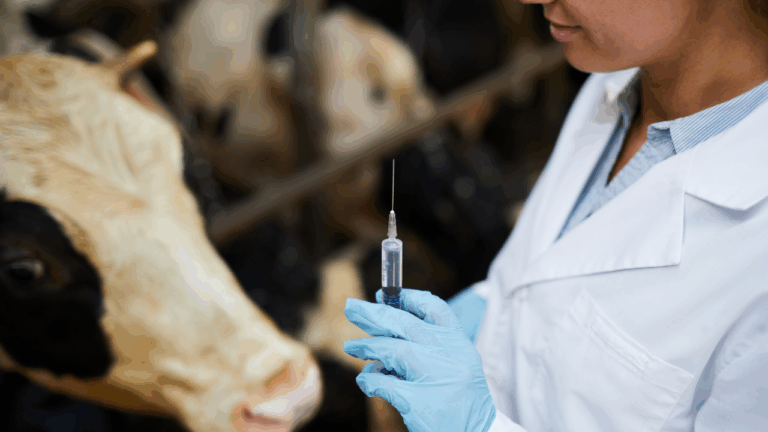
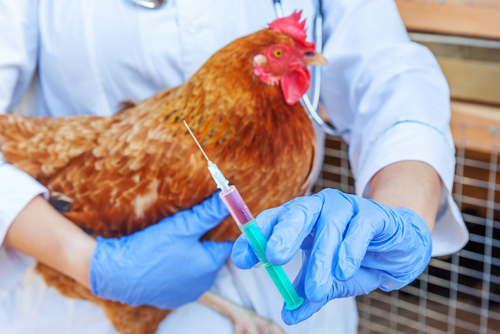
A new global OHT-led study finds that vaccination coverage against high-burden diseases in food animals remains low worldwide, but especially in low- and middle-income countries (LMICs). An analysis of data from the World Organisation for Animal Health on 104 livestock diseases affecting cattle, pigs, and poultry across 203 countries from 2005–2025 reveals large gaps and regional variation in vaccination coverage for high-impact diseases such as foot-and-mouth disease, brucellosis, rabies, Newcastle disease, and classical swine fever. Expanding livestock vaccination coverage would greatly benefit LMICs, and substantially reduce global disease burden, improve productivity and economic outcomes, lower greenhouse gas emissions, and reduce antibiotic use. The authors call for urgent action to assess and improve animal vaccine efficacy, identify priority antigens, and scale up vaccine production to reduce costs. [PNAS]
A new WHO guide to translate antimicrobial use surveillance data into policy action.
The World Health Organization (WHO) released a guide to help countries strengthen antimicrobial use (AMU) surveillance and translate data into actionable policies for combating antimicrobial resistance (AMR). Highlighting that inappropriate AMU is a primary driver of AMR, the guide provides a framework for collecting, analyzing, and interpreting data. Monitoring AMU can help identify consumption patterns and access disparities, inform policy responses, assess intervention impacts, and raise public awareness. With global leaders committing to a target of 70 percent of national antibiotic use coming from the Access category, the guide supports evidence-based decision-making and multidisciplinary collaboration to achieve sustainable stewardship. [World Health Organization]
A global slowdown in agricultural research funding threatens the future of food security.
Food prices are rising worldwide, and a new analysis identifies declining investment in agricultural research as an important contributing factor. Even as demand for food continues to rise, growth in global public and private funding for agricultural science has slowed sharply since 2015. While past investments helped boost farm productivity and keep food affordable, these benefits take decades to appear. This means that reduced funding today could lead to higher food prices, greater environmental strain, and increased food insecurity in the future. Doubling funding for agricultural research now is essential to ensure stable, affordable food supplies in the decades ahead. [Nature]
Avian influenza virus persists longer in milk from infected cows than in virus-spiked milk.
An investigation into the stability of the highly pathogenic avian influenza A (H5N1) virus in milk showed that H5N1 in raw milk from infected cows could survive months under refrigeration, while viruses added to healthy milk disappeared within weeks. The virus from infected cows was also found to be more resistant to lower-temperature pasteurization. These findings suggest that viruses produced in the cow’s mammary gland display enhanced stability, highlighting potential risks from consuming unpasteurized dairy products. [New England Journal of Medicine]
Youth engagement is essential to combating antimicrobial resistance in Africa.
Young people comprise nearly 70 percent of sub-Saharan Africa’s population, yet they remain largely excluded from antimicrobial resistance (AMR) decision-making, often limited to tokenistic roles in awareness campaigns. In a recent essay, authors argue that youth are an essential part of achieving sustainable, innovative, and locally executed AMR solutions across Africa and must be recognized as strategic partners and co-creators in AMR mitigation strategies. Successful youth-led programs across Africa have reached millions through community mobilization and advocacy, demonstrating the potential impact of youth engagement. The authors propose a framework for institutionalizing youth participation, with an emphasis on structural integration into governance, intergenerational collaboration, dedicated funding, and strong accountability mechanisms. [PLOS Global Public Health]
The prevalence of zero-dose and under-immunized children in Bangladesh
To better understand where and why under-immunized and zero-dose infants remain unreached, researchers evaluated differences in childhood vaccination rates throughout Bangladesh. The survey encompassed 12 subdistricts covering various regions, such as wetlands, coastal regions, hills, and urban slums, using data from 12,756 caregivers of children between the ages of 4 and 23 months. The survey revealed that 11.6 percent of youngsters were under-immunized and 1.9 percent had not received any vaccinations. Children in wetland, coastal, and urban slum areas were up to three times more likely to miss necessary vaccines. Additionally, children who lived farther away from immunization centers and were female were disproportionately impacted. To close ongoing disparities in vaccination coverage, researchers emphasized the need for focused interventions and customized outreach. [BMJ Global Health]
Long-term cardiovascular risks following respiratory syncytial virus infection in adults
Using data from Denmark’s national health registry, researchers investigated whether adult respiratory syncytial virus (RSV) infection raises the risk of cardiovascular problems after the acute stage of illness. Adults with laboratory-confirmed RSV infection were matched to uninfected controls, and they were monitored for a year. Those with prior RSV infection were found to have a greater frequency of cardiovascular problems, such as heart failure, myocardial infarction, and arrhythmia. The absolute excess risk that lasted for several months following infection suggests that RSV infections could trigger long-term cardiac stress. [JAMA Network Open]
Rapid progression and mortality patterns in Zambia’s 2023–2024 cholera outbreaks
An analysis of national surveillance data from Zambia’s cholera outbreaks between January 2023 and July 2024 revealed insights into disease progression and short-term mortality. Of the 3,655 reported cases, more than half were male, and children under the age of 15 comprised over one-third of the total cases. The overall fatality rate was 4.2 percent, with most deaths occurring within three days of the onset of symptoms. Men, individuals 50 years of age or older, and confirmed cholera cases had the highest mortality risk. These findings emphasize the importance of enhanced surveillance systems, quick testing, and prioritized triage for high-risk patients. They also identify crucial gaps in early diagnosis and prompt rehydration therapy. [PLOS One]
Building self-reliant TB responses in high-burden countries in a changing global health landscape
Tuberculosis (TB) is currently the world’s leading infectious killer. Although TB services were recovering from setbacks during the COVID-19 pandemic, major cuts to donor aid in 2025–2026 threaten progress as TB programs rely heavily on donor support, particularly for community-based care. Reduced funding and the abrupt withdrawal of USAID programs have caused service disruptions, increased TB cases and deaths, and setbacks in research and innovation. While funding cuts pose serious risks, especially for poorer countries, they also create a demand for high-burden nations to lead through domestic financing, innovation, integrated primary care, and reframing of TB elimination as a long-term economic and health security investment. [PLOS Medicine]
Image from Shutterstock