August 18, 2025

Biosecurity and low antibiotic use are linked to lower AMR rates on farms.
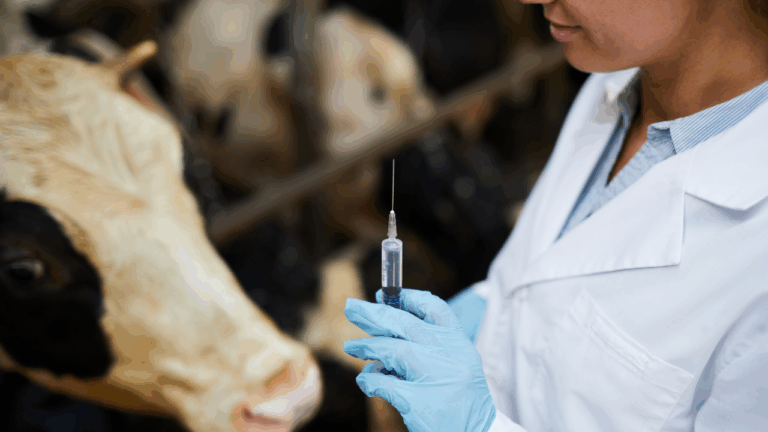
A survey of cattle and poultry farms in Punjab, India, revealed a higher prevalence of extended-spectrum beta-lactamase (ESBL) Escherichia coli in poultry (63.5 percent) vs. cattle (46 percent) and farmworkers (12 percent), perhaps reflecting the higher antibiotic use in poultry (85 percent) compared to cattle (70 percent). An analysis of the samples using generalized linear mixed models revealed that improved biosecurity and low antibiotic use were associated with lower ESBL E. coli prevalence, highlighting the crucial need to implement tailored strategies to ensure farm biosecurity and regulate veterinary antibiotic use. [Journal of Global Antimicrobial Resistance]
High heterogeneity of A. baumannii strains warrants clearer scientific communication.
The high degree of inter- and intra-bacterial strain diversity (defined as diversity across strains and intergenerational diversity, respectively) of Acinetobacter baumannii is often overlooked by the scientific community despite the genotypic and phenotypic differences across the various strains. Several descendant variants of A. baumannii have emerged from a single parental strain, allowing for the exploration of diverse mechanisms and behaviors within the same bacterial species. Such high genomic heterogeneity also underscores the importance of communicating the specific strain being used in a scientific study to avoid misleading conclusions and generalizations. [npj Antimicrobials and Resistance]
Seasonal differences in AMR rates in cardiac patients in Pakistan
A retrospective cross-sectional analysis of cardiac patient records from Faisalabad, Pakistan, identified Staphylococcus aureus, Klebsiella pneumoniae, and Escherichia coli as the most prevalent pathogens among the clinical samples. The analysis revealed a strong correlation between isolation frequency and season, with prevalence rates peaking in the autumn and winter among inpatients and in spring and summer among outpatients. Seasonal patterns were also observed with antimicrobial resistance (AMR) trends, with inpatient isolates displaying greater resistance than outpatient isolates, particularly during the winter season (adjusted odds ratio: 2.5). These results highlight a high-risk season during which surveillance and intervention are crucial to mitigating AMR infections in cardiac patients. [BMC Infectious Diseases]
Risk factors for HPAI infection in layer and broiler farms in Japan
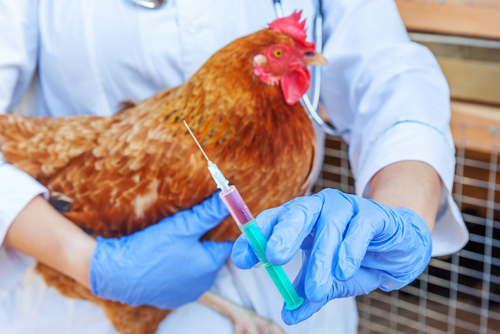
An additive Bayesian network model analyzing outbreaks of highly pathogenic avian influenza (HPAI) in layer farms (egg production) and broiler farms (poultry meat production) in Japan between 2022 and 2023 HPAI season found that layer farms, farms with large flock sizes, and farms located near extensive bodies of water, showed a higher risk with flocks getting infected with HPAI. The proximity of water bodies to farms may be a risk factor due to the presence of ducks, which can harbor influenza A and spread HPAIs to surrounding environments. Farms with these characteristics should prioritize biosecurity measures to protect their flocks from HPAI infection. [Nature Scientific Reports]
Gaps in West Nile Virus surveillance in Africa
West Nile Virus (WNV), a virus that circulates among birds, mosquitoes, and dead-end hosts, including humans, is endemic in Africa. However, its transmission risk remains unclear due to gaps in genomic surveillance and insufficient epidemiological data in 19 African countries. A systematic review found evidence of viral circulation in 39 of the 55 African countries; however, most of these countries lacked genomic data on WNV across all hosts and vectors. Underreporting of WNV cases is likely due to low clinical awareness of the disease and prioritization of other diseases of greater outbreak concern, which may conceal the true burden of disease. Comprehensive One Health surveillance systems for WNV are needed across Africa, but the first steps should include access to point-of-care diagnostics and targeted genomic surveillance in high-priority regions. [The Lancet Microbe]
Immunization coverage slipping in upper-middle- and high-income countries
New global immunization data released by the World Health Organization (WHO) and UNICEF show that the proportion of children who received the three-dose diphtheria, tetanus, and pertussis vaccine increased slightly in 2024 compared to 2023, but more than 14 million infants never received even one dose of the vaccine. This number is four million more than the 2024 target established by the WHO Immunization Agenda 2030. While support from Gavi, the Vaccine Alliance, has improved vaccination coverage in 57 low-income countries, declining coverage in upper-middle- and high-income countries threatens global progress and highlights a concerning trend in vaccine misinformation and uptake. [World Health Organization]
Low-quality antimalarials are a growing concern in Equatorial Guinea.
Nearly 60 percent of randomly sampled artemisinin-containing antimalarials (ACAs) in Equatorial Guinea in 2019 were found to be either substandard or falsified. Regional differences were observed across Equatorial Guinea, with a higher prevalence of falsified samples in mainland cities. In 2013, a similar analysis found that 9.6 percent of sampled ACA purchases were substandard or falsified, highlighting a significant rise and a concerning trend in a country with high malaria prevalence. These findings highlight an urgent need for stronger regulatory measures to improve ACA quality. [BMJ Global Health]
Integration of animal movement networks to identify disease surveillance and control
A scoping review aimed at addressing the knowledge gap between animal movement data and disease transmission dynamics found network analysis to be an effective framework in identifying high-risk pathogens spreading among livestock and poultry. Historical outbreaks have demonstrated the impact of animal diseases such as foot-and-mouth disease, HPAI, and African swine fever on food security and agricultural economies. Greater data availability has resulted in numerous studies pairing livestock and poultry traceability with network analysis to predict the dynamics of animal movement networks. This modeling and analysis can inform targeted disease surveillance and improve outbreak prevention strategies. [PLOS One]
Anthropogenic risk factors driving plague in southwest China
A cross-sectional survey of nearly 3,000 residences across southwest China found that the risk of plague occurrence decreased by 80 percent for every unit increase of improved living environment. Improving living environments was also significantly linked to a lower risk of contracting the disease across 54 villages in this study. Household sanitation and protective behavior measures were associated with a reduced risk of plague, highlighting how better living conditions directly contribute to reduced exposure of individuals to plague vectors. Incorporating anthropogenic modulators of disease dynamics into public health guidance could serve as an efficient tool for managing disease risks, such as plague, across various populations. [One Health]
Social determinants of health driving AIDS incidence in Brazil
A modelling study addressing the incidence of Acquired immunodeficiency syndrome (AIDS) among Brazil’s most vulnerable populations found that inequalities derived from various social determinants of health significantly increase the number of AIDS cases amongst the poorest subpopulations. Determinants such as income, education, sex, and race, simulated across communities to identify cumulative disease burden and avoidable cases of AIDS, saw a 39 percent reduction of AIDS incidence in a hypothetical scenario with no inequalities. If these determinants were addressed by social protection policies, the model predicted a positive spillover effect by reducing the number of AIDS cases in higher socioeconomic communities in Brazil. [BMJ Global Health]
Image from Shutterstock.