March 16, 2026
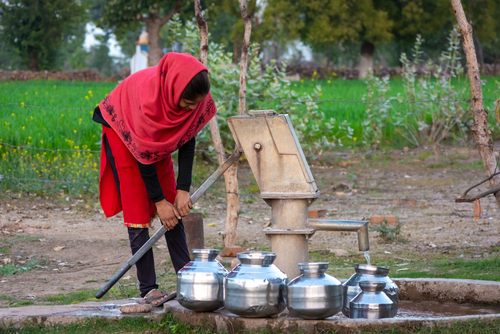
Arsenic in India’s groundwater poses a far greater health threat than previously understood.
Millions of people in India rely on hand pumps for water, unaware of the slow-moving crisis of arsenic-contaminated groundwater across the Indo-Gangetic plains. In his column, Vital Signs, OHT’s Dr. Ramanan Laxminarayan highlights that an estimated 20 to 30 million Indians may face chronic Arsenic exposure through hand pumps installed decades ago. New research shows the consequences extend beyond skin lesions and rare cancers. A study from Bangladesh shows a clear dose-response relationship between arsenic exposure and mortality, with lung and bladder cancer risks doubling or tripling at high exposure levels and cardiovascular deaths rising substantially. Studies in West Bengal confirm these patterns, with elevated cancer rates and increased prevalence of hypertension and heart disease in heavily exposed communities. [Hindustan Times]
Re-thinking healthy aging: why India needs to focus on well-being beyond 65
India has made dramatic gains in child survival, but what about the later years? A thought-provoking piece by OHT’s Dr. Ramanan Laxminarayan points out that a 65-year-old Indian today can expect to live only three years longer than at the time of Independence, a gap he traces to childhood undernutrition, unaddressed midlife risks such as tobacco and air pollution, and a health system that prioritizes hospitalization over prevention. But better health alone is not enough: India’s largely informal workforce has no safety net for old age. Dr. Laxminarayan proposes tax-funded basic pensions, government-matched savings plans for informal workers, and long-term care financing, arguing that preventing disease and securing income in old age are inseparable goals that together can allow Indians to age with dignity. [Hindustan Times]
Recurring Nipah virus infections in India reveal the need for stronger One Health surveillance.
Recurring Nipah virus infections in India are a reminder that they do not represent isolated outbreaks but ecological spillovers we need to tackle. With an alarmingly high fatality rate of 40-75 percent, the infections can cause severe respiratory illness and encephalitis with lasting neurological effects. Fruit bats are the natural reservoir, and most infections arise from zoonotic spillovers through contaminated fruit or close contact with infected individuals. In OHT’s blog, Shreyas Satish Kumar points out that environmental pressures – such as deforestation, urban expansion, and agricultural intensification – have brought bats and humans closer together. Success at containing outbreaks in Kerala, India, demonstrate that rapid detection, isolation, and contact tracing are vital, but repeated incidents highlight the need for stronger One Health surveillance. [One Health Trust]
Teens perform better on tests in the evening – here’s why.
The time of day can have a big impact on how well teenagers perform on cognitive tests. New OHT collaborative research from rural India backs that up. The analysis of over 7 years of data from over 10,000 children and adolescents aged 8-21 found that test timing matters. Compared to morning testing, midday scores on native language and math performance declined by around 0.09 and 0.10 standard deviations. Evening tests showed the opposite, scores in native language, English, math, and reasoning increased by up to 0.23 standard deviations. These patterns may reflect biological changes in circadian rhythms throughout puberty, where internal clocks naturally favor evenings as a time for enhanced alertness. [SSRN]
It is not just about fewer antibiotic prescriptions; it is about better prescribing.
Reducing antibiotic overuse is crucial to fight antibiotic resistance, but quality matters too: the right antibiotics must be given at the right dose and length. A trial across 32 health centers in Rwanda used a digital clinical decision support tool to reduce antibiotic prescriptions from 70 to 25 percent in pediatric outpatient care without worsening clinical outcomes. However, about a quarter of the antibiotics prescribed were not the ones the algorithm recommended, suggesting that technology alone cannot change ingrained prescribing habits. Researchers argue that to improve prescribing practices, decision support tools must be paired with clinician training, local adaptation, and equitable access. [PLOS Medicine]
Better diagnostic tools are needed for severe fungal infections.
A comprehensive review synthesizing findings from the World Health Organization’s landscape analysis of fungal diagnostics reveals critical gaps in our ability to detect and identify invasive fungal infections. This gap is particularly pronounced in low- and middle-income countries. Most commercially available tests require well-equipped laboratories, stable electricity, and trained personnel, making them inaccessible at primary and secondary health facilities in low-resource settings. With antifungal resistance on the rise, researchers call for investment in rapid and affordable point-of-care diagnostics to increase the capacity to detect and treat invasive fungal infections worldwide. [The Lancet Microbe]
Rising resistance to a critical tuberculosis drug in South Africa
Bedaquiline serves as a cornerstone of modern treatment regimens for tuberculosis (TB), however, resistance is a growing concern in South Africa. A recent study in the Western Cape found that 12 percent of new cases and 41 percent of follow-up cases showed bedaquiline resistance. Resistance was most common among patients with a recent history of tuberculosis treatment but was also detected in patients with no known prior episodes, suggesting possible transmission of resistant strains from person to person. Since South Africa adopted bedaquiline-based regimens as the standard of care in 2019, these findings raise concern about the long-term effectiveness of current treatment approaches and underscore the urgent need for routine resistance testing. [The Lancet Microbe]
Chikungunya research expands amid climate risks and global spread.
Once confined to tropical regions, chikungunya has evolved into a major hazard to global health, fueled by the expansion of mosquito habitats from urbanization and climate change. A review of over 8,000 scholarly articles from 2004 to 2025 showed that chikungunya research grew sevenfold annually after 2013 – indicative of the virus’s growing geographic range and recurrent outbreaks in diverse areas. With new vaccine candidates including VLA1553 appearing in recent years, research is increasingly focused on vaccine development, climate-driven transmission, and public health preparedness. However, global research cooperation is still uneven, with high-income nations producing the majority of the work while many severely impacted areas are still underrepresented in research collaborations and preparedness initiatives. [PLOS Neglected Tropical Diseases]
Major gaps in hepatitis B protection for at-risk adults in Zambia
Hepatitis B in adults is a major concern in African countries, where vaccines provide an affordable and cost-effective tool to lower infections in high-burden areas. A study of 616 high-risk adults in Lusaka, Zambia (including healthcare professionals, contacts of infected individuals, and HIV-positive individuals), evaluated hepatitis B immunity and vaccination compliance. Half of the participants showed no signs of immunity, and only 38 percent had protective antibodies. While nearly all eligible participants accepted the first vaccine dose, just one in five completed the full three-dose series. These findings highlight significant immunity gaps and emphasize the need for better program design, community outreach, and behavioral strategies to increase adult hepatitis B vaccine uptake and completion. [PLOS One]
Image from Shutterstock