November 18, 2025
OHT’s Dr. Samantha Serrano has conducted qualitative research on the human rights, healthcare access, and experiences of people with disabilities in Guatemala, Brazil, and the United States. In this blog, she provides an analysis of how antimicrobial resistance (AMR) can disproportionately impact the lives of people with disabilities and how social, economic, and health disparities faced by people with disabilities can exacerbate the emergence and spread of AMR, citing peer-reviewed research and detailing observations from her previous fieldwork.
What AMR and Disability Have in Common
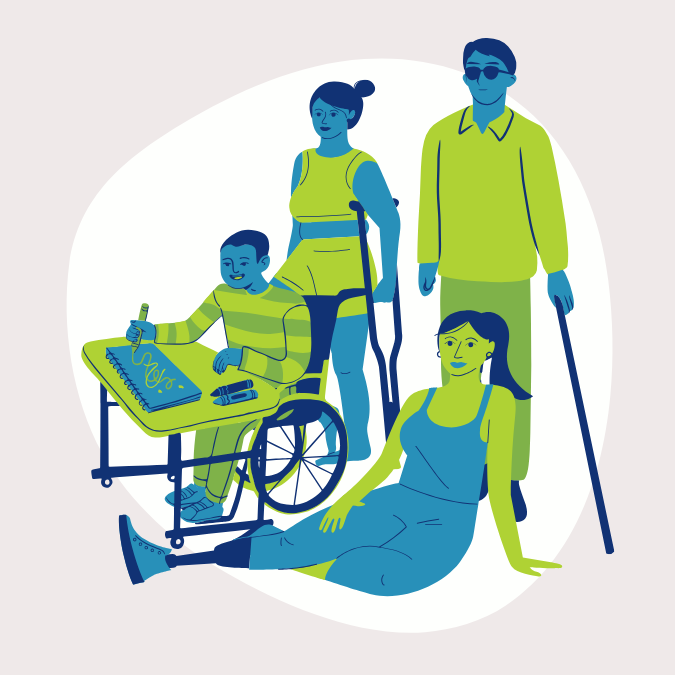
People with disabilities, as a population group, are unique in that anyone can become a part of this marginalized part of society at any point in their lifetime. A genetic alteration, a complicated pregnancy or birth, an accident, an infection, a stroke, chronic disease, or neural degeneration can impair people and cause them to move, think, see, communicate, or breathe differently in this world. The World Health Organization (WHO) estimates that one in six people on the planet live with a disability, and in an increasingly aging population, there is a higher likelihood of developing an impairment with age.
Antimicrobial resistance (AMR) makes infections difficult to treat. It increases disease severity and risk of death. Like disability, AMR knows no borders: anyone can get an antimicrobial-resistant infection at any point in their lifetime. However, certain population groups are more vulnerable to AMR: the very old, the very young, the immunocompromised, and people living in low-resource settings or poverty. These very same groups are also more vulnerable to becoming disabled.
It’s no surprise to those familiar with AMR that these drug-resistant infections can cause disabilities. Disability caused by these infections and productivity losses are common measures of the burden of AMR, often expressed as DALYs (disability-adjusted life years). Difficult-to-treat infections can necessitate the amputation of appendages or weaken people to the point of needing a wheelchair or other support to move around. Infections can lead to vision or hearing loss or cause brain damage, resulting in cognitive impairment. They can impact the lungs or airways, necessitating the use of medical oxygen. The psychological toll of these infections can lead to mental illnesses, including depression and anxiety.
When we discuss disability in the context of AMR and the health sphere in general, the discussion inevitably steers toward what we can do to prevent it. This is a valid point. We know health inequities and the spread of certain illnesses can cause impairments that shorten life spans and impact people’s overall well-being. However, the goal of preventing disabilities (as defined in the medical field), frequently excludes those already living with impairments that impact not only their health but also access to healthcare and other vital services and resources. Often, the impairments people have are blamed for a lack of access to healthcare and poor health outcomes. However, social, economic, and architectural barriers, along with discrimination and bias against people with disabilities (also known as ableism), exacerbate health disparities faced by this population.
Accessibility to Care
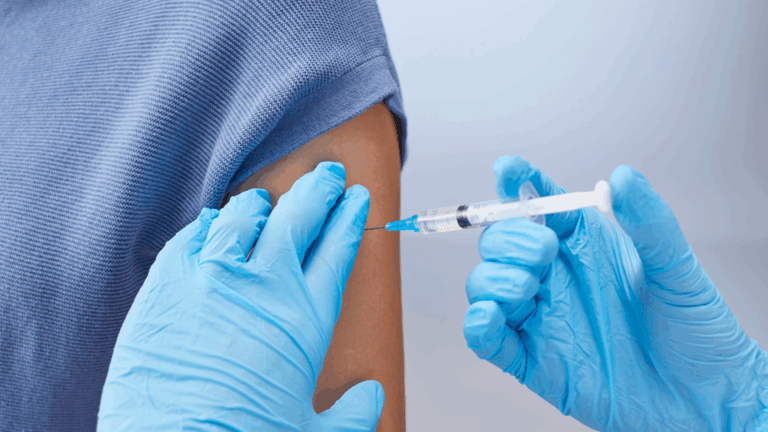
People with disabilities often face barriers to accessing healthcare centers and health campaigns. For example, due to a lack of sidewalks, smooth terrain, or accessible transportation, it may be nearly impossible for a person with a physical disability or visual impairment to reach a medical clinic in a timely manner to treat an infection or receive preventive medical services such as vaccines, which have been shown to reduce antibiotic use and the spread of drug-resistant germs.
Spaces designated for and information about immunization campaigns and primary healthcare centers and hospitals are often inaccessible for people with diverse disabilities. In 2018, while conducting qualitative research about migrant mothers’ experiences in healthcare in São Paulo, Brazil, I accompanied a mother, Noelia, and her 18-year-old daughter, Elisabeth, in various healthcare settings and consultations.* Elisabeth has cerebral palsy and lives with several impairments, including hearing and cognitive impairments. She also needs to use a wheelchair to move around places. At 18 years old, Elisabeth had not received most recommended childhood vaccines because her family could not easily access health centers with her in her wheelchair in Bolivia, from where she had migrated.
UTIs
In many public healthcare clinics in São Paulo, restrooms were inaccessible to Elisabeth in a wheelchair. Unable to use the facilities without assistance, she couldn’t enter, or there wasn’t enough space for her mother to enter with her. A lack of accessible restrooms impacts fluid intake and increases individuals’ vulnerability to urinary tract infections (UTIs). Additionally, people with physical disabilities are at a higher risk of UTIs because of factors including immobility and urinary incontinence. This increased vulnerability to UTIs is especially alarming when considering that the 2025 WHO Global Antibiotic Resistance Surveillance Report found that one in three UTIs is now resistant to at least one antibiotic.
Access to WASH
People with physical and/or intellectual disabilities like Elisabeth are often dependent on caregivers to complete necessary hygiene activities –such as using the restroom, showering, or handwashing– which can limit restroom and hygiene access and increase the risk of infection if the caregiver does not execute the tasks properly. People with disabilities also face several other barriers to accessing water, sanitation, and hygiene (WASH). A 2024 review highlighted that people with disabilities in low- and middle-income countries (LMICs) are disproportionately affected by inadequate access to WASH services. Furthermore, the scarcity of controlled studies to assess the impact of disability-inclusive WASH interventions limited their prioritization for funding and political support. Access to WASH infrastructure – such as toilets, hand-washing stations, and waste disposal – is one of the most important interventions for the prevention of the emergence and spread of antimicrobial-resistant infections. The 2024 Lancet Series on AMR shows that improving WASH infrastructure in LMICs could prevent 247,800 AMR-related deaths each year.
Pneumonia
Communication challenges often exacerbate the problem. Individuals with speaking and/or cognitive impairments frequently depend on caregivers to recognize subtle signs of infection, such as restlessness, irritability, or fever. People with severe intellectual disabilities and some physical disabilities are more likely to get pneumonia than those without such disabilities as well. This is frequently because they may have other health issues, such as immobility, acid reflux, muscle stiffness, spine problems, or trouble swallowing. Even though they are at greater risk for pneumonia—which often requires antibiotics for treatment—studies have found that these individuals may also be more likely to receive antibiotics when they don’t need them. The increased risk of pneumonia, coupled with communication challenges, can make it harder for doctors to tell if someone with a disability has a lung infection. In the absence of reliable diagnostic options, doctors might prescribe antibiotics earlier than they would for other patients, which can contribute to antibiotic overuse – a key driver of AMR.
Pneumonia is the leading infectious cause of death in children under five years old, accounting for 19 percent of deaths in 2019. Unfortunately, only one-third of children with bacterial pneumonia received the antibiotics they needed in 2019. When health resources, including medicines, are limited, people with disabilities are at a higher risk of exclusion from medical treatments. Disability is often equated with poor health and poor quality of life and public health strategies tend to prioritize people perceived as healthy with more potential for productivity and “good quality of life”. This unjust, systemic exclusion was made especially apparent during the COVID-19 pandemic.
Institutions for People with Disabilities
As people with disabilities are often dependent on caregivers or aid workers to complete vital tasks for everyday living –such as feeding, using the toilet, and accessing the community– it is difficult for them to isolate themselves if they have an infection or isolate from their caregiver or aid worker(s) if they are ill, exacerbating the spread of infections as well as their vulnerability to infections. In many countries and regions of the world, people with disabilities whose families cannot provide the care they need are institutionalized in long-term care facilities or day care facilities. Frequently, these institutions are overcrowded, lack basic hygiene, and generally offer treacherous living conditions. During fieldwork I conducted in urban Guatemala in 2010 and 2011, I visited multiple institutions housing people with intellectual disabilities and mental illnesses. At one institution for children with profound intellectual disabilities, up to 70 young residents were cared for in a small room by only 2 staff members, highlighting severe overcrowding, limited support, and unmet care needs. During my fieldwork, these spaces were recognized as hotbeds for infections.
The social abandonment of people with disabilities in institutions or on the streets due to discrimination, stigma, and socioeconomic inequity is commonplace in many parts of the world and leaves this group increasingly vulnerable to infections and reduces their access to healthcare. In a 2025 study from China on people in a psychiatric hospital for men, 43 percent of the patients and 23 percent of the staff tested in the institution were positive for tuberculosis (TB). Upon genomic testing, 3 out of 160 of the tested patients were found to have drug-resistant TB. A 2024 study on AMR and infection prevention in care centers for people with intellectual disabilities in the Netherlands found that medically untrained professionals comprise most of the workforce within these spaces, and they frequently are uneducated about infection prevention for often medically fragile people with disabilities. The researchers found that they also didn’t have accessible educational resources on hygiene and personal care to share with their patients or residents with intellectual disabilities.
Stigma, Sexual Violence, and STIs
People with disabilities are among the most vulnerable groups to sexual violence and manipulation and are often denied or receive limited or inadequate sexual education, contraceptives, sexual autonomy, and sexual health services. In 2011 and 2012, I observed a sexual education course for adults with disabilities run by a nonprofit in Texas, United States. During the course, many students, often over 40 years old, revealed that they had never had any prior sexual education, and they recounted multiple experiences with sexual coercion and violence. It is common for families and authorities to not believe people with disabilities when they report sexual violence because they are regularly dehumanized, desexualized, infantilized, or are perceived as confused. Women with disabilities are two to four times more likely to experience intimate partner violence than those without disabilities.
In my research involving people with intellectual disabilities and mental illnesses in Guatemala, social workers reported that sexual violence against girls and boys with disabilities was almost never reported, and accounts of sexual violence were rarely believed unless the victims became pregnant or contracted a sexually transmitted infection (STI). STIs can be asymptomatic and lead to serious health problems or death. Neisseria gonorrhoeae, the pathogen responsible for the STI gonorrhea, has become increasingly resistant to the antibiotics used to treat it. A lack of access or denial of sexual health services and education, stigma against the sexuality of people with disabilities, and increased vulnerability to sexual violence not only endanger this group but also facilitate the spread of infection and hinder timely detection and treatment, potentially exacerbating the AMR problem.
Poverty
It’s important to note that people with disabilities often face multiple dimensions of disadvantages, discrimination, and inequity that can impact their vulnerability to drug-resistant infections. Around 80 percent of people with disabilities live in LMICs and are frequently among the poorest in their communities. They often face low levels of employment, less education, poorer health, and a lack of accessible housing and transportation, translating to higher rates of poverty. On average, people with disabilities die up to 20 years earlier than those without disabilities and have twice the risk of developing conditions, including asthma, diabetes, stroke, obesity, and poor oral health. Multidimensional poverty, like that endured disproportionately by people with disabilities, is a major driver for the emergence and spread of antimicrobial-resistant infections.
Improving the Lives of People with Disabilities and Controlling AMR
As discussions around AMR begin to address diverse intersections of this multidimensional issue including gender, migration, conflict, and poverty – disability must be included in these conversations and examined as well. With rising rates of AMR around the world and a diverse and large population of people with disabilities at increased risk of contracting these difficult-to-treat infections, policies and interventions for AMR mitigation need to be designed with the inclusion of people with disabilities in mind. Measures must be taken to provide accessible information on infection prevention, diagnosis, and antimicrobial stewardship across disability services and institutions. Healthcare systems and centers need to do more to integrate and serve people with disabilities. Policymakers and global health funders must ensure people with disabilities are included in health initiatives, surveillance data, and programs. Following the adoption of the 2024 United Nations Declaration on AMR and with work underway to build a new Global Action Plan on AMR, we have to ensure that interventions and programs are recommended through a lens of accessibility for people with disabilities to truly control this growing crisis. Examining the intersection of AMR and people with disabilities provides an example of how promoting more accessible communities, enacting policies to fight discrimination and stigmas, and reducing economic and health disparities help everyone.
*Elisabeth and Noelia are pseudonyms.
Edited by Erta Kalanxhi