June 06, 2025
On June 6, 2025, experts from across India gathered at Christian Medical College (CMC) Vellore for the Global Antibiotic Resistance Partnership (GARP)-India workshop, hosted by the One Health Trust and CMC Vellore. According to the Institute of Health Metrics and Evaluation, India faced an estimated 297,000 deaths directly attributable to antimicrobial resistance (AMR) in 2019, with over a million more linked to resistant infections. AMR occurs when microorganisms, including bacteria, develop resistance to the drugs designed to stop them, such as antibiotics. The workshop focused on defining concrete actions that could transform the country’s approach to its growing AMR crisis.
The hybrid event welcomed leading clinicians, economists, public health professionals, and researchers from diverse sectors. Together, they engaged in candid, evidence-based discussions on India’s challenges and strengths in responding to AMR, with a sharp focus on how vaccination could be better deployed as part of the country’s strategy.
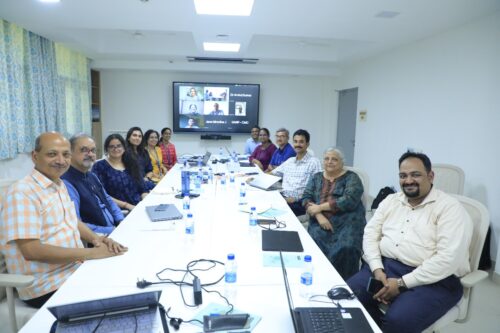
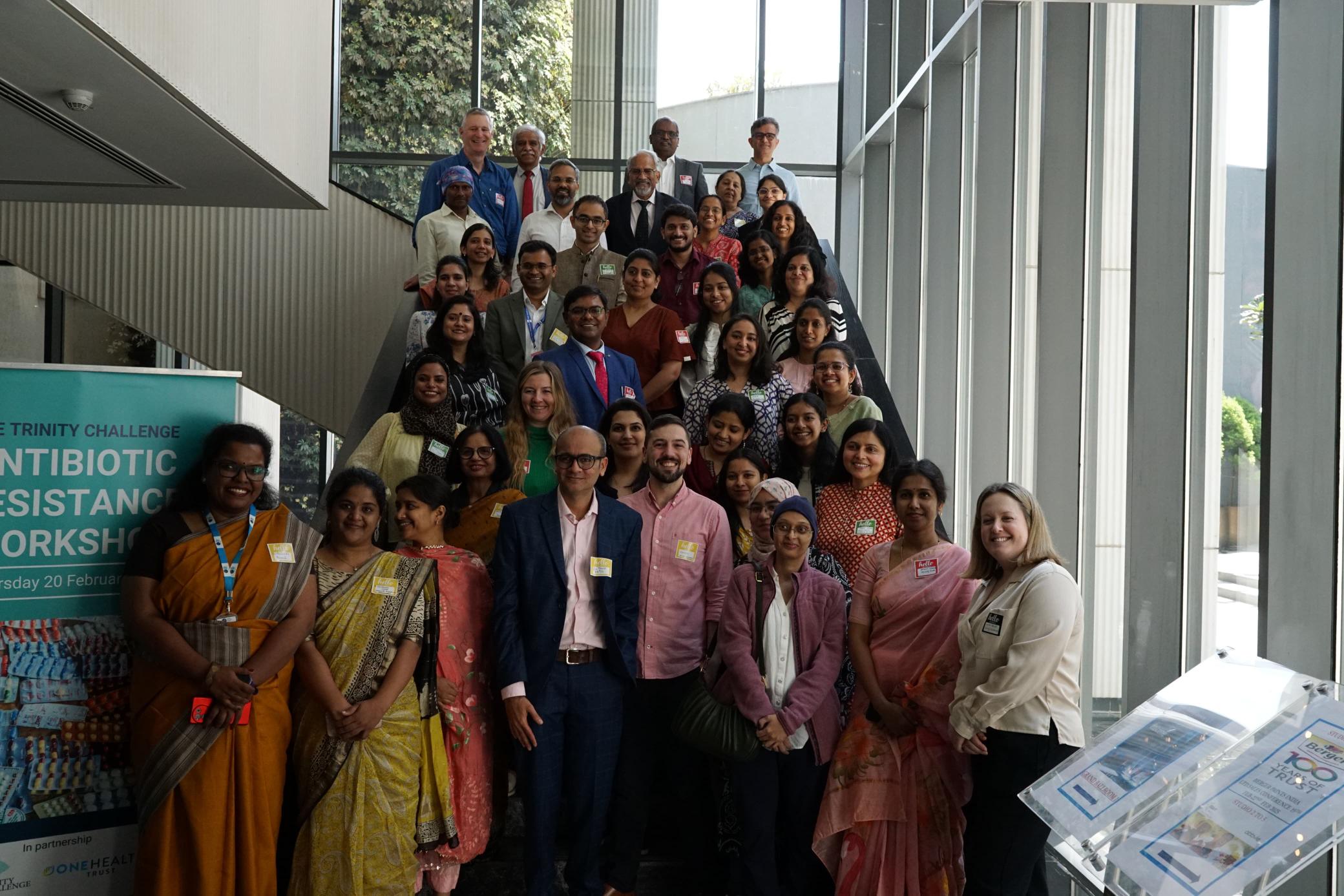
Image of workshop attendees in-person and online
Photo Credit: CMC Vellore
The day opened with a welcome message from Dr. Priscilla Rupali, the head of the Department of Infectious Diseases at CMC Vellore, who emphasized the importance of a multisectoral, data-driven approach to AMR. OHT’s Rishiraj Bhagawati followed with an overview of GARP’s origins and its expansion across Africa and Asia. He introduced the “One Health” model, showing how an intersectoral approach, including human, animal, and environmental health, is key to any sustainable AMR control strategy.
Dr. V. Ramasubramanian, infectious disease specialist at Apollo Hospitals, Chennai, highlighted how vaccines reduce both infection incidence and the need for antibiotics. He stressed the importance of expanding vaccination beyond children, particularly for vulnerable adult populations.
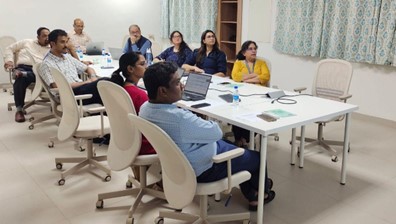
The audience during Dr. Gagandeep Kang’s presentation about the rotavirus vaccine from its clinical trial to policy implementation
Photo Credit: CMC Vellore
Dr. Gagandeep Kang, the Director of Enterics, Diagnostics, Genomics & Epidemiology at the Gates Foundation, presented the history of the rotavirus vaccine in India, emphasizing domestic innovation, public-private partnerships, and phased rollouts. Her session illustrated how local scientific leadership can translate into large-scale policy.
Prof. Rajib Dasgupta, Professor and Chairperson at the Centre of Social Medicine Community Health at Jawaharlal Nehru University, explored the challenges of vaccine prioritization for policymakers, calling for alignment between safety, economics, regulation, and implementation goals. OHT President, Dr. Ramanan Laxminarayan, spoke about compelling cases for adult vaccination as a cost-effective AMR strategy, citing vaccines such as those for typhoid, pneumonia, influenza, and respiratory syncytial virus (RSV) as top candidates.
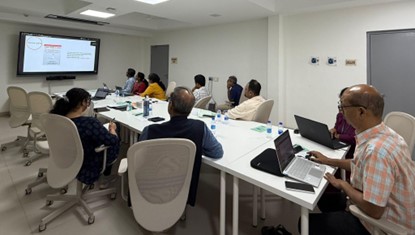
The audience during Dr. Winsley Rose’s presentation addressing vaccine hesitancy
Photo Credit: CMC Vellore
Dr. Winsley Rose, a Professor of Pediatrics at CMC Vellore, addressed adult vaccine hesitancy, pointing to the need for stronger communication strategies, trusted messengers, and frontline provider training. Dr. Santosh Taur, the Director of Medical Affairs, Vaccines, Rare Diseases & Digital at Pfizer Limited, India, discussed India’s manufacturing leadership, spotlighting innovations such as the pneumococcal conjugate vaccine that protects against 20 different types of Streptococcus pneumoniae (PCV-20) and the role of serotype surveillance.
OHT Fellow and Director of Partnerships, Dr. Erta Kalanxhi, shared estimates on the impact of a maternal Klebsiella pneumoniae vaccine, especially for reducing neonatal sepsis and AMR in low-and middle-income countries. The day closed with Dr. Mohammad Shakeel, an Assistant Professor at the Department of Infectious Diseases at CMC Vellore, who highlighted the importance of equity in vaccine access, and the need to scale production and ensure affordability.
On the second day of the workshop, the focus turned to refining the draft policy brief. Participants emphasized that vaccines should be viewed as a core pillar in India’s AMR control strategy. Discussions centered on prioritization, particularly for adult-targeted vaccines including the typhoid conjugate vaccine (TCV) and pneumococcal conjugate vaccine (PCV), and the urgent need to reduce overuse of antibiotics in cases such as fever syndromes, often mislabeled as typhoid.
Participants agreed on targeting vulnerable adults while broadly expanding access. The launch of PCV-20 spurred a debate on feasibility and affordability, alongside calls to reintroduce adolescent and catch-up immunization programs. There was a strong emphasis on presenting the policy brief to key stakeholders with clearly articulated feasibility and impact data.
Participants discussed the necessity for real-time AMR surveillance in vaccinated populations, investment in affordable rapid diagnostics to better differentiate between viral and bacterial infections and the importance of tailoring vaccine rollout to regional disease patterns.
The workshop was uniquely productive for cross-disciplinary engagement. The discussions sharpened the working policy brief into a more impactful document, tailored to India’s AMR priorities. The final recommendations now better reflect national-level evidence, implementation feasibility, and the need to communicate urgency without compromising clarity. The workshop not only advanced participants’ understanding of vaccines and AMR but also demonstrated how locally grounded insights can shape policies that respond to a country’s specific AMR burdens.
By the close of the event, there was a strong consensus: India must adopt a National Adult Immunization Policy that prioritizes AMR mitigation. The finalized policy brief, informed by this workshop, will provide a roadmap for action that is not only strategic but also deeply rooted in the Indian context.
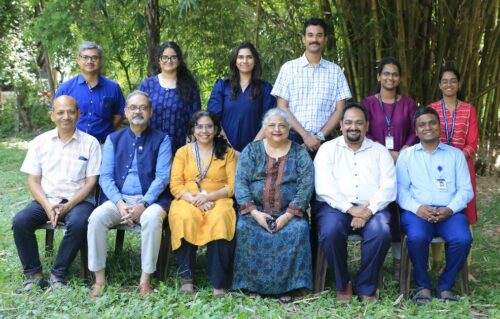
The in-person workshop attendees at CMC Vellore from left to right: top row – Dr. Sagar Khadanga, Bhumika Shori, Simran More, Rishiraj Bhagawati, Jane Miracline John, Dr. Uradi Saraswathi; bottom row – Dr. Rajib Dasgupta, Dr. Anuj Sharma, Dr. Priscilla Rupali, Dr. Sangeeta Sharma, Dr. Umang Agarwal, Dr. Prasanna Kumar
Photo Credit: CMC Vellore
Guest Blogger

Bhumika Shori is a summer 2025 intern at the One Health Trust in Bangalore, India. As a part of the Global Antibiotic Resistance Partnership project, she contributes to policy-driven initiatives that highlight the role of vaccination in addressing antimicrobial resistance. Bhumika is currently pursuing a major in Molecular Biology and minors in Statistics & Machine Learning and Global Health Policy at Princeton University. Her research interests include interdisciplinary approaches to global health.