September 24, 2026
Vaccines to Control Antimicrobial Resistance in Mozambique: Projections from mathematical models and evidence from clinical studies
Vaccines help to limit the spread of drug-resistant illnesses as well as antibiotic use.
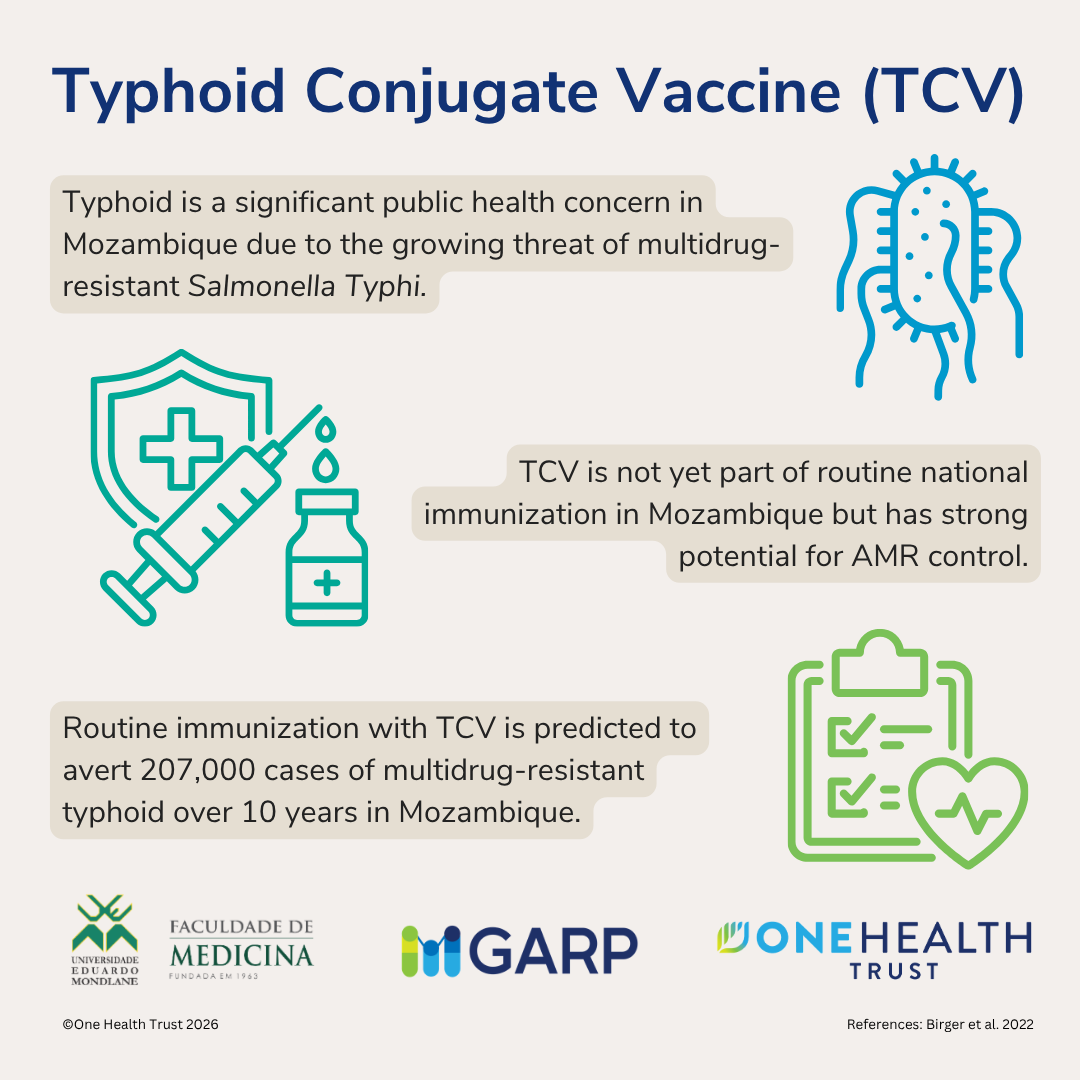
Typhoid Conjugate Vaccine (TCV)
- Typhoid is a significant public health concern in Mozambique due to the growing threat of multidrug-resistant Salmonella Typhi.
- TCV is not yet part of routine national immunization in Mozambique but has strong potential for AMR control.
- Routine immunization with TCV is predicted to avert 207,000 cases of multidrug-resistant typhoid over 10 years in Mozambique
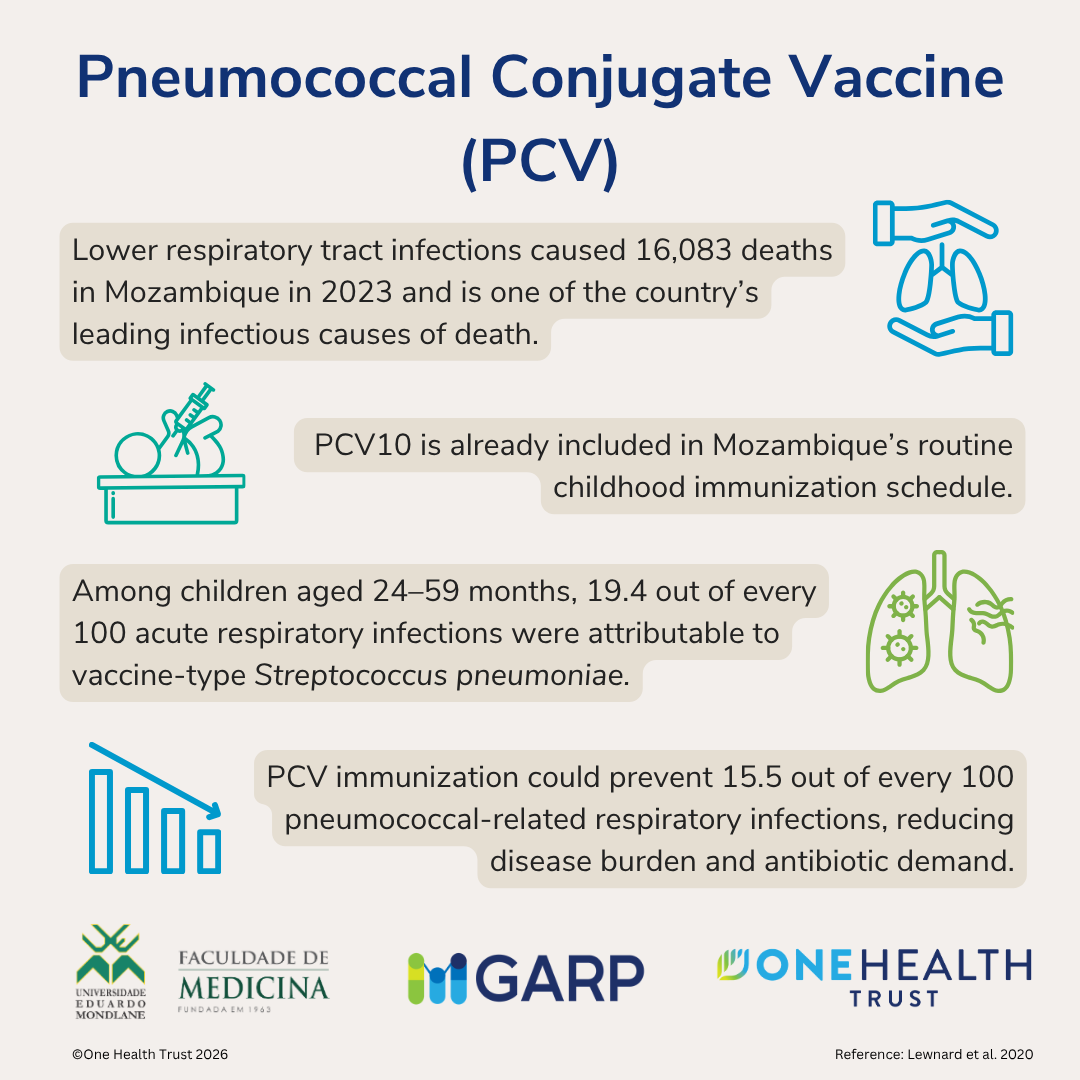
Pneumococcal Conjugate Vaccine (PCV)
- Lower respiratory tract infections caused 16,083 deaths in Mozambique in 2023 and is one of the country’s leading infectious causes of death.
- PCV10 is already included in Mozambique’s routine childhood immunization schedule.
- Among children aged 24–59 months, 19.4 out of every 100 acute respiratory infections were attributable to vaccine-type Streptococcus pneumoniae.
- PCV immunization could prevent 15.5 out of every 100 pneumococcal-related respiratory infections, reducing disease burden and antibiotic demand.
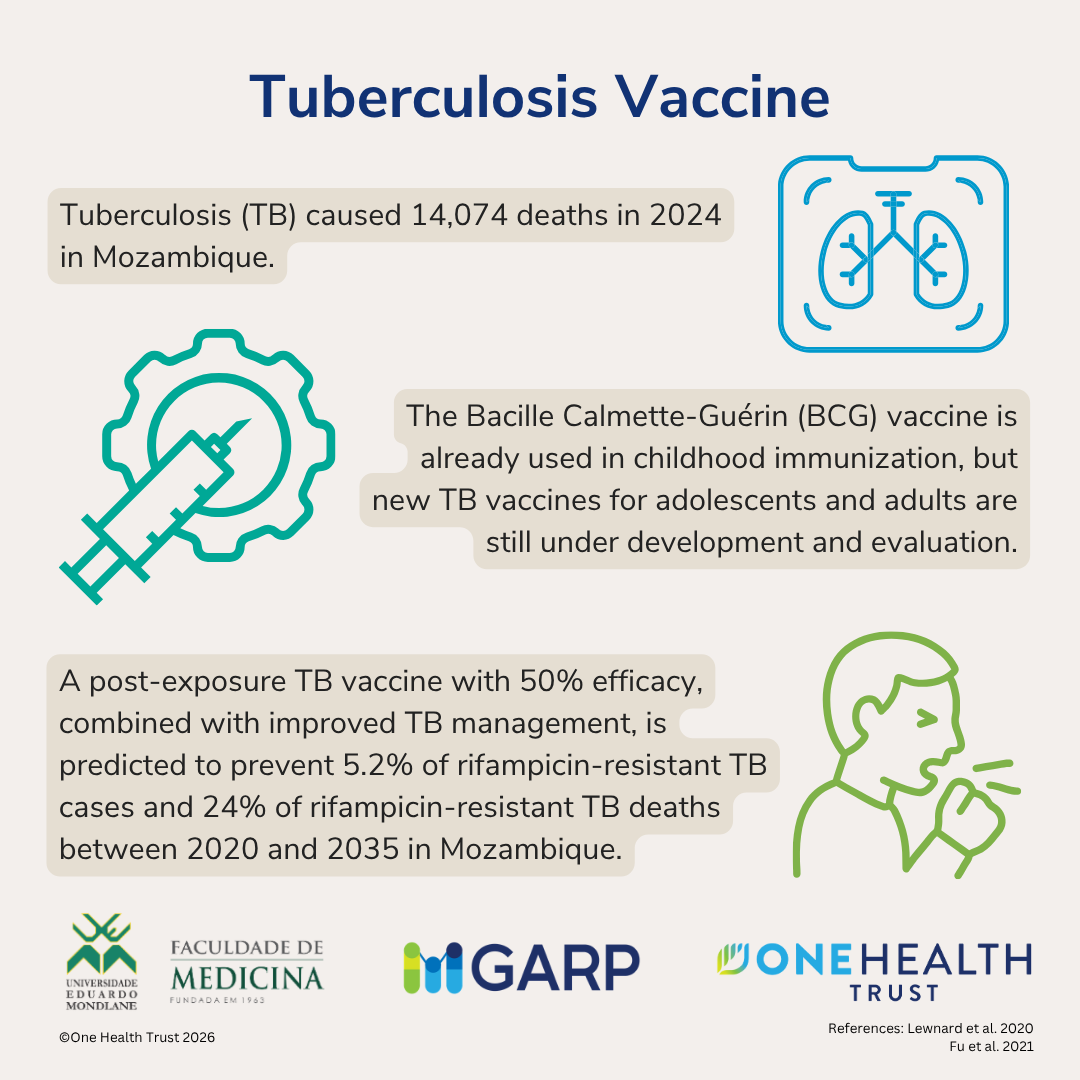
Tuberculosis Vaccine
- Tuberculosis (TB) caused 14,074 deaths in 2024 in Mozambique.
- The Bacille Calmette-Guérin (BCG) vaccine is already used in childhood immunization, but new TB vaccines for adolescents and adults are still under development and evaluation.
- A post-exposure TB vaccine with 50% efficacy, combined with improved TB management, is predicted to prevent 5.2% of rifampicin-resistant TB cases and 24% of rifampicin-resistant TB deaths between 2020 and 2035 in Mozambique.
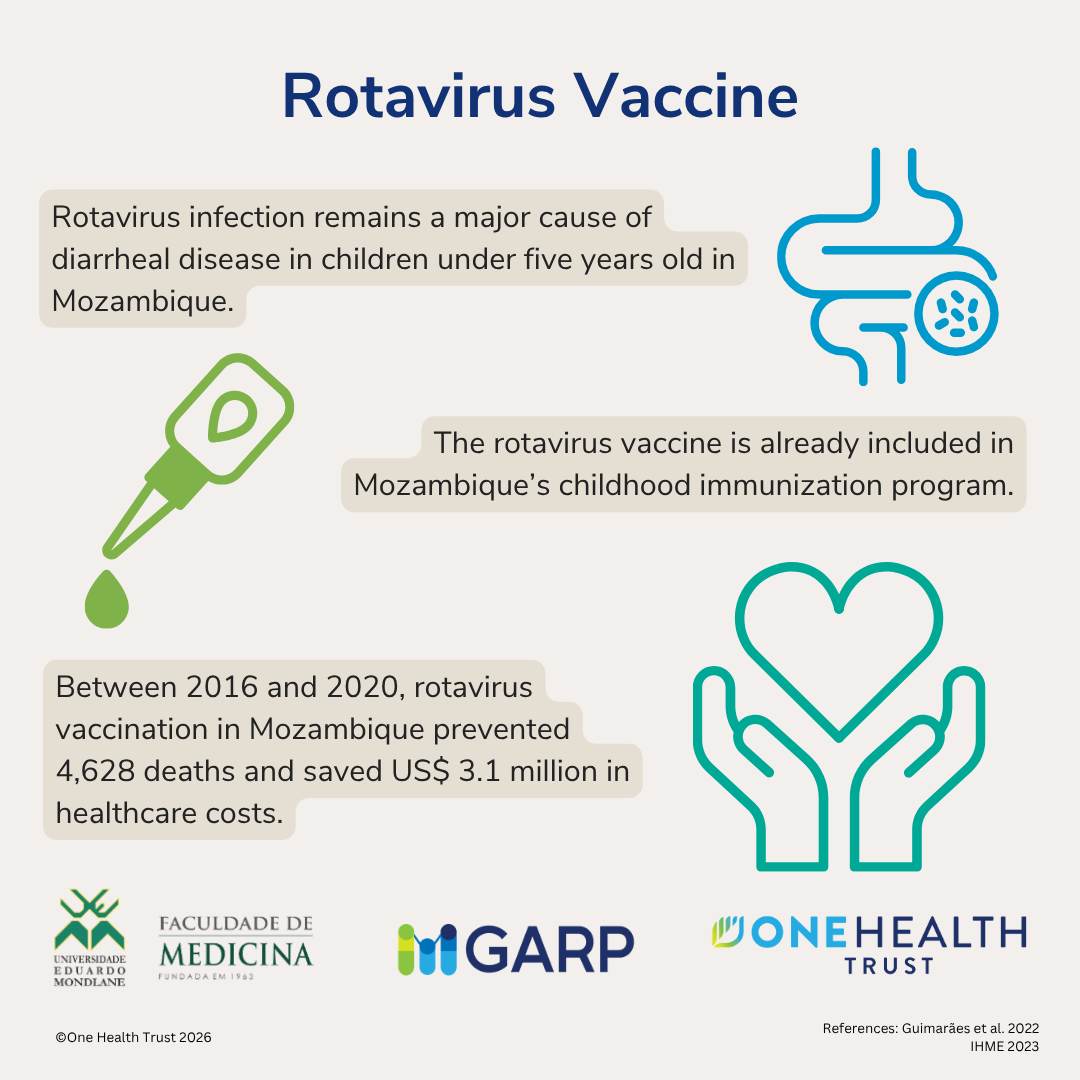
Rotavirus Vaccine
- Rotavirus infection remains a major cause of diarrheal disease in children under five years old in Mozambique.
- The rotavirus vaccine is already included in Mozambique’s childhood immunization program.
- Between 2016 and 2020, rotavirus vaccination in Mozambique prevented 4,628 deaths and saved US$ 3.1 million in healthcare costs.
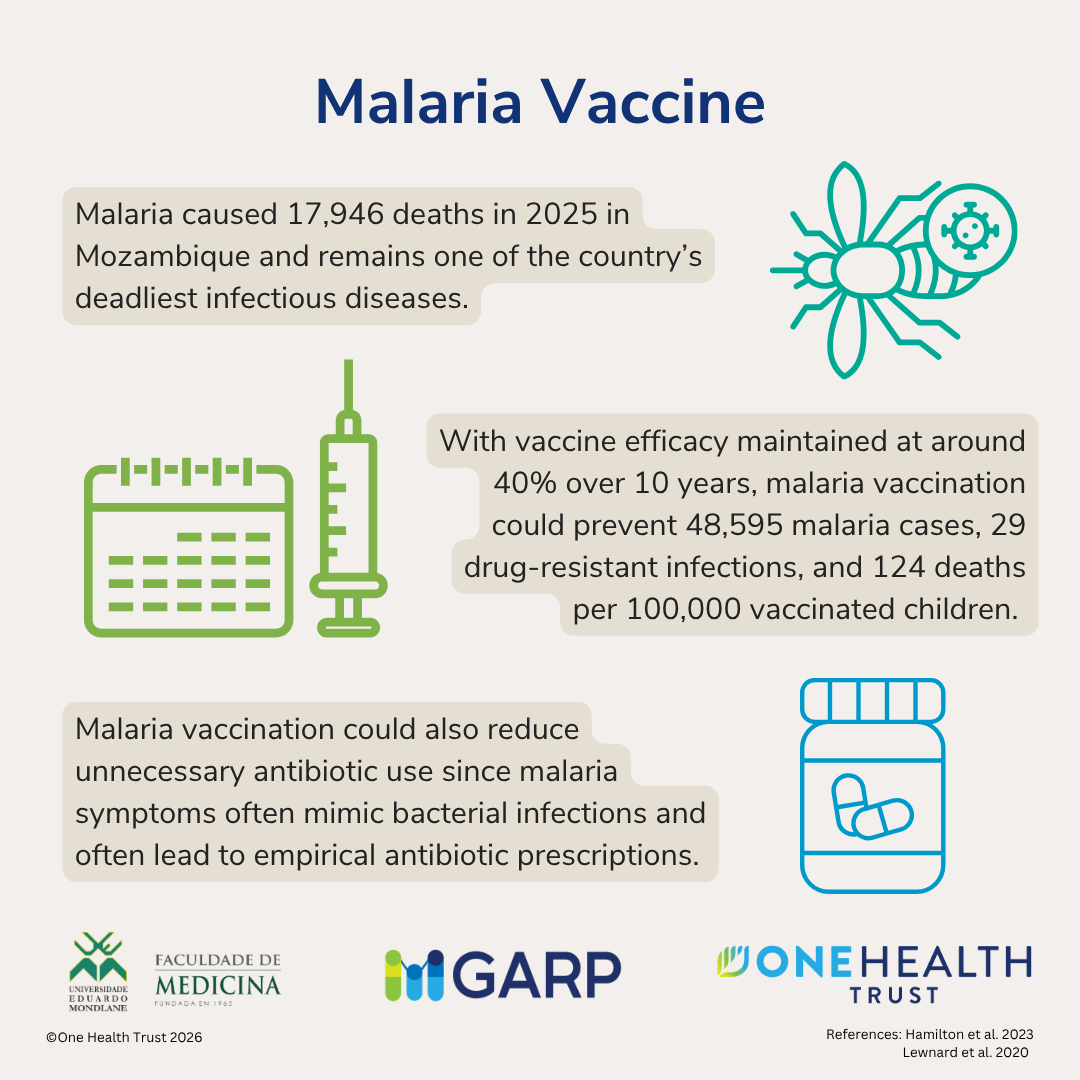
Malaria Vaccine
- Malaria caused 17,946 deaths in 2025 in Mozambique and remains one of the country’s deadliest infectious diseases.
- With vaccine efficacy maintained at around 40% over 10 years, malaria vaccination could prevent 48,595 malaria cases, 29 drug-resistant infections, and 124 deaths per 100,000 vaccinated children.
- Malaria vaccination could also reduce unnecessary antibiotic use since malaria symptoms often mimic bacterial infections and often lead to empirical antibiotic prescriptions.