June 25, 2026
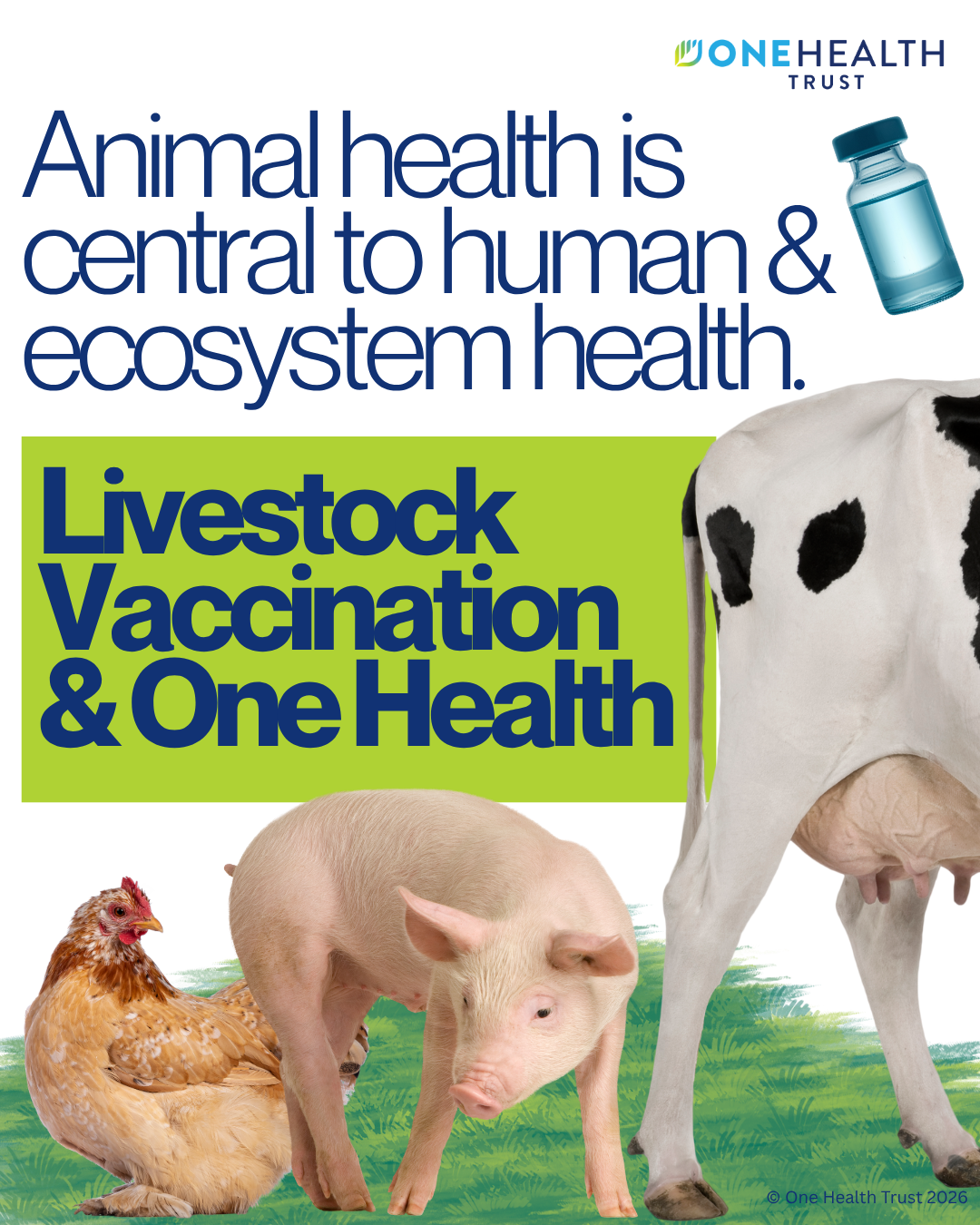
Animal health is central to human & ecosystem health.
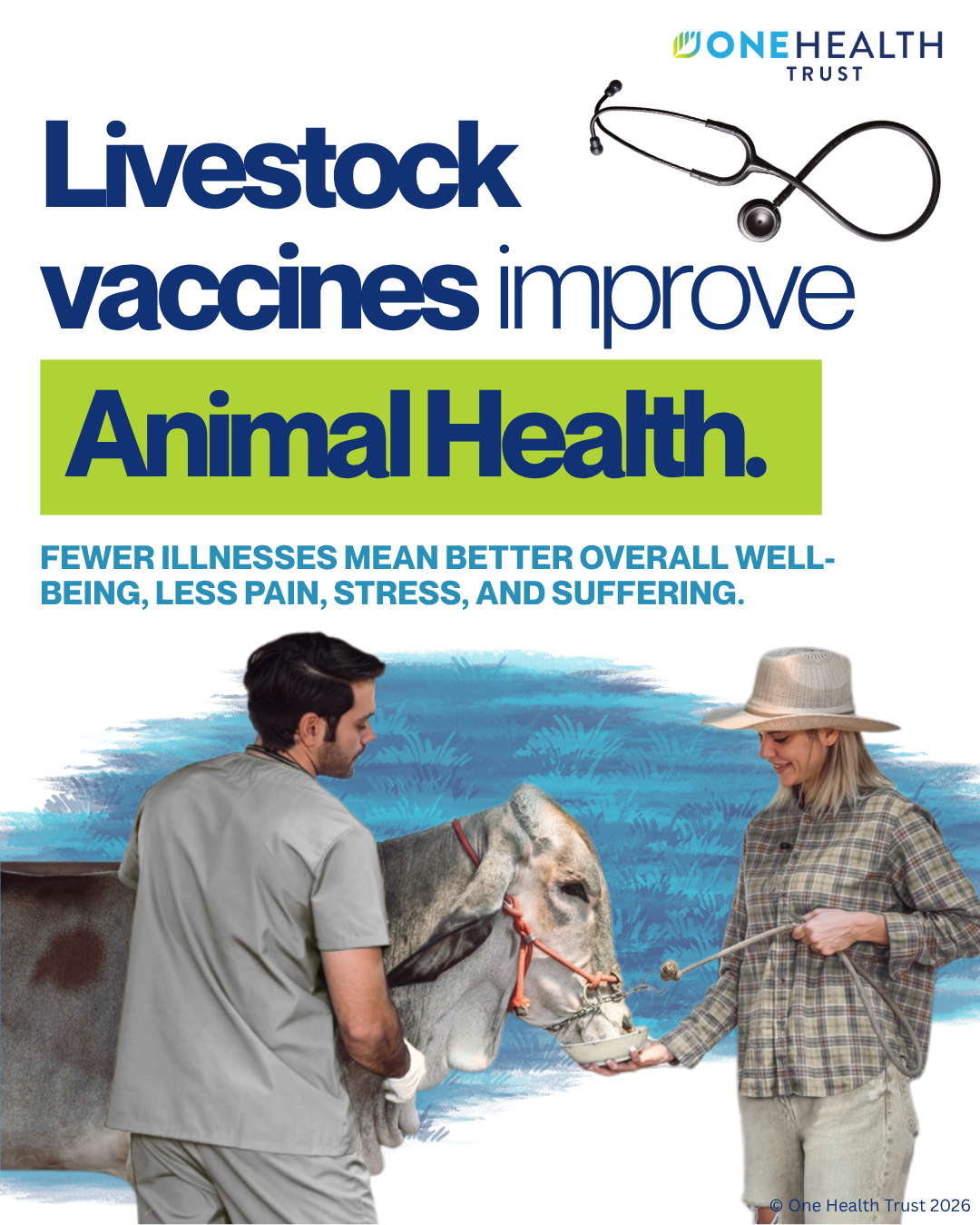
Livestock vaccines improve animal health.
- Fewer illnesses mean better overall well-being, less pain, stress, and suffering.
- Livestock vaccines control the spread of infections to humans.
- Vaccination can stop disease transmission cycles between animals, wildlife, and people, reducing outbreaks of zoonotic diseases.
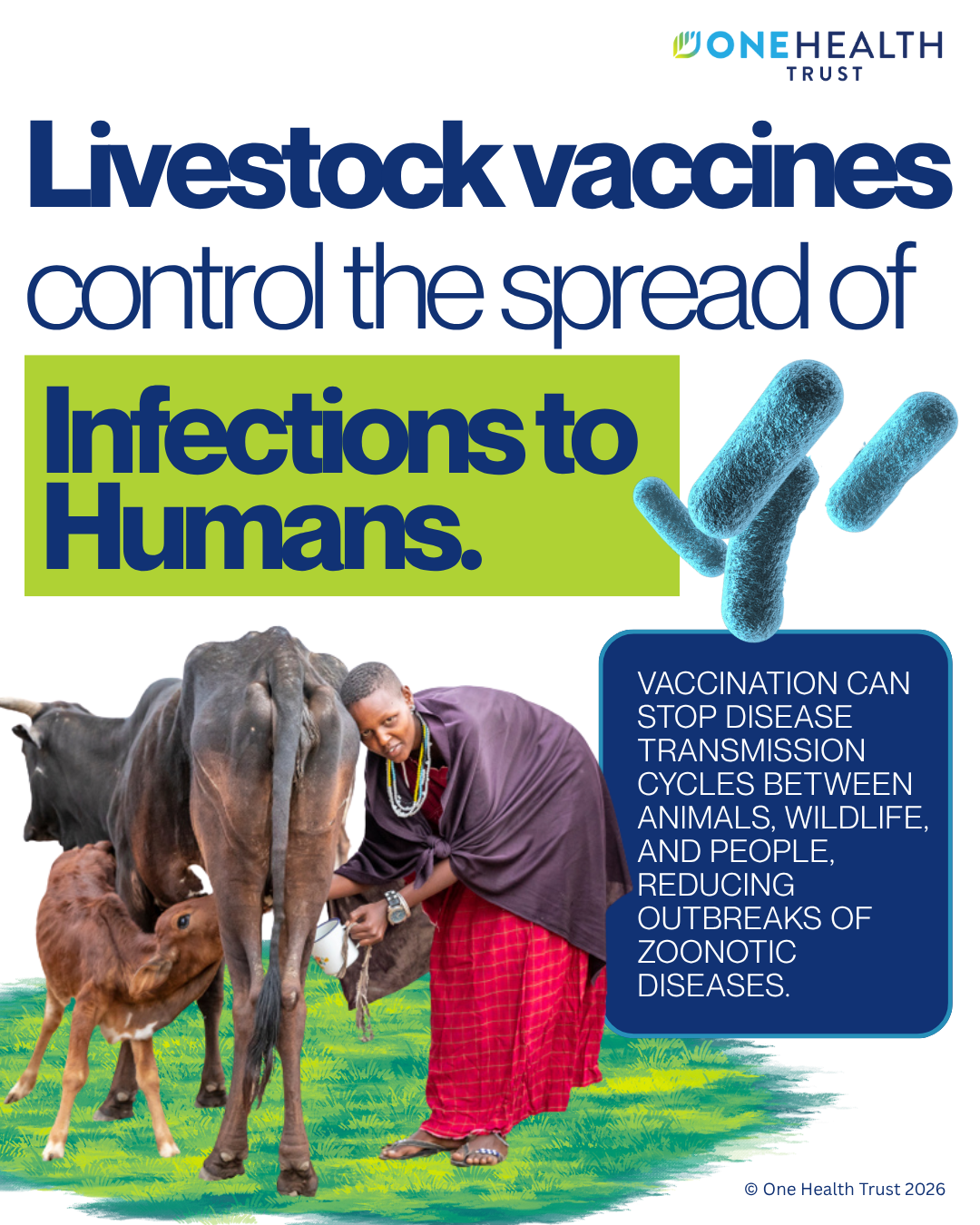
Livestock vaccines control the spread of infections to humans.
- Vaccination can stop disease transmission cycles between animals, wildlife, and people, reducing outbreaks of zoonotic diseases.
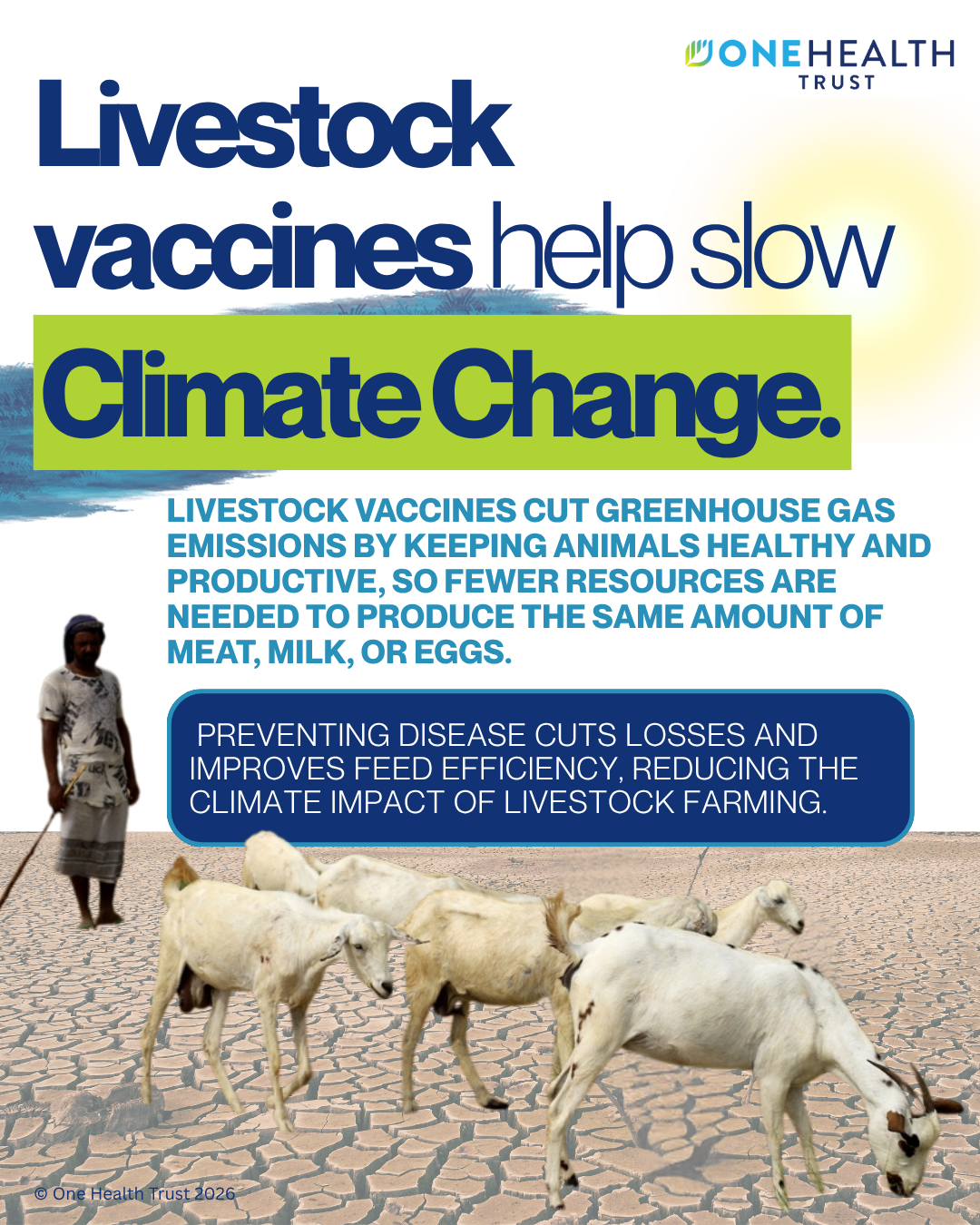
Livestock vaccines help slow climate change.
- Livestock vaccines cut greenhouse gas emissions by keeping animals healthy and productive, so fewer resources are needed to produce the same amount of meat, milk, or eggs.
- Preventing disease cuts losses and improves feed efficiency, reducing the climate impact of livestock farming.
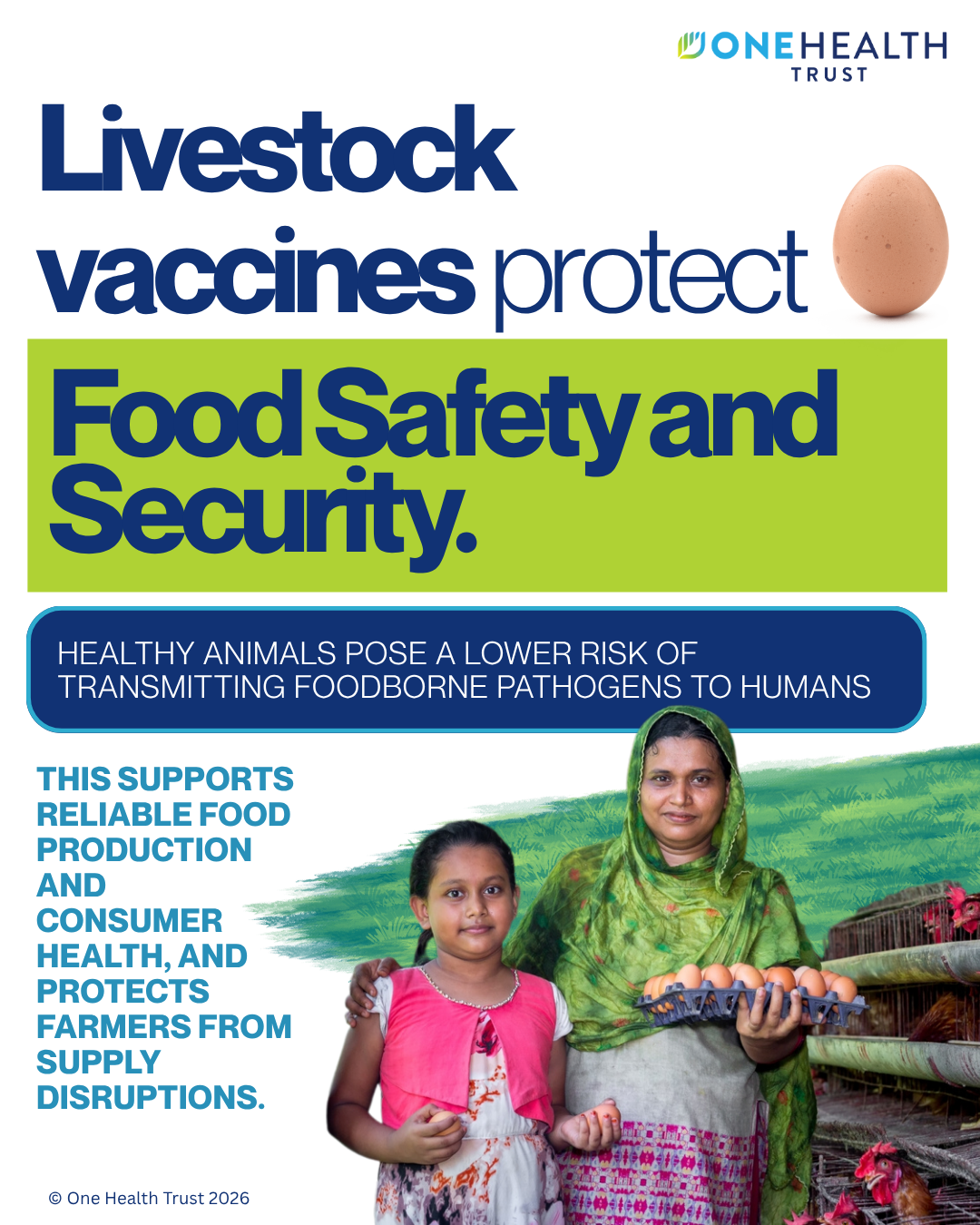
Livestock vaccines protect food safety and security
- Healthy animals pose a lower risk of transmitting foodborne pathogens to humans
- This supports reliable food production and consumer health and protects farmers from supply disruptions.
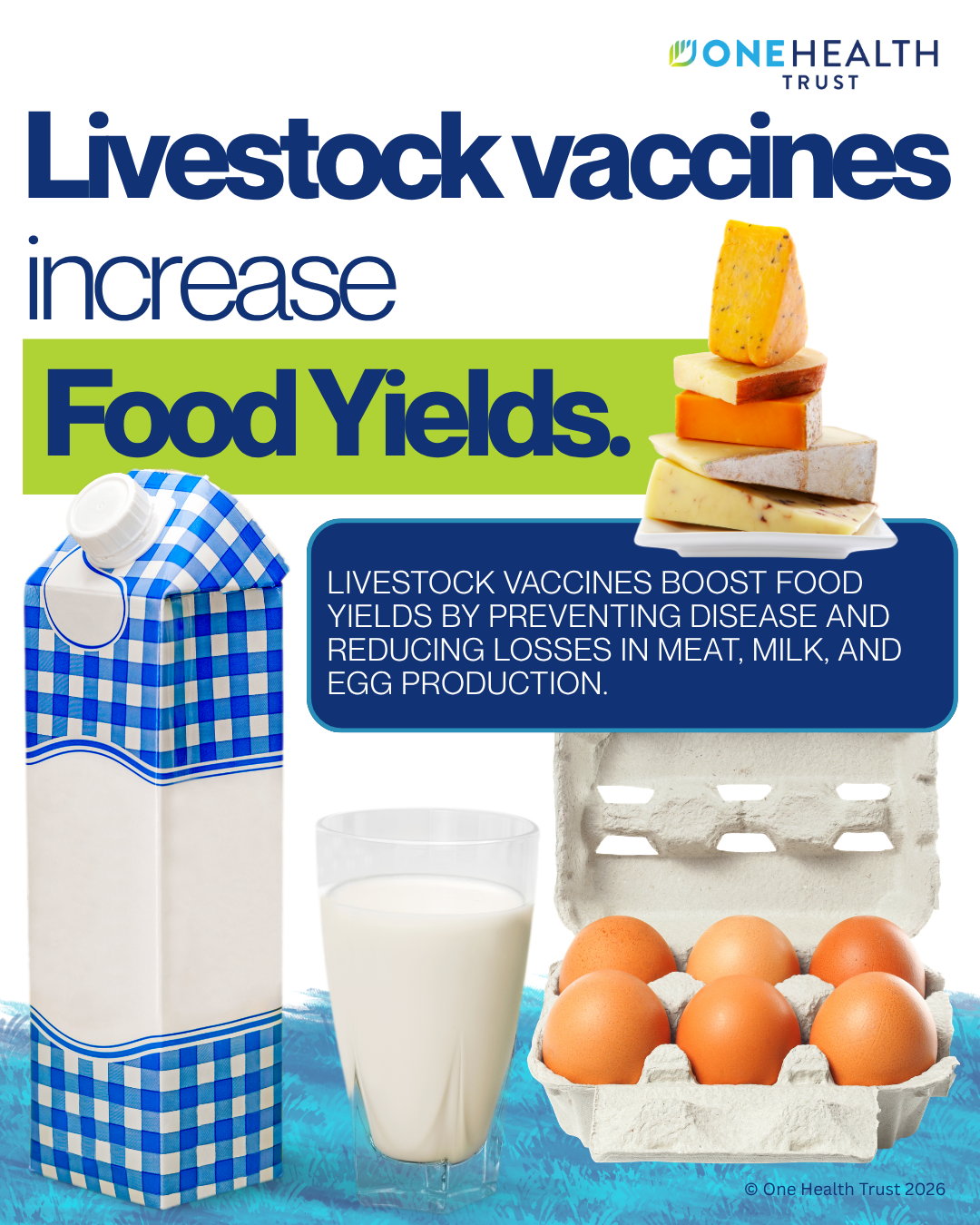
Livestock vaccines increase food yields.
- Livestock vaccines boost food yields by preventing disease and reducing losses in meat, milk, and egg production.
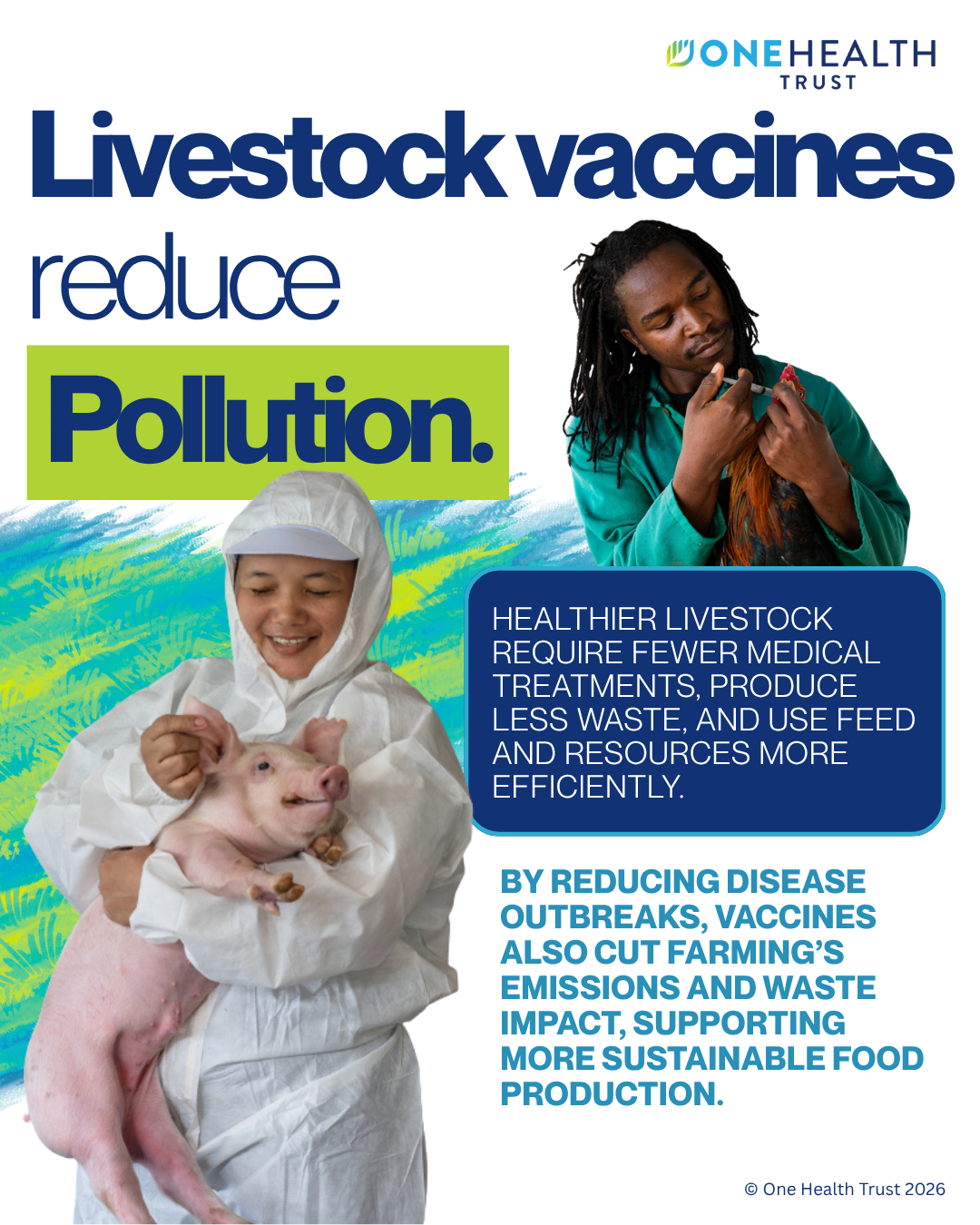
Livestock vaccines reduce pollution
- Healthier livestock require fewer medical treatments, produce less waste, and use feed and resources more efficiently
- By reducing disease outbreaks, vaccines also cut farming’s emissions and waste impact, supporting more sustainable food production.
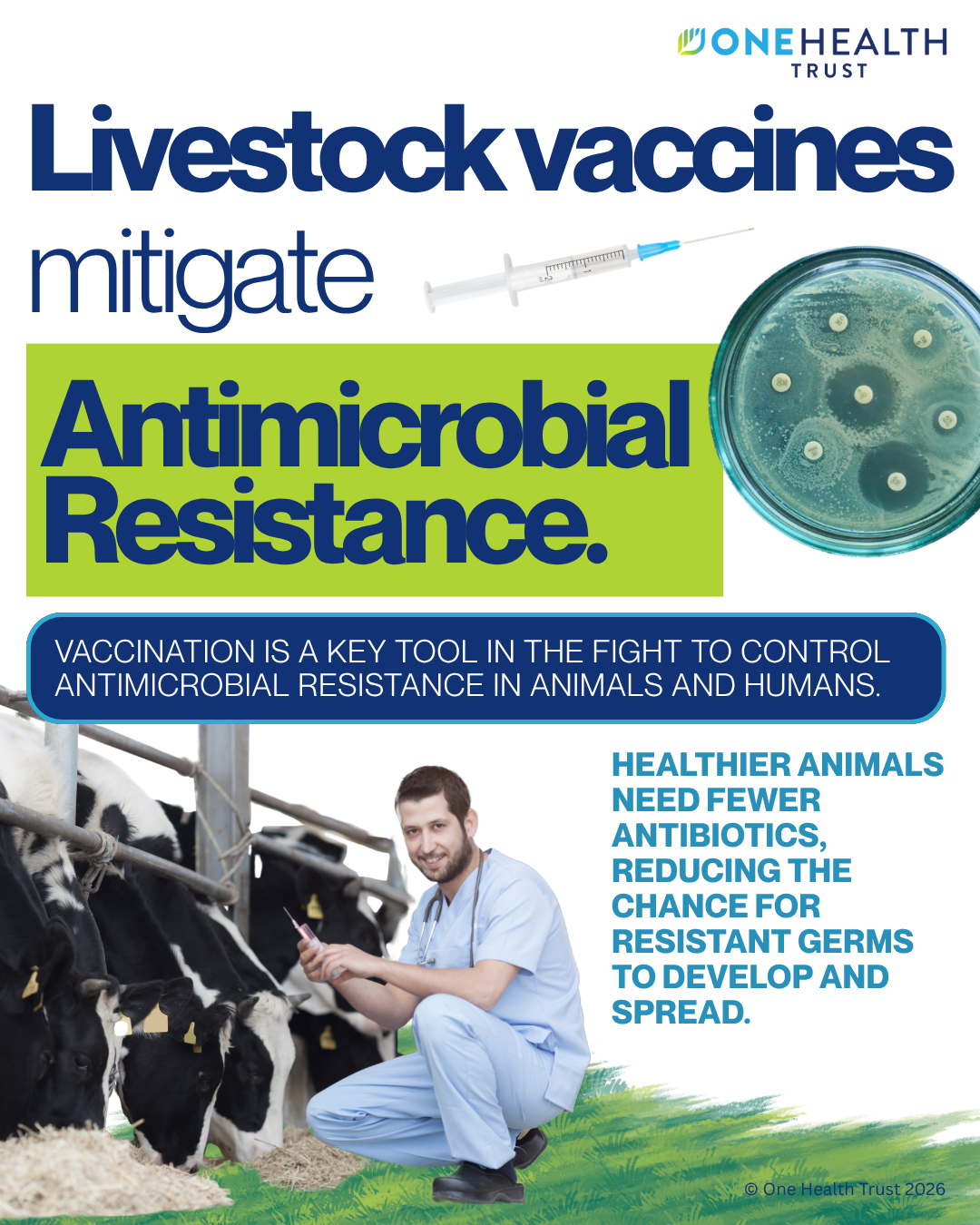
Livestock vaccines mitigate antimicrobial resistance.
- Vaccination is a key tool in the fight to control antimicrobial resistance in animals and humans.
- Healthier animals need fewer antibiotics, reducing the chance for resistant germs to develop and spread.
Download the infographic here.