May 13, 2026
The One Health Trust and Christian Medical College (CMC) Vellore held the Global Antibiotic Resistance Partnership (GARP)-India policy brief launch on May 4, 2026, bringing together professionals from across India at the India Habitat Centre in New Delhi.
In India, antimicrobial resistance (AMR) is driven primarily by high infectious disease burden and antibiotic misuse, causing an estimated 267,000 deaths and factoring in nearly 987,000 others. The GARP-India policy brief was developed to highlight the critical role of vaccines in preventing infections and reducing the spread of AMR. The event featured the formal launch and presentation of the policy brief, and a panel discussion on its key findings and implications.
Expanding life-course vaccination to reduce AMR
Leading clinicians, economists, public health professionals, and researchers from diverse sectors engaged in candid, evidence-based discussions on India’s challenges and strengths in responding to AMR, with a sharp focus on how vaccination could be better deployed as part of the country’s strategy.
The day opened with a welcome message from Dr. Priscilla Rupali, the head of the Department of Infectious Diseases at CMC Vellore, followed by OHT’s Dr. Ramanan Laxminarayan’s opening remarks on the importance of strengthening immunization programs and positioning vaccines as a key tool within national public health strategies to help mitigate AMR. He noted that AMR is a growing public health challenge not only in India but also in countries such as Zimbabwe, Pakistan, and Nepal, underscoring the urgency for action. Dr. Laxminarayan highlighted that vaccination is important across the life course, for both children and adults.
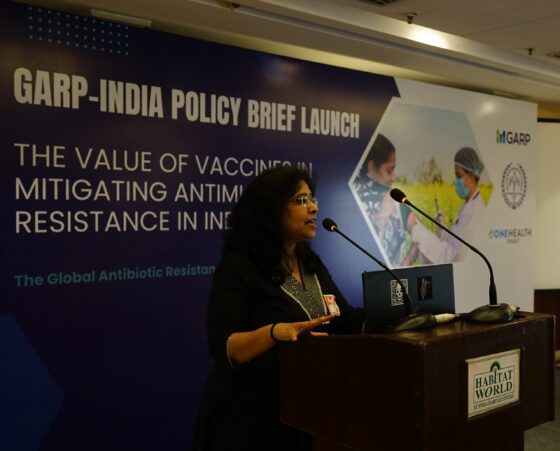
Dr. Priscilla Rupali (CMC Vellore) presenting the opening remarks of the event
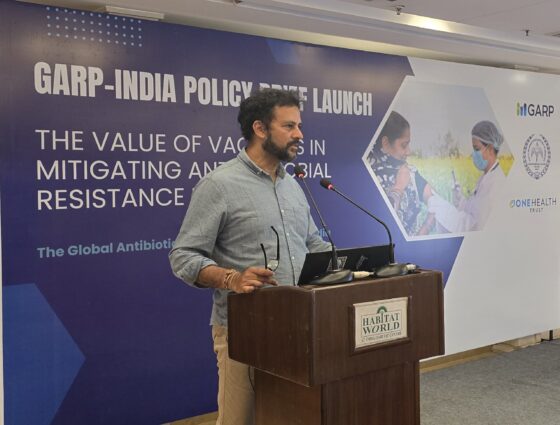
Dr. Ramanan Laxminarayan (OHT) presenting the opening remarks of the event
GARP-India outlines vaccine priorities for AMR control
OHT’s Rishiraj Bhagawati then provided an overview of GARP and its work across countries in Africa and Asia since 2008. He highlighted GARP’s role in elevating AMR on national policy agendas, informing National Action Plans on AMR, and supporting evidence-based policy development, including the prioritization of vaccines such as the typhoid conjugate vaccine (TCV) and pneumococcal conjugate vaccines (PCVs) to reduce antibiotic use and drug-resistant infections.
Dr. Prasannakumar from CMC Vellore presented the key highlights of the policy brief, framing AMR as a dual crisis of increasing AMR and a shrinking pipeline of effective treatment options. He emphasized that “with vaccines, we can win the war without fighting it,” underscoring the preventive power of immunization. Drawing on the policy brief’s recommendations, he outlined the prioritization of vaccines based on disease burden, public health impact, cost-effectiveness, and their potential to reduce antibiotic use and resistant infections. The GARP-India team identifies TCV and PCVs as immediate priorities, while advocating for a life-course approach to vaccination that includes both children and adults.
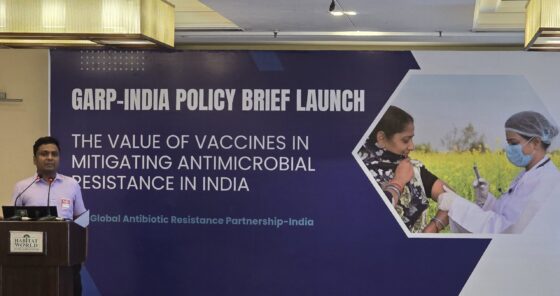
Dr. Prasannakumar (CMC Vellore) presenting the key findings of the policy brief
There was then a panel discussion that focused on identifying practical solutions to the challenges highlighted throughout the session. All panelists participated enthusiastically, offering candid perspectives from their respective sectors on barriers to implementation and the steps needed to advance the policy brief’s recommendations. The discussion emphasized cross-sector collaboration and explored how the policy brief could be translated into actionable strategies across different areas of the health system.
A state-level approach
Dr. Jyoti Joshi, Senior Science Advisor at International Centre for Antimicrobial Resistance Solutions, emphasized the need for further studies to quantify the impact of vaccines on AMR and stressed the importance of generating and disseminating data to strengthen the evidence base. She also noted that vaccine hesitancy, particularly in the post-COVID-19 context, remains a significant challenge and highlighted the need to increase public awareness and confidence in immunization. Additionally, she underscored the importance of closer collaboration between AMR and immunization policymakers and pointed out that, since public health is a state subject in India, effective implementation of the policy will require a state-level approach.
Dr. Laxminarayan noted that while modeling studies are valuable for estimating the potential impact of vaccines on AMR, they do not always capture the full picture, citing the example of rotavirus vaccination, where the benefits, such as reductions in childhood diarrhoeal disease, healthcare utilization, and unnecessary antibiotic use observed after implementation, can be broader than initially predicted. He emphasized the importance of complementing modeling with robust field data to better understand the true impact of vaccination on antibiotic use and AMR.
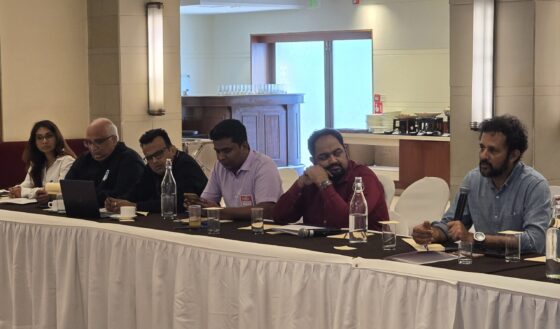
Dr. Ramanan Laxminarayan sharing his insight during the panel discussion
Dr. Arvind Kumar, Additional Professor at AIIMS, Delhi, and Dr. Vikas Suri, Professor at PGIMER, representing the government and clinical sectors, highlighted that generating India-specific data is crucial for informing immunization strategies and demonstrating the impact of vaccines on AMR. They emphasized the importance of adopting a One Health approach to ensure that AMR mitigation efforts extend across multiple sectors and noted that policy documents such as the GARP-India policy brief must effectively reach government stakeholders to support the implementation of appropriate vaccination strategies nationwide.
They also discussed challenges within government hospitals, where patients often seek immediate treatment rather than preventive measures, underscoring the need for greater public awareness around vaccination. The panelists stressed that the government should take a more active role in supporting mass vaccination programs, as the cost of vaccines can limit uptake. In particular, they highlighted the limited focus on adult immunization in public healthcare settings and recommended establishing dedicated vaccine corners in hospitals, along with increased efforts to promote awareness of adult vaccination.
In contrast, Dr. Neha Gupta from the Clinical Infectious Diseases Society noted that in the private sector, patients are generally willing to receive vaccines and that cost is often not a major barrier. Instead, she emphasized that the key challenge lies in creating the perceived need for vaccination. She highlighted that awareness of adult immunization remains low, underscoring the importance of bolstering education and outreach to improve vaccine uptake among adults.
Integrating vaccination into broader AMR strategies
Dr. Anuj Sharma, Technical and Team Focal Point for AMR and Infection Prevention and Control at the World Health Organization Country Office for India, highlighted the importance of engaging institutions such as the Office of the Principal Scientific Adviser to the Government of India and Centre for Cellular and Molecular Platforms in advancing vaccine promotion and implementation efforts. He noted that states such as Kerala have made significant progress in implementing AMR policies, demonstrating the value of strong state-level action. He emphasized that vaccination, like AMR, should move from a largely vertical program approach to a more integrated, horizontal model embedded across the health system. In his view, effective state-level implementation can serve as the foundation for broader national adoption.
Addressing the question of whether higher vaccine volumes could reduce costs, Dr. Santhosh Taur– Director of Medical Affairs, Vaccines, Rare Diseases, and Digital at Pfizer Limited – noted that cost is only one of several factors influencing vaccine uptake. He pointed out that in some government settings, vaccines that are otherwise expensive are provided free of charge, yet uptake remains low, indicating that awareness, perceived need, and accessibility are equally important determinants. At the same time, he acknowledged that increasing vaccine volumes would likely reduce costs through economies of scale and associated incentives, making broader vaccination programs more financially feasible.
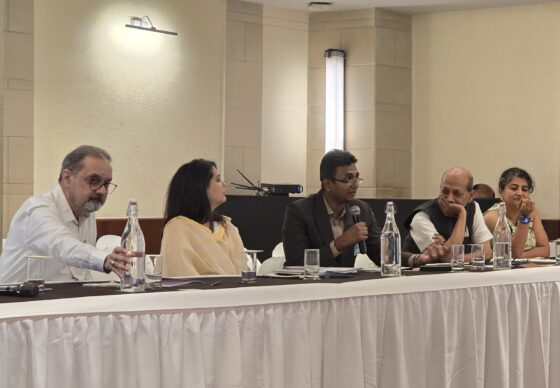
Dr. Santhosh Taur sharing his insight during the panel discussion
Dr. Sangeeta Sharma, Professor at the Institute of Human Behaviour and Allied Sciences, emphasized the importance of community sensitization and sustained awareness campaigns to improve understanding of the benefits of vaccination and its role in mitigating AMR. She stressed that addressing vaccine hesitancy is essential to increasing uptake and ensuring that immunization is recognized as a critical preventive health measure across all age groups.
Dr. Rajib Dasgupta, Professor and Chairperson at the Centre of Social Medicine and Community Health, focused on the practical barriers to vaccination and the implementation bottlenecks that can limit the success of immunization programs. He noted that effective public health interventions often begin at a smaller scale, allowing strategies to be tested and refined before wider adoption.
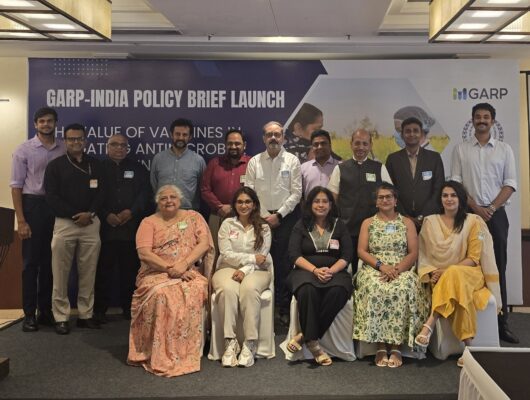
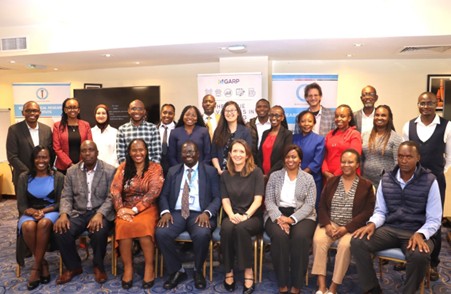
Event attendees at the India Habitat Centre
Additional points raised during the discussion included the need to better understand and communicate the economic benefits of vaccination, including its potential to reduce healthcare costs and productivity losses associated with infectious diseases and AMR. Panelists also reiterated the importance of establishing dedicated vaccine corners in hospitals to improve access and promote both routine and adult immunization. Another suggestion was for insurance companies to offer lower premiums to vaccinated individuals, thereby creating financial incentives that could encourage greater vaccine uptake.
Practical strategies to expand vaccination in India
The policy launch underscored a powerful and timely message: vaccines are not only one of the most effective tools for preventing infectious diseases, but also a critical component of India’s strategy to combat AMR. The discussions throughout the event highlighted that while strong evidence and clear policy recommendations are now in place, meaningful progress will depend on coordinated action across policymakers, healthcare providers, researchers, and communities.
From generating India-specific data and strengthening state-level implementation to expanding adult immunization and addressing vaccine hesitancy, the event brought forward a range of practical solutions to translate policy into action. As several speakers emphasized, integrating vaccination more firmly into AMR strategies offers India an opportunity to reduce antibiotic use, prevent resistant infections, and strengthen public health outcomes. The launch of “The Role of Vaccines in Mitigating AMR in India” marks an important step in this direction and provides a roadmap for harnessing the full potential of vaccines in efforts to control AMR.
Photo credits: Shreyas Satish Kumar and Rishiraj Bhagawati