Imagine this scene:
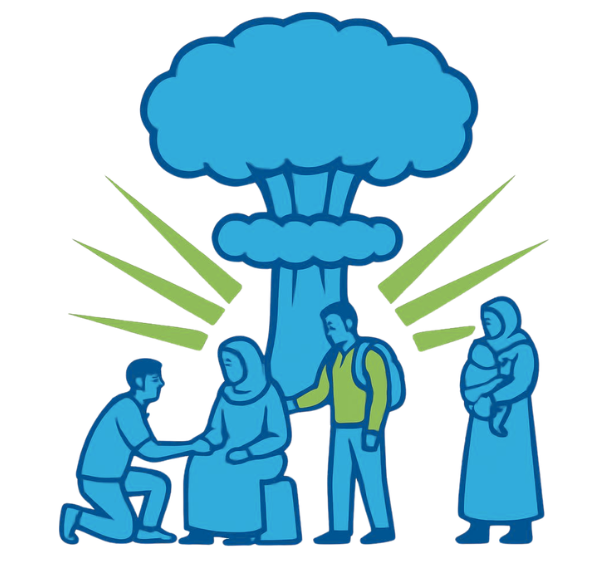
A family’s house was destroyed when it was bombed during a war. They got out with the clothes on their backs – nothing more. When they were fleeing, the mother was hit with fragments from another bomb. It tore off part of her leg. Dirt got in the wound.
They made it to a refugee camp, but the wound got infected. With nothing available to treat the injury, the infection got worse. She had a drug-resistant infection that wasn’t treatable with regular antibiotics. Her entire leg and part of her hip had to be removed to save her life. She will have a physical disability for the rest of her life.
This is just one story of drug resistance or antimicrobial resistance (AMR) and the impact of armed conflict. Report after report finds that victims of armed conflict and refugees – both those seeking shelter abroad and inside their own countries – are especially likely to suffer from drug-resistant infections.
Dr. Aula Abbara, consultant in Infectious Diseases and Acute Medicine and Honorary Senior Clinical Lecturer at Imperial College, London, has been studying the problem firsthand.
She’s worked with teams that found people injured in Syria’s 15-year-long conflict not only suffered terrible wounds, but then developed worse infections because of crowded and unsanitary conditions in healthcare facilities. These war-damaged hospital laboratories in Syria, especially, lacked the capacity to test for drug-resistant bacteria, and so doctors didn’t know which antibiotics to prescribe to treat patients’ infections.
Solutions require taking a One Health approach, Dr. Abbara and colleagues have found.
She and her colleagues call for programs to bring in more health professionals and healthcare access; introduction of easy-to-use diagnostics so people’s infections can be immediately diagnosed and thus treated with the correct drugs; stopping the improper use and distribution of antibiotics; and proper surveillance so that professionals know which drug-resistant infections are spreading and where.
In this episode of One World, One Health, Dr. Abbara chats with host Maggie Fox about what she’s seen and what might help.
Maggie Fox 00:00
Hello and welcome to one world, one health, with bite-sized insights from people working to solve some of the biggest problems facing our planet. I’m Maggie Fox. One Health means we’re all one — animals, plants, people, and the climate and environment.
We talk a lot on this podcast about antimicrobial resistance, or drug resistance — when viruses, bacteria, and other microorganisms develop the ability to resist the drugs people develop to fight them, it’s a growing threat to humanity, and it’s a problem made worse by the things we do to ourselves. One of those terrible things is conflict, and drug resistance is one more misery of many miseries that’s added to those suffered by refugees around the world.
In this podcast, we’re chatting with Dr. Aula Abbara, a consultant in infectious diseases at Imperial National Health Service Health Care Trust at Imperial College London, which is at St Mary’s Hospital. She’s worked in refugee camps and in other refugee situations, and studies how germs develop resistance. Aula, thanks so much for joining us.
Aula Abbara 01:10
Thank you very much for having me.
Maggie Fox 01:13
Let’s start out by talking about some of the refugee situations around the world. I feel like a lot is going on, a lot of conflicts right now, where people are driven into displacement. Can you talk about some of them?
Aula Abbara 01:28
So sadly, we’re seeing displaced people globally. Over the last decade, we’ve seen a doubling in the number of people forced from their homes, and that’s both as refugees, but also as internally displaced people within country borders, so some of the largest crises are in Sudan, for example, the DRC, in Gaza, in Syria, in Ukraine.
Maggie Fox 01:50
And by DRC, you mean the Democratic Republic of Congo, which is in Central Africa?
Aula Abbara 01:56
Yes, that’s right, and sadly, we’re seeing more and more of these conflicts. You may also be aware that in South and Central America, there’s a crisis with increasing numbers of people forced from their homes and migrating, facing extreme difficulties along their paths.
So very sadly, we’re seeing a lot more of these displacements, often related to war and conflict, but also increasingly related to climate change and natural disasters as well.
Maggie Fox 02:21
And on top of this, the US has cut off most of the aid it provides around the world. What does this mean for getting all of the needed antibiotics, antivirals, vaccines, and healthcare to the people who need it around the world?
Aula Abbara 02:33
So that’s an important question, and sadly, it’s not just the United States. It’s also the UK, France, Germany and several other countries who are cutting their aid budgets by 30 to 50 percent around the world, and this is impacting some of the organizations such as the U.S. Agency for International Development, but also some of the multilateral organizations such as Gavi, the vaccine alliance; the Global Fund, which is there to fight tuberculosis, malaria and human immunodeficiency viruses, but also some of the United Nations and World Health Organization, as I think you’re aware of.
So, what does this mean for the most vulnerable populations? Well, it means that insufficient diagnostics are reaching the people most in need. We’re seeing this in terms of malaria quite catastrophically. It also means that required treatments, whether it’s antibiotics, anti-malarials, other treatments essential for life and not reaching the populations most in need, and also it goes beyond that, because what we’re also facing is massive food insecurity around the world, and what we are seeing is nutrition crises, and as we know, this particularly affects the most vulnerable, and that’s particularly young children under the age of five years, and also pregnant women and lactating women. So women who are breastfeeding are at particular risk.
So globally, what we’re seeing is an interruption to healthcare access with all the consequences of that. And what we are very concerned about is we’re going to see an increase in mortality related to entirely preventable and treatable conditions as the full effects of this funding crisis take hold.
Maggie Fox 04:05
Remind us of the consequences of having people displaced. They’re not in regular housing. Sometimes they’re intense. Sometimes they’re in other temporary housing. They’re cooped up, and they don’t have regular access to the kind of healthcare they’re used to. What happens when their lives are disrupted like this?
Aula Abbara 04:25
So the consequences are catastrophic; when people are forced from their homes, and particularly those who are forced into what we call tented settlements, which are usually overcrowded, poorly ventilated, often without adequate water and sanitation, and the majority, actually, of the people who are forced from their homes are women and children who are vulnerable.
This can lead to multiple impacts. I do want to focus here on part, on some of the mental health impacts, because these are very significant, and we’re also, alongside all of this, seeing a significant increase in sexual and gender-based violence. But also, it means, if we were to have it. Of infectious diseases, outbreaks such as cholera, and we’re seeing an awful lot of cholera around the world, but also measles and other vaccine-preventable diseases. They can run through these tented settlements, making already vulnerable children and families even more vulnerable. So, Measles is an important example where children who are malnourished, and obviously, it’s occurring in settings where vaccination coverage is mainly because they’ve been forced in their homes, or the impact of conflict and insecurity on vaccine programs is negatively impacting the health of these populations.
Maggie Fox 05:33
And again, they don’t have their medical records. They don’t know if they’ve been vaccinated. They’re not in school, so they’re not getting their regular vaccinations. They’re not getting their checkups. So, these are people who have missed their vaccinations. They don’t have access to regular care. They’re not getting the treatments they need in a regular setting. When you think about antibiotic and antiviral resistance developing, it’s because people are misusing and overusing these drugs here. It’s because people don’t have access in the first place. Can you talk a little bit about that?
Aula Abbara 06:04
Absolutely! And I think this is a really important thing to discuss, and very much in line with what we are emphasizing, which is not just about overuse and misuse of antibiotics contributing to antimicrobial resistance. It’s also a lack of access or inappropriate access. So, for example, if you don’t have supplies of the first-line antibiotic that a child or a patient can be treated with, the healthcare worker, usually, the physician or the pharmacist, may choose a different antibiotic, which may have a different spectrum or a different way of acting, and that could lead to increasing drug resistance. So, it’s actually much more complicated than overuse and misuse. To give you an example from some of the work in Syria, we studied this very carefully. So, Syria has faced, very sadly, 14 years of protracted conflict which has displaced more than half the population since the regime fell in December 2024, we’re in a period not across the whole country, but in some parts of the country, where we are entering a recovery phase, but now we’re studying the impact of antimicrobial resistance in Syria in a way we weren’t able to understand before the regime fell, and what we know is there’s multiple effects and impacts.
So, for example, over-the-counter antibiotic availability without a prescription is a significant problem in Syria. But also, we have a country where 90 to 95 percent of the population are living in abject poverty, where health literacy rates may be incredibly poor, where vaccination rates, we know, are poor, particularly in certain areas. And what that means is people may come to a pharmacy and the pharmacist is providing antibiotics, perhaps at the wrong dosage at a shorter course, because a patient can’t afford the full course, or may not be providing the right antibiotic for a particular patient given the condition they have, and this is alongside the fact that a patient may prefer to go to a pharmacist as a first point of call, particularly in rural areas, so they either can’t afford the fees to See a doctor privately, or the weights or the access to a doctor who’s free at the point of contact may not be available to them. So, it becomes quite circular, and it compounds the impact for these patients and also for the development of antimicrobial resistance.
Maggie Fox 08:17
Aula, can you tell us a little bit about what you’ve seen yourself? You’ve been to some of these camps. Can you describe some of the situations you’ve actually seen yourself?
Aula Abbara 08:25
Absolutely, there are places that we call refugee camps. So, to give you an idea, on the outskirts of Damascus, we have an area called Yarmouk, which was a predominantly Palestinian refugee camp. And I worked there around 2006; it’s not really a refugee camp in the way that we might picture it. So, it’s not tented settlements, it’s sort of peri-urban. It sprang up as a sort of small suburb. And in some of these areas, they look like small cities.
So even in the Zaatari refugee camp in Jordan became almost like a small city, albeit in that particular camp, it was Porter cabins, and so within that, because people find that they’re not there temporarily for a month, two months, and can return home when they’re in a situation where it becomes protracted. Of course, people are going to set up small businesses or small pharmacies or provide health care access to varying quality and availability to the population, predominantly based on the needs of that local population.
Some years ago, I worked in Zaatari refugee camp, where Syrian refugees had been displaced to and some of you will know this was one of the largest refugee camps around the world at that time, and within the camp boundaries, a number of different clinics provided by international organizations and different country donors sprang up, and there were different sorts of healthcare facilities, and I remember when I was seeing patients, we’d have patients that we knew were going from clinic to clinic, trying to obtain different treatments and antibiotics and actually hoarding them. And this is highly problematic. It may mean they’re not taking the course as prescribed, and therefore not taking them as appropriate, and they may be keeping them because they may be so concerned. They cannot access healthcare appropriately for their children or their loved ones in the future, so that if those loved ones become unwell with an infection, they may decide which antibiotic to give to their child or their loved one at that particular time, and that may not be the correctly prescribed or the correct treatment at all.
So, this is one of the things that can also contribute to the overuse and misuse of antibiotics, and therefore to antimicrobial resistance. And so this last piece of work is actually undertaken at the American University of Beirut, which I supervised, and it was undertaken by Dr. Ahmed Ed Bis, who’s a pharmacist based in Syria, who works for a humanitarian organization, who interviewed patients affected by antimicrobial resistance in the northwest of Syria. So, this is one of the first, and I think it might actually be the only piece of research that I’ve seen where patients directly affected had their voices heard and listened to. And for us, that’s really important, because on the back of that, we can start to understand what it is that we need to change to be able to respond better to antimicrobial resistance as a crisis within Syria.
So some of the stories that stick with me are the stories that patients tell of having been injured in a bomb or an attack and then finding themselves by the side of the road, often for hours, with contaminated wounds, without the proper healthcare they need in the middle of a war zone. So, this was in northwest Syria a few years ago, at the height of some of the conflict that we were seeing there; some of the other stories are devastating. It’s stories of people living with disability, with infections, affected by antimicrobial resistance in overcrowded tents, and their families are having to do things like sell any possessions that they have, even if they have a fridge, they might have to sell that as well to be able to obtain whether it’s antibiotics or required treatment, but also in a lot of these situations, and actually, one of the challenges that we find in many countries affected by conflict is the lack of good diagnostics to properly characterize the infections. So, what that means is they may take course after course of antibiotics, which may not be effective against the infection that they have, without really knowing exactly what antibiotic they should take, and that can become problematic. They might run into side effects. It may be ineffective, and it also may allow the infection to grow without prompt and early treatment.
Maggie Fox 12:16
So I mean, we’ve got misery piled on top of misery piled on top of misery, but the consequences are more than just misery, right? The consequences then can sweep through this population.
Aula Abbara 12:30
Absolutely! Beyond that, when we have difficult-to-treat and resistant infections, it also has a profound impact on the health system and on healthcare in general. The other thing that we have seen in conflict settings, and I’ve seen this in Syria over the last few months in particular, is also the breakdown, not only of antimicrobial stewardship, but also of infection prevention and control. So, the state of some of the health facilities, because of the conflict, because of under-resourcing, because of a lack of, I guess, governance and leadership, but also supplies and consumables that are required for these settings, means that antimicrobial resistance becomes even more problematic. Because actually, if you’re a patient coming into the hospital with even a myocardial infarction, such as a heart attack, or coming in with a simple pneumonia, you may be at risk of being affected by a drug-resistant bacterium. So, catching that in the hospital can make your sort of future infections harder to treat. So, actually, it has multiple compounding impacts for patients and for the whole health system as well. And in a country such as Syria, where we are recovering from a protracted conflict, where there’s vast poverty, there’s vast under-resourcing, all of these increase the financial impacts on the health system.
It may be that the other much-needed interventions are missed because we’re dealing with problems relating to antimicrobial resistance. So from around 2012 onwards, I’ve supported different aspects of health care in Syria, in Syria and some of the refugee camps where people were displaced, particularly to the northern areas, so in the northwest and the northeast at that time, but also to areas where refugees resided in the earlier years of the conflict, when, very sadly, the conflict was very active and patients were coming across the border from Syria into Jordan. I spent some time in one of the hospitals that supported Syrian patients in Amman, and that will always stay with me. I went back a number of times, working with the brilliant physicians who were supporting these patients with immediate and complex surgery, including trauma surgery, neurosurgery, and orthopedic surgery, and also managing them even at that time. So, this was around 2013 and 2014 difficult to treat drug-resistant infections, and so I will never forget the injuries that I saw. It was young children with amputations. It was elderly people with multiple fractures across their limbs. It’s young women who’d been blinded over the course of the conflict but also had multiple crush injuries, and then secondary infections related to that, and also people who are paralyzed on ventilators and their loved ones trying to look after them.
Maggie Fox 15:10
Can you describe what happens to people when they’re completely out of their normal world? They’re somewhere, they’re out of their town, they’re out of their country, perhaps the people they’re used to being around aren’t there. What is happening to them?
Aula Abbara 15:24
So, I would say that conflict is profound in terms of the individual impacts and what we need to understand. It’s not just serious in Ukraine, Sudan, the Democratic Republic of the Congo, and South Sudan; the impacts are multifold on every aspect of their lives, particularly for children, particularly for those who are already vulnerable, who may have disabilities, who may have different injuries from previous conflicts, remembering that often, these conflicts flare up periodically. And then the other thing, which I think closely relates to what you’re asking, is the mental health toll and what that means for the population. And if we step back and think about what that means for children, it can have long-term implications, but also beyond that. I say it’s the loss of childhood, the loss of social structures as well. And these are going to have long-term impacts on these children and on their families as well.
Maggie Fox 16:18
So, this podcast is about solutions. Can you tell us some of the solutions that you can see that could help?
Aula Abbara 16:25
So, if we’re talking about solutions relating to this problem of antimicrobial resistance in settings of conflict, I think there’s a tremendous amount that we can do. A lot of it takes governance. It takes leadership; it takes institutional support; It takes speaking up; it takes characterizing the issue. And I think all of us, whether we are working in an academic institution or as a healthcare worker or as a civil society organization, have a role in coming together to study this; amplify our voices, amplify the voices of affected patients, so that we can come up with the solutions that are needed.
They can be very complicated, and they can also look very different in terms of the needs in different settings. So the needs in Ukraine are different from the needs in Gaza. They’re different from the needs in Syria, because the conflicts are affecting the populations and countries in different ways, and they have different needs. And that might also be the case within a country’s borders. So, one area of Syria may have good access to diagnostics, good access to antibiotics, and good access to healthcare, but you might go to a rural area or an area where there are lots of refugees and tented settlements, and then the situation is very different. So, I’m also a big believer in contextualizing the needs and responses to a particular locale.
On a broad level, there are important things that we need, having rapid point of care, diagnostics that are low cost, heat, stable, able to be used with minimal training, and be able to be stored without sort of a short shelf life, would be really important, and can revolutionize the care that we can provide, because it would support us to make and support healthcare workers to make good decisions in terms of infection prevention and control immediate treatment and also what patients need further investigations or what that looks like across their patient journey.
Maggie Fox 18:18
Aula, thanks so much for joining us.
Aula Abbara 18:20
Thank you very much, Maggie. It’s been a pleasure to be here.
Maggie Fox 18:24
Listeners, if you enjoyed this podcast, please share it, and please have a look at the website at onehealthtrust.org. We’ve got a lot more information on antimicrobial resistance and lots of other interesting and important topics. And if you have ideas for subjects you’d like us to cover. Please share them at [email protected]. Thanks for joining us.
Guest
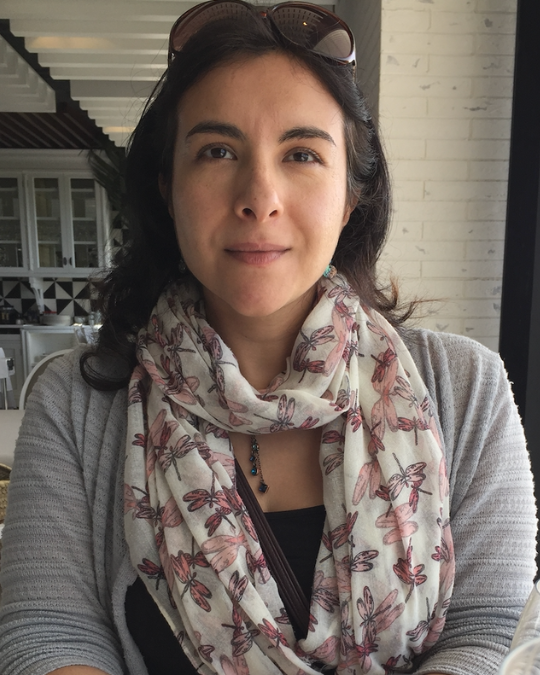
Dr. Aula Abbara is a consultant in Infectious Diseases at Imperial Healthcare NHS Trust; an Honorary Clinical Lecturer in Infectious Diseases at Imperial College London, United Kingdom; and an advisor to the Fleming Initiative on AMR in Conflict/ Humanitarian Disasters.
Credits
Hosted and written by Maggie Fox
Special guest: Aula Abbara
Produced and edited by Samantha Serrano
Music composed and sound edited by Raquel Krügel’
Transcript edited by Namitha Prabhu