Imagine a life form identical to your own, only backwards.
At first, it would look normal. But just like when you try to use a mirror to read text on a page, it doesn’t quite translate.
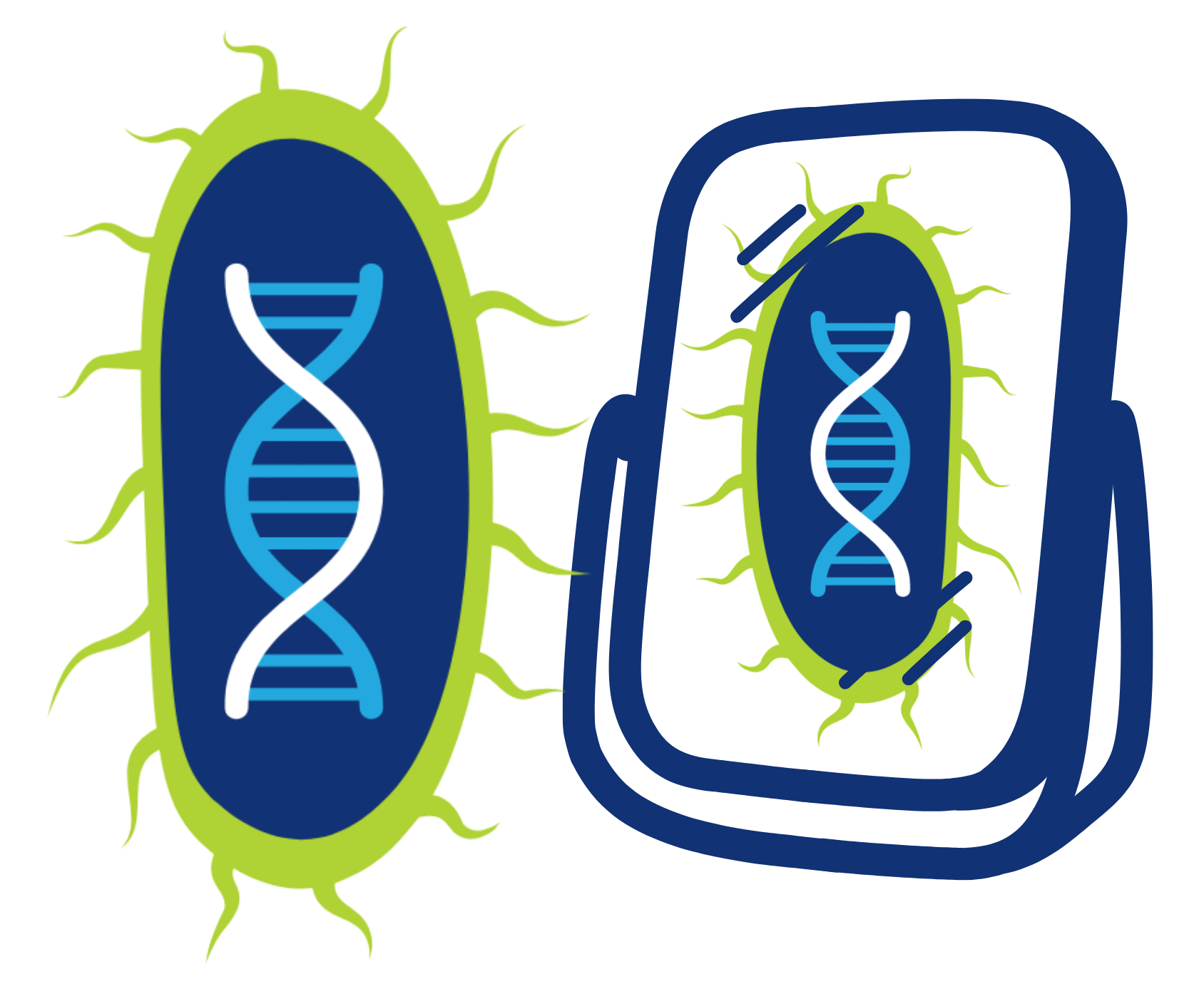
For some reason, all of the DNA of life on Earth is right-handed. The double helix of DNA that codes for all life on the planet spirals to the right – a quality called chirality. But, in theory, scientists could build cells based on DNA that spirals to the left.
These mirror cells could defy some of the rules of biology. While it’s not clear how they might be useful, several labs sought to examine the possibility. Some of the U.S. scientists who took a look were startled by the implications and put together a team of 35 experts who studied the risks.
Mirror bacteria, in particular, scared them. Like an invasive plant that local animals don’t recognize as potential food, mirror bacteria could evade the immune systems of animals and people and cause life-threatening infections, they reported. They could wreak havoc on crops and even on entire ecosystems. The experts’ December 2024 report recommended halting all work on mirror cells.
In this One World, One Health episode, one member of that committee, Dr. Jassi Pannu, explains some of what the team found. Dr. Pannu is a Senior Scholar at the Johns Hopkins Center for Health Security and an Assistant Professor in the Department of Environmental Health and Engineering at the Johns Hopkins Bloomberg School of Public Health. Listen as she chats with host Maggie Fox about the potential risks of mirror bacteria and how scientists must voluntarily stop this research.
Maggie Fox 00:01
Hello and welcome to the One World, One Health, with bite-sized insights from people working to solve some of the biggest problems facing our planet. I’m Maggie Fox. One Health means we’re all one — animals, plants, people, and the climate and environment.
Many diseases that torment humans come from animals. COVID-19 was just the most recent, but new strains of flu always start in animals. Rabies comes from bats and spreads through dogs and wild animals. Plague is spread by fleas carried by rats. But humans can spread disease too, and we can invent them. Lab accidents that cause pandemics are usually the stuff of movies, and people love to debate whether we’re on the verge of another one.
In this episode, we’re talking about an effort to prevent a potentially disastrous lab accident, or perhaps the creation of a horrific biological weapon. It’s something called “mirror bacteria.” Our guest is Dr. Jassi Pannu, a senior scholar at the Johns Hopkins Center for Health Security and an assistant professor at the Johns Hopkins Bloomberg School of Public Health. She’s an expert on global health security and Pandemic prevention. Jassi, thank you for joining us.
Jassi Pannu 01:23
Thank you. Thank you for the invitation to chat about this topic.
Maggie Fox 01:27
Jassi, so what is a mirror organism in the first place?
Jassi Pannu 01:32
So, in terms of what a mirror organism is, it’s a hypothetical life form that would be composed entirely of mirror-image biological molecules. And the reason for that is that all known life on Earth is actually made up of molecules with a consistent handedness or chirality, a DNA molecule. All DNA molecules in life on Earth are right-handed, and so the mirror image of that would be a DNA molecule that is left-handed. You can imagine two gloves that look identical in a mirror, but there’s no arrangement by which you can lay those two gloves on top of each other so that they would match their exact opposites.
So that’s the interesting thing about life on Earth, that all DNA and RNA are right-handed and all proteins are left-handed. And scientists don’t really know why this is the case? It seems plausible that this was a bit of a fluke during the origins of life that set the rest of evolution on a particular path. And we don’t really have any reason to believe that life is based on the opposite handedness, so it would be left-handed DNA and right-handed proteins. We don’t have any reason to believe that life would be any different. I think, in fact, most scientists think that a mirror organism or a mirror cell would function the exact same way, even if visually it was the opposite.
Maggie Fox 02:51
And so, DNA is a double helix. It’s this twisting form. And so, DNA twists to the right, and the proteins that it coats twist to the left, and all DNA always twists to the right, and all proteins always twist to the left. And that’s what we’re talking about when we talk about chirality.
Jassi Pannu 03:00
Exactly.
Maggie Fox 03:05
Okay? And so, anything that’s a mirror organism does it backwards.
Jassi Pannu 03:19
Exactly! And this kind of life form doesn’t actually appear to exist on Earth. So, to obtain a mirror organism, scientists would have to create it synthetically. And there are some scientists, including my colleague Dr. John Glass, who is also part of this effort, who have created living cells with completely synthetic genomes, but there’s been no success yet in terms of creating an entirely synthetic living organism.
So, I just want to stress that a mirror bacteria or a mirror cell is not something that’s been accomplished to date, and it would be a huge accomplishment to involve not only creating a fully synthetic living organism, but then going a step further and creating that in its entirely mirrored form.
Maggie Fox 04:03
Why would you even want to do that?
Jassi Pannu 04:04
Yeah, it’s a great question. It’s really a fascinating research question. I think scientists were just interested in thinking about, could you create synthetic life forms? Could you do it in the mirrored version? And there are some reasons that you could think about doing this for beneficial applications. But I think, honestly, that most science is done without a particular application in mind. It’s science done for science, science’s sake, for the sake of advancing our knowledge of the world. And a lot of the research being done on synthetic life and mirror organisms was primarily being done for that reason. But there are some hypothetical applications you could think about, for example, for a mirror organism.
And again, these are all hypothetical because we haven’t actually been able to create this organism, but one that’s been theorized is something like a cellular factory. Could you, for example, create mirror bacteria that break down plastic, and could you spread them in the environment? Or could you have mirror bacteria that live inside of your bloodstream, acting as miniature factories producing drugs. So, these are all interesting applications that scientists have thought about.
Maggie Fox 05:09
So that would be cool, like a little living drug factory inside your body, and there was at least one, maybe more, actual government grants to do this work.
Jassi Pannu 05:20
Yeah, yeah. So, the research and development ecosystem, especially in the United States, has brought all sorts of unexpected innovations. And these come from basic science, where if a scientist has an interesting idea that they’d like to pursue, they can seek funding for it.
And there’s an interesting term in contemporary tech policy called permissionless innovation, the idea that you should be able to seek innovation by default, but there is a consideration when it comes to government grants, which is the government has finite resources, so you are making decisions about what grants should be made, in terms of what research should be supported with taxpayer dollars, and that’s where it becomes important to consider whether the research will succeed, but then also If the research has risks, and if there are significant societal risks, that’s probably a good reason for the government not to support that kind of research using government grants.
Maggie Fox 06:11
So, who thought to think twice about this?
Jassi Pannu 06:15
Yes, so this was something that my colleagues and I thought about. Research on the topic of mirror organisms had been ongoing for some time, actually, since 1848, when Louis Pasteur first discovered chirality, scientists have been theorizing about the possibility of mirror organisms. So it’s not an entirely novel concept, but it’s only recently that scientists have started to make advancements where they’re really getting close to actually being able to make a mirror organism; close is relative.
It could be five years, 10 years, 15 years, but certainly something where the path towards creating a mirror organism was possible, and you were able to envision it, and that’s what prompted this group of scientists that I am a part of to think more carefully about the risks, because some of the benefits that I’ve described to you in terms of because you have a cellular factory. The reason that is a potential benefit is that mirror organisms would not be broken down in the environment in the same way as existing bacteria would be. And it’s those same potential benefits that also give rise to the risks.
Maggie Fox 07:20
Jassi, what got you involved in this panel?
Jassi Pannu 07:22
Yeah, I am a policy researcher, and I focus specifically on biosecurity and technology policy. So I’m really interested in thinking about the kinds of innovations that are happening in synthetic biology and artificial intelligence and all these emerging fields, and thinking through, what are the ways in which we can make sure that we responsible we develop these technologies responsibly, and so that’s how I was brought on to this project.
But really, there was such a variety of expertise in terms of the group of almost 40 researchers, including synthetic biologists and chemists, but also bioethicists and other policy researchers. And it was really this multi-disciplinary group that first brought together the different kinds of expertise needed to really assess the risks. Because some of the risks relate to the immune system, some relate to the environment, and some relate to how microbes function in the environment, you really need a broad group that could integrate findings from these different fields. And I think it was that integration that hadn’t been done yet.
Maggie Fox 08:30
And boy, did you find some stuff.
Jassi Pannu 08:33
Yes, yeah. So I can perhaps try to summarize something that sounds pretty science fiction, but it’s important to keep in mind that a lot of scientific innovation does sound like science fiction before it happens, if we just think about nuclear weapons and artificial intelligence. So just because it sounds strange to us, it shouldn’t impact our reasoning as to whether or not it’s possible.
And that’s what this group really wanted to investigate. And we came to this question with a skeptical eye; we weren’t really sure what to make of it, but after we completed our investigation, we kind of came to the conclusion that there were some serious risks that we needed to consider, and in terms of what those are, the fundamental issue for a mirror organism. And really, when we’re talking about mirror organisms, we’re talking about mirror bacteria, single celled, very simple organisms, as I said earlier, it’s not about how that individual bacteria would function, because we really have no reason to think that they would function any differently in isolation, but it’s much more about how that mirror bacteria would interact with our world, With life on earth, and that includes the human body, animals, plants, the soil, anywhere that bacteria currently exist on Earth. And the fundamental reason that mirror bacteria would interact differently with all of these things is that you can imagine that molecules and the other molecules that they bind to. They function as keys and locks like proteins and ligands. There’s a key and a lock, and you need a precisely shaped key to fit a particular lock, and if you mirror that, then you have a situation where mirror organisms are not fitting into any of the existing locks. And that includes the way that the human immune system detects bacteria. It includes how viruses that infect bacteria, like bacteriophages, infect those bacteria, and also how predators, like predators in the environment, sense and eat bacteria, and suddenly, when you when you end up in a world where you have a mirror organism that isn’t being detected by any system in the natural world, but is eating nutrients and self replicating. That’s where you get into a situation where you wouldn’t be able to, in the long term, control the growth of that organism, and it could pose significant problems.
Maggie Fox 10:51
I think of it as like when there’s an invasive species in our area, like there’s this invasive honeysuckle that’s not native to the area, so none of the animals know that it’s something they can eat, and it just grows over all the trees and bushes and takes over.
Jassi Pannu 11:05
That’s a really excellent analogy, because really, it is the fact that other predators and immune systems are not recognizing it as an invader that is the real problem that would allow it to proliferate in the environment and also to proliferate in the human body.
Maggie Fox 11:21
And once you started looking, you found a lot of different things. It sounds almost like an alien invasion. The bodies of plants and animals wouldn’t recognize them. Antibiotics wouldn’t work against them because they’re designed against something that is physically very different. It would be an ultimate biological weapon, because humans rely on just a few crops: wheat, rice, corn, or soybeans. So if your bacteria attack those, you could starve entire populations. But it sounds like there could maybe be some defenses. Could you design antibiotics that would be able to act against them? Could you genetically engineer resistant crops?
Jassi Pannu 12:02
Yep, these are all really excellent questions that we also wanted to investigate. So, we have a paper along with our publication in the journal Science, where we highlighted some of the findings. We also have an associated technical report that’s over 100 pages, which goes into questions like, what antibiotic classes would still work against these bacteria, and how might we expect these bacteria to grow in the environment, affect agricultural crops or animals in the environment?
And ultimately, what we realized was that this particular organism poses a unique challenge, because normally when you think about a pathogen, a pathogen has a particular host range, so a pathogen will infect humans or mammals, or it will infect certain types of plants, like the agricultural plants you mentioned. But it’s very rare to have an organism that could cause disease across a broad range of different hosts, and that’s what we found for mirror organisms, that it could cause disease in humans and animals, as well as plants, as well as seed, just the soil, and live in the environment. And that’s where the picture becomes very complicated for prevention, because you could imagine if many animals in the environment are exposed and plants are exposed, and humans are eating those plants, and animals are spreading it to other plants. Then control using something like a drug or an antibiotic becomes quite impossible, and that’s why prevention is really the thing that we ended up leaning on heavily in terms of having the most positive impact would be to try to prevent an organism like this from getting into the environment in the first place.
Maggie Fox 13:43
How do you do that?
Jassi Pannu 13:45
Yeah, so this is the challenge that we come to, which is, it’s something called anticipatory governance, which is, there’s a group of scientists, in this case, who are trying to think about where the future of a technology or scientific field is going, and then suggest governance in advance. And what we’re proposing is that governments think about whether or not they should permit this kind of research in terms of creating a fully functional synthetic organism, and whether or not that really is a type of research that warrants funding, given the potential risks. But it’s always a challenge, because there’s a fundamental dilemma of you often can only be sure of the risks after technology has been developed and widely deployed, but that’s not a situation that we think is worth getting into in this particular case, given the risks involved. So those are the discussions that we encourage other scientists and the broader stakeholder community to grapple with in the coming years.
Maggie Fox 14:41
Another thing you noted was that, before you did the report, it was something that hardly anyone had heard of. And you point out that there was a risk in even making it public, because now you’ve given people the idea. And of course, a government could say, Well, now you’ve given us the idea for a really good weapon. We want to talk about that.
Jassi Pannu 14:59
Yeah. Yeah, this is something that we considered very carefully, because scientists, including myself, always think about openness as being a real benefit, and it’s not our norm to think about controlling information, and that’s much more something that the security community is familiar with. What we wanted to do as a group was to bring in a broad set of voices to come together and think about the risks in this integrated way. But we didn’t want to misstep and do something that the security community thought was irresponsible, so we spent a long time talking to folks in the security community as to whether sharing this information broadly was a good idea or not, and ultimately, with their input, came to the decision that sharing it was the responsible thing to do, because it seemed like where a lot of the risk was coming from was a well-intentioned group of scientists creating this organism, not realizing that there were significant risks, and doing it accidentally was less so the misuse of this technology. And so, we wanted to make sure that scientists in this field who are working with mirror molecules, potentially thinking about mirror organisms, were aware of the risks, rather than inadvertently doing something where they hadn’t considered the downsides.
Maggie Fox 16:14
So, is this something that, then, it would just be responsible not to go ahead with? Period.
Jassi Pannu 16:20
Yeah, this is the really challenging question. Because I think as a society, there haven’t been many technologies where we, as a global society, have said we will just not do this. I think there are some examples, like human germline editing, for example, where there has been a strong scientific norm against this, but then there have been isolated cases where scientists have broken that norm and pursued it. And so we’re really facing an unprecedented challenge of what to do about this technology? Do we have a good way of governing it globally? I think it’s a really important question that we should really work hard to try and figure out, and governments will probably have to come together and work internationally, develop international collaborations to make sure that this kind of risk is prevented.
Maggie Fox 17:09
Jassi, thank you so much for joining us.
Jassi Pannu 17:11
Thanks for the conversation.
Maggie Fox 17:13
Listeners, if you enjoyed this podcast, please share it, and please have a look at the website at onehealthtrust.org. We’ve got a lot more information on antimicrobial resistance and lots of other interesting and important topics. And if you have ideas for subjects, you’d like us to cover. Please share them at [email protected]. Thanks for joining us.
Guest

Dr. Jassi Pannu is a Senior Scholar at the Johns Hopkins Center for Health Security and an Assistant Professor in the Department of Environmental Health and Engineering at the Johns Hopkins Bloomberg School of Public Health.
Prior to joining the Center in 2025, Dr. Pannu spent a decade at Stanford University, where she completed her MD, residency training, and health policy subspecialty fellowship. Dr. Pannu is a licensed and board-certified internal medicine physician and served as a front-line physician during the COVID-19 pandemic. She also previously held an Ugandan medical license due to her work at multiple Ugandan national referral hospitals and clinics during the COVID-19 pandemic.
At the Center, Dr. Pannu’s primary areas of research include global health security and biosecurity, pandemic prevention and preparedness, and emerging technology security and governance.
Credits
Hosted and written by Maggie Fox
Special guest: Jassi Pannu
Produced and edited by Samantha Serrano
Music composed and sound edited by Raquel Krügel
Transcript edited by Namitha Prabhu