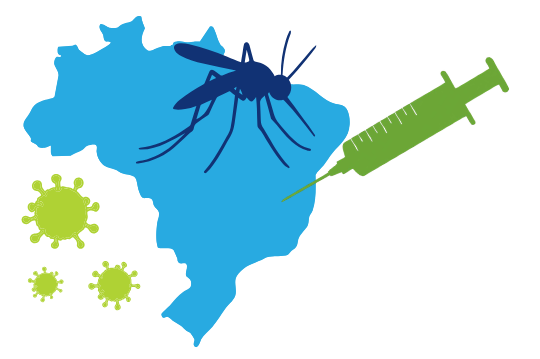
It’s a rare piece of good news. A single-dose dengue vaccine developed in Brazil as part of an international collaboration protected people against at least two strains of the virus for five years or longer, and did so safely.
The vaccine was already being tested across Brazil and the findings helped boost confidence in its use.
“This is a big deal,” says Dr. André Siqueira, Head of the Dengue Global Program at the Drugs for Neglected Diseases Initiative (DNDi).
Dr. Siqueira, who is also an Infectious Diseases Consultant at Brazil’s Instituto Nacional de Infectologia Evandro Chagas, a hospital that is part of the Oswaldo Cruz Foundation (Fiocruz), helped develop the vaccine. He chatted with One World, One Health about the work in 2024.
The new vaccine worked almost perfectly to keep people from being hospitalized with severe dengue symptoms, Dr. Siqueira and the team reported in Nature Medicine.
That’s a big deal. Dengue can cause terrible symptoms, including severe abdominal pain, internal bleeding, severe muscle aches, and long term fatigue. From January 2025 to January 2026, dengue killed more than 4,000 people.
The only other dengue vaccines currently available are a two-dose formula made by Japanese manufacturer Takeda and Sanofi’s Dengvaxia, which the company is discontinuing because of a lack of demand.
In this episode, Siqueira updates host Maggie Fox about the latest findings on the new vaccine’s efficacy and its rollout in Brazil.
Maggie Fox 00:00
Hello and welcome to One World, One Health, where we take a look at some of the biggest problems facing our world. I’m Maggie Fox. This podcast is brought to you by the One Health Trust with bite-sized insights into ways to help address challenges such as infectious diseases, climate change, and pollution.
We take a One Health approach that recognizes that everything on this planet, the animals, plants, and people, and the climate and environment, are all linked. Dengue is one of the fastest spreading infections in the modern age. It’s caused by a virus carried by mosquitoes, the Aedes aegypti and the Aedes albopictus mosquitoes that follow people into cities and into newly cleared areas.
They’re insects that thrive as climate change warms the world and disrupts the weather. The World Health Organization estimates that between 100 million and 400 million people get infected every year. Brazil’s been hit especially hard. In 2024, dengue infected more than 6 million people, four times more than the year before. So, doctors are keen to develop a vaccine to protect against it. But dengue is tricky. There are four strains, and the first time people get it, they’re usually not that sick. The trouble comes when they catch a second or a third strain. That’s when they develop serious or even deadly symptoms. That makes it challenging to develop a vaccine, because vaccinating a person can make the body react as if it had a previous infection, rather than protecting it.
In this episode, we’re chatting with Dr. André Siqueira at the Oswaldo Cruz Foundation, or Fiocruz, in Rio de Janeiro, Brazil. He’s also now at the Drugs for Neglected Diseases initiative (DNDi). He helped develop a single-dose vaccine that’s just been shown to protect people well against several strains of dengue. The vaccine’s been approved and is being deployed in parts of Brazil now.
André, thank you for joining us.
André Siqueira 02:08
It’s a pleasure. It’s really great to be with you.
Maggie Fox 02:13
Well, I’d like to ask you, first of all, to tell us a little bit about dengue, the four different types, and why it has been so hard to develop a good vaccine to protect people against it.
André Siqueira 02:25
So, one of the features of dengue is that it’s not a single virus. It’s not a single agent. So there are actually four dengue viruses; although they have a lot of similarities between them, they also have a lot of differences that make it possible for an individual to have up to four dengue infections, to be sick with dengue four times. It could cause the protection conferred by infection with one serotype to protect against that single serotype, but not against the other three. And the challenge for the development of vaccines is that there is a phenomenon called ADE -antibody dependent enhancement, in which the antibodies produced against one of the serotypes can facilitate then try off the other serotypes in the host cells and lead to higher viremia, higher replication, and consequently more severe disease.
So, the challenge is that if you don’t produce a vaccine that has a balanced protection against the four serotypes at the same time, there is the risk that the vaccinated individuals will be prone to developing more severe disease than non-vaccinated people.
Maggie Fox 03:40
And this vaccine that you worked on was designed to protect against all four types at once.
André Siqueira 03:47
Exactly, actually, this vaccine, it is composed of the four serotypes, or it’s a live attenuated vaccine. So, it’s a vaccine with the viruses that cause dengue, but they are attenuated, meaning that they don’t have the virulence factors that the wild-type viruses have. So, they like other vaccines that we have. Also, when they are injected, they reproduce in the body, but they lead to the production of antibodies and cell responses that are aimed at protecting the individuals against the infection, against the disease, but not making them sick.
Maggie Fox 04:24
They’ve been weakened in a way that won’t hurt people but produce a very strong immune response, right? Live viruses like this, attenuated, as you say, weakened, produce a very strong immune response.
André Siqueira 04:37
Yes, perfectly. So, they are weakened so they don’t cause the disease, but they cause the immune response.
Maggie Fox 04:43
In this latest trial, you tested in 16,000 people. Can you tell us about the group you tried it in, who they were, and how long the trial lasted?
André Siqueira 04:53
So yes, the trial started in 2016 in 16 cities of Brazil, involving 16,000 people. So a lot of sittings and it was evaluated in individuals between the age of two and 59, years of age, each individual after vaccinated, so they could be allocated to the placebo or the vaccine on and they would follow that for five years until the termination of the trial, when all the data was collected and analyzed to get the results that are now available.
Maggie Fox 05:24
Okay? And this is important, because some people who question vaccines have asked, ” Are they tested against a placebo?” This is a big word you hear a lot. What you did was you vaccinated some people, other people were not vaccinated at all, right? And you compared what happened to them over five years.
André Siqueira 05:43
Exactly! So it’s one situation in which we believe in all the authorities that evaluated the trial, the regulatory agencies, the ethics committee, who agreed with the placebo arms. Now we have more vaccines in the market, but when they started the trial, there were no alternatives. So, we wanted to demonstrate that the vaccine could protect individuals against the disease and against the severe outcomes, and for that, the allocation was for each placebo-vaccinated individual.
There were two individuals in the active arms, so there was a two-to-one ratio of allocation, so more people were vaccinated than received a placebo. And with that, we were able to demonstrate the efficacy results.
Maggie Fox 06:28
And what were the results?
André Siqueira 06:31
The results show that the vaccine has an 80 percent efficacy in protection against dengue disease in Brazil. Due to the recent epidemiological trends, we were only able to conclude against dengue one and two; there was no circulation of dengue viruses three and four during the study. And there was also a very meaningful efficacy against severe dengue. So, the people in the vaccinated arm had much fewer hospitalizations than those in the placebo. So it was 79 percent against the disease and close to 100 percent against hospitalization.
Maggie Fox 07:08
This is a big deal, right? This is, I mean, sometimes people get mixed up, and they think, “Well, if it didn’t protect me from getting infected, it didn’t work.” But what you really want to do is keep people from getting so sick that they have to go to the hospital or might die.
André Siqueira 07:22
For a public health perspective, for individual perspective, if we can protect against disease and against the severe outcomes, there’s a big relevance for the individual that won’t be sick and won’t be severely ill and have the risk of dying from that infection, and also a collective impact, in which it reduces the strength during outbreaks, during epidemics, so very much like COVID-19, when we have epidemics, their health units, they are overcrowded.
So, people with the disease and other health conditions suffer from this impact because health professionals are not able to deal with the volume of people seeking care. So, if we can have that impact in reducing the burden of dengue, the clinical burden of dengue, there is a major impact in the affected regions.
Maggie Fox 08:12
Dengue can make people very sick. Can we talk about the range of symptoms?
André Siqueira 08:18
So, although the proportion of individuals that develop severe disease, if someone thinks about one to 5 percent might not seem very high, but if you have a big epidemic, it will be a very high absolute number. But what we call mild dengue and mild can be a misleading word to some extent, because it causes a lot of very high fever, myalgia, fatigue, and headaches.
So even what’s called mild dengue is very intense and causes very intense symptoms that make people unable to do their activities. They have to be lying in bed for days and sometimes weeks due to the consequences of dengue. So that’s not mild at all. Although people may not be required to be hospitalized and be in intensive care, they will be unable to do their activities, work, and study, and this has major consequences as well.
Maggie Fox 09:14
And you use that medical word, myalgia, but what we’re talking about is when you ache all over, and dengue has a nickname. It’s called breakbone fever. Can you talk about that symptom?
André Siqueira 09:25
So people have a lot of pain in all their muscles. We have aches throughout our bodies, and it’s very debilitating. And that’s what happens with dengue for days, and sometimes two or three weeks may ensue. So that’s really debilitating. That’s where the “break-bone fever” name comes from.
Maggie Fox 09:44
So, this is a vaccine developed and made in Brazil. What does that mean? Can you make enough for Brazil, and can you make enough for other countries?
André Siqueira 09:54
So, there’s a very good point that the vaccine is an international collaboration in terms that an attenuated weakened virus was developed by the National Institute of Health in the United States, and then they made the option to license its further development and production to many companies in the world.
So there are companies, but in time, in Brazil, there are also companies in India, in Asia, in Europe, in the United States, that are also working towards developing their products. Butantan has the license for Brazil, so it’s now focusing on being able to provide for the public health system of Brazil. It’s trying to scale up the needs.
So, we have more than 200 million inhabitants. So, there’s a big population to be covered. But there are discussions underway. I’m not involved, as I’m not part of Butantan and the other companies involved, to try to speed up that production scale-up and make it available, not only in Brazil, but in the rest of the world, and protect more people against the disease.
Maggie Fox 10:57
Is there going to be enough vaccine for everybody in Brazil?
André Siqueira 11:00
They have committed to deliver around 50 million doses in the next four years. So that’s the current status. So, they are working on increasing capacity, and that’s their goal.
Maggie Fox 11:13
Will there be enough vaccine to affect the outbreaks of dengue in Brazil?
André Siqueira 11:18
It’s possible that it will have a major effect, and it will depend on the strategy the Minister of Health is discussing and taking over on trying to prioritize areas, direct the doses, and where it will have the biggest impact. So it does have the potential. If you think of nationwide, there’s a lot of heterogeneity in transmission, meaning that as transmission is not the same in all the regions at the same time, if you direct them with the best possible evidence in terms of health surveillance and strategy, it can have a bigger impact.
Maggie Fox 11:54
Zika swept through Brazil a few years ago, and there was a question as to whether the considerable exposure to Zika, which is related to dengue, affected immunity. Can you say anything about that? I know some people were even questioning whether Zika was like a type five dengue.
André Siqueira 12:11
Zika is the same virus family —arbovirus, so it’s very similar in some aspects to dengue. There is some evidence in Brazil that people who had never had dengue and were infected with Zika were at higher risk of having complicated Dengue when exposed to dengue, and that’s the same mechanism that I mentioned before, the antibody-dependent enhancement. But there is also conflicting evidence on that, so we actually will need to understand better how this relationship works, and wait for more evidence to be produced.
So even when we try to understand how the sequence of viruses, there are names of the dengue viruses: dengue, one, two, three, and four. So, there are a lot of factors associated with protection and risk in terms of whether it matters. What are the viruses that infect first, and the interval between one infection and the other? And we know it does, but how to explain it, and what is the sequence that is more dangerous or safer? We don’t yet know for sure. It’s really messy, and Zika didn’t come to make it simpler; on the contrary.
Maggie Fox 13:21
Lots of people remember the dengue vaccine trial that went badly wrong in the Philippines a few years back. What did you learn from that trial, and did your team work to prevent the same problems?
André Siqueira 13:35
This is indeed a very meaningful and important fact that happened throughout this process of development of dengue counter measures dengue vaccines. So what happened is the dengue vaccine was the first one to be rolled out in some places in either the public or the private sectors. And what happened is that there was an imbalance in the production of antibodies. So there was a much higher antibody titer against dengue four than the other serotypes. So that ended up exposing people who had never had dengue and were vaccinated; they had a higher risk of developing severe disease than those who had not been vaccinated.
That effect disappeared ones that were vaccinated had had prior dengue infection. So this vaccine had protection in that situation. But the problem is that there was a lot of discussion on that, and there was a change in the label, so the vaccine was only recommended to people who were seropositive against dengue, who had laboratory-confirmed evidence of previous dengue infection. So that ended up having an effect of reducing the confidence in the vaccine and reducing the uptake for that dengue vaccine. And in the end, now, the company that developed it decided to stop production, also because of the new vaccines in the market, and what we took away from that experience is that we need to invest in products that have balanced protection. So one of the good features of this current vaccine, produced by Butantan in conjunction with NIH, is that there is well-demonstrated replication of the four serotypes of dengue in the vaccinated people.
So it was measured, so volunteers were vaccinated with that vaccine, and they had samples drawn each day, and it demonstrated that the four serotypes were present in the bloodstream of the volunteers. So, we know that the production of antibodies is also related to the replication of the live attenuated viruses, and if we have that evidence, it is a much stronger result in terms of producing a balanced response. And the follow-up studies showed the titers of antibodies, which were now very consistent with that finding, so we are much more confident that these won’t be a major issue for that vaccine.
Maggie Fox 16:01
Will you be following up with patients in your trial to see if strains three and four of the dengue virus ever circulate, and if people are protected against those strains?
André Siqueira 16:13
That’s a really good point and a very important question. So this is being addressed now with big follow-up studies in terms of some cities in Brazil, which are having mass vaccination with this vaccine. Dengue three is now entering Brazil, so it’s spreading currently. So it’s very likely that we will be producing evidence on how this vaccine protects and behaves against dengue three; dengue four has not been circulating recently, but with the follow-up, we expect that at some moment in the future, it will, and we will be able to assess it. So this is being done with surveillance, with participation of Butantan, but also the Minister of Health, in terms of increasing testing for the serotypes and having a better surveillance of that, and also having in the registry of people that have been vaccinated. Also, studies are being conducted with similar vaccines. There are some differences in how it is being produced and manufactured by the other companies, but there have been studies conducted in India and southeast Asia that might capture the effect of this vaccine against the other serotypes as well.
Maggie Fox 17:21
Is there anything else you can tell us about controlling the spread of dengue?
André Siqueira 17:25
So we know that dengue is expanding, although we are very optimistic, not only with the vaccines, but also with innovation in vector control such as the Wolbachia, new technologies that are being developed dengue will continue to expand in the next years, in the next decades, due to climate change, urbanization, all the migration and other risks, political risks, financial risks, in terms of the health systems.
So, although the vaccine is very promising, we can’t just wait for it to solve all the problems and for dengue to disappear. So we need to have a strong set of countermeasures against dengue. So apart from the vaccines, new ones are likely to be developed even with more modern technologies. We are working with the Dengue Alliance, so DNDi, Fiocruz, and other organizations from endemic countries are also in the development of treatments against dengue.
So, once we have established epidemics, and especially when we know that some vulnerable groups are at higher risk of developing severe disease, and they are unfortunately not covered by the live attenuated vaccines, such as elderly individuals, infants, and pregnant women, we will need other solutions. So that’s why we have that alliance trying to develop treatments, antivirals, and host-directed therapies that could reduce the risk of developing severe disease and also reduce the strain against affected health systems.
So there has also been progress in this front. There has been support for the conduction of clinical trials, initially using monoclonal antibodies against dengue, but also in the pipeline. We have antivirals, we have immune modulatory drugs that could be deployed during epidemics to reduce the duration of symptoms, risk of development of severe disease, so we believe that we will need to use all the available tools in combination to have the best impact against dengue.
Maggie Fox 19:33
André, thanks so much for coming on and chatting with us.
André Siqueira 19:36
It was a pleasure, and always ready to answer your call.
Maggie Fox 19:41
Listeners. If you enjoyed this podcast, please share it. You can learn more about this podcast and other important topics at onehealthtrust.org, and let us know what else you’d like to hear about at [email protected]. Thanks for joining us.
Guest
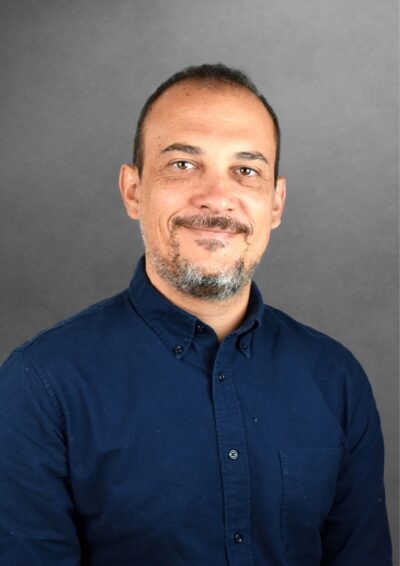
Dr. André Siqueira is Head of the Dengue Global Programme at the Drugs for Neglected Diseases Initiative (DNDi), where he leads global efforts to accelerate the development of new treatments for dengue. A physician specializing in infectious diseases, André has over 15 years of experience in clinical research on emerging and neglected tropical diseases, with a focus on dengue, malaria, chikungunya, and Zika. André has led and coordinated multicenter research initiatives, contributed to international clinical trials, and serves as an advisor to national and global health agencies on arboviral disease control. As part of his commitment to addressing health challenges in low- and middle-income countries, André actively works to ensure that innovative dengue treatment options reach the populations most at risk.
Credits
Hosted and written by Maggie Fox
Special guest: André Siqueira
Produced and edited by Samantha Serrano
Music composed and sound edited by Raquel Krügel