July 14, 2025
GARP–Nepal reviews recommendations for vaccination initiatives against AMR.
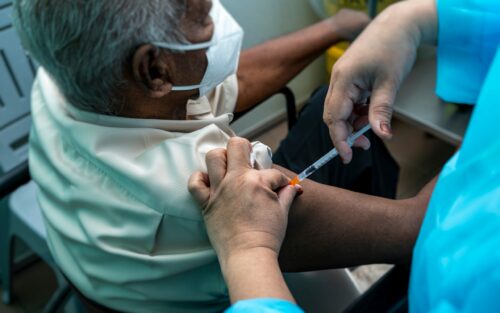
The Global Antibiotic Resistance Partnership (GARP)-Nepal published a policy brief with key recommendations on how immunization programs can be leveraged in the fight against antimicrobial resistance (AMR) in Nepal. GARP is a One Health Trust-led initiative to investigate the value of vaccines against AMR in country-specific contexts. The brief outlined how the National Immunization Programme, which includes vaccines such as the typhoid and pneumococcal conjugate vaccines, has helped to reduce cases of typhoid fever, pneumonia, and meningitis, and how it could be leveraged to target additional vaccine-preventable diseases. To improve AMR control in Nepal, there needs to be equitable access to vaccines, accompanied by clear messaging and effective communication of their value among policymakers, decision-makers, and communities. [One Health Trust]
Insufficient infrastructure and testing capacities and drastic variations in AMR prevalence across Africa
The Mapping AMR and Antimicrobial Use Partnership, a UK government-funded project that includes the One Health Trust, Africa CDC, and other collaborators, analyzed retrospective AMR data collected from 14 African countries between 2016 and 2019. High geographical heterogeneity in AMR prevalence rates, largely due to disparities in data availability and quality, underscores the ongoing issue of gaps in AMR surveillance in the region. For example, Escherichia coli resistance to third-generation cephalosporins ranged from 19.3 percent in Eswatini to 68.4 percent in Ghana. For existing AMR records, only 12.1 percent could be linked to clinical patient data, such as the specimen source and inpatient/outpatient status. These findings underscore the urgent need for investment in strengthening antimicrobial susceptibility testing capacity, improving AMR databases and data collection tools, and establishing clear guidelines to assess AMR data quality. [PLOS Medicine]
Antimicrobial stewardship education may reduce time to antibiotic administration for septic patients.
A quasi-experimental study showed that the time between antibiotic prescription and administration for septic intensive care unit (ICU) patients in seven hospitals across Latin America decreased by over one hour after the implementation of an educational antimicrobial stewardship (AMS) intervention targeting infectiology, nursing, and pharmacology ICU staff. This improvement in “hang time,” or the duration from when an antibiotic is prescribed to when it is administered intravenously, remained consistent one year after the initial results, indicating the sustainability of the AMS intervention’s effects. Given the importance of administering antibiotics within the first hour of sepsis onset, educational AMS programs could help overcome systemic barriers that contribute to the mortality burden among septic ICU patients. [Antimicrobial Agents and Chemotherapy]
Ugandan scientists and the GARP–Uganda team call for increased vaccine promotion during an AMR roundtable.
At a policy and research roundtable launching the GARP–Uganda policy brief in Kampala, Professor Denis Byarugaba, Fellow at the Uganda National Academy of Sciences, highlighted the urgency of addressing antibiotic overuse in the country. Other experts emphasized the importance of integrating prevention measures, such as vaccination, into strategies to combat AMR, which was responsible for more than half of the deaths due to bacterial infections in Uganda in 2021. [New Vision]
Emerging zoonotic threat of Streptococcus suis
A Gram-positive bacterium called Streptococcus suis, which can cause meningitis, endocarditis, sepsis, and even death in humans, has spread widely across the globe as an emerging zoonotic disease and poses a significant threat to the swine rearing industry due to its prominence in pigs. The disease is highly prevalent in southeast Asia, where human cases of S. suis have been linked to consuming raw pork and related products. S. suis has diverse resistance mechanisms against several antibiotic classes and can even store and disseminate antibiotic resistance genes to other Streptococcus pathogens. Improved infection prevention and control practices, such as food safety checks, can help reduce the growing burden of resistant S. suis in humans and pigs worldwide. [One Health]
Tiled-amplicon sequencing used to analyze the H5N1 genome in retail dairy products
A study of viral RNA, sequenced from commercial dairy samples collected in Wisconsin, United States, revealed that a tiled-amplicon sequencing approach was an effective surveillance method for H5N1 highly pathogenic avian influenza (HPAI) virus in cattle. Combined with a reverse transcriptase quantitative polymerase chain reaction method to detect H5N1 HPAI virus in pasteurized retail dairy products, the tiled-amplicon sequencing approach yielded over 90 percent genome coverage at an overall average sequencing depth of 8,176x, with individual samples ranging from 325x to 29,256x. These findings suggest that tiled-amplicon sequencing can produce near-complete genome sequences and support ongoing efforts to track and monitor viral shedding in pasteurized dairy samples. [PLOS One]
RSV infection is associated with increased hospitalizations, particularly in tropical climates.
Respiratory syncytial virus (RSV) activity was found to be associated with increased respiratory and cardiorespiratory hospitalizations among adults in an exposure-response analysis of hospitalization and RSV surveillance data from 15 countries across North America, South America, Europe, Asia, and Oceania. Rates of respiratory and cardiorespiratory hospitalization increased with age, with individuals aged 75 and up at the highest risk of RSV-attributable hospitalization. Notably, high population attributable fractions, or the proportion of the hospitalized population that could be attributed to RSV infection, were observed in tropical climates such as Brazil and Mexico, warranting further research to explore the complex seasonal dynamics of RSV transmission in climatically diverse regions. [eClinicalMedicine]
Safety considerations of a Phase 3 malaria vaccine for children living in endemic regions across Africa
A systematic review and meta-analysis assessing 11 randomized control trials in malaria-endemic regions found that children who received the RTS,S/AS01E malaria vaccine experienced an almost five percent reduction in serious adverse events (SAEs) compared to children who received a rabies vaccine in the control group, suggesting that the RTS,S/AS01E vaccine is effective at providing protection against severe forms of malaria for children in high-burden regions. This major advancement in malaria control and prevention should continue to bolster safety considerations and reduce vaccine hesitancy. [PLOS Global Public Health]
Incidence of healthcare-associated infections in long-term care facilities across Europe
A prospective cohort study assessing the incidence of healthcare-associated infections (HAIs) in various long-term care facilities (LTCFs) across Europe found that 57 percent of residents had acquired at least one HAI in a 12-month period in 2022. Respiratory tract infections remain the most common type of infection in LTCFs and account for nearly half of all observed HAIs in residents, highlighting a need to explore risk factors and establish rigorous infection prevention and control measures in LTCFs. [The Lancet Infectious Diseases]
A cosmopolitan approach to universal health coverage for communities with migrants and displaced people
Bridging the gap to healthcare for migrants and displaced people has remained a global health challenge, as limitations of current universal health coverage (UHC) policies continue to worsen for these populations. Centering global solidarity, a cosmopolitan approach places four pillars at the core of global financing to better support the integration of health into climate finance for migrants and displaced populations. Long-term investment in inclusive health systems, harmonized legal frameworks, integrated cross-border care, and supranational financing each contributes to a new UHC paradigm that ultimately views individuals as part of a shared global community with the responsibility to uphold cosmopolitan principles that prioritize health equity regardless of migratory status. [The Lancet Public Health]
Image from Shutterstock