November 24, 2025
Inadequate access to antibiotics and limited drug diversity found across 14 African countries
A retrospective Africa CDC analysis co-authored by OHT’s Dr. Ramanan Laxminarayan used pharmacy and medical supply data to examine antibiotic consumption in 14 sub-Saharan African countries between 2016 and 2019. The study found that overall consumption averaged just 8.4 daily doses per 1,000 inhabitants—far below global estimates—and was concentrated in a narrow range of common medicines such as amoxicillin and cotrimoxazole. The findings suggest that low antibiotic use and diversity in the region stem largely from limited access, underscoring the need to expand equitable access to appropriate treatments alongside ongoing efforts to promote the judicious use of antimicrobials. [PLOS One]
Knowledge gaps on antimicrobial resistance among African pharmacy workers
A survey supported by OHT researchers assessed knowledge, attitudes, and practices regarding antimicrobial resistance (AMR) among 908 pharmacy healthcare workers across 28 African countries. While 71 percent demonstrated good AMR knowledge, only 42 percent displayed good stewardship practices. Licensed pharmacists and pharmacists working in public facilities showed better practices than pharmacy technicians and those working in private pharmacies. Patient demands and pharmaceutical company influence were identified as key factors affecting antibiotic dispensing. The findings highlight the need to strengthen AMR and stewardship training in pharmacy education and workplaces to promote responsible antibiotic use, particularly for less experienced professionals and those in private pharmacies. [BMJ Global Health]
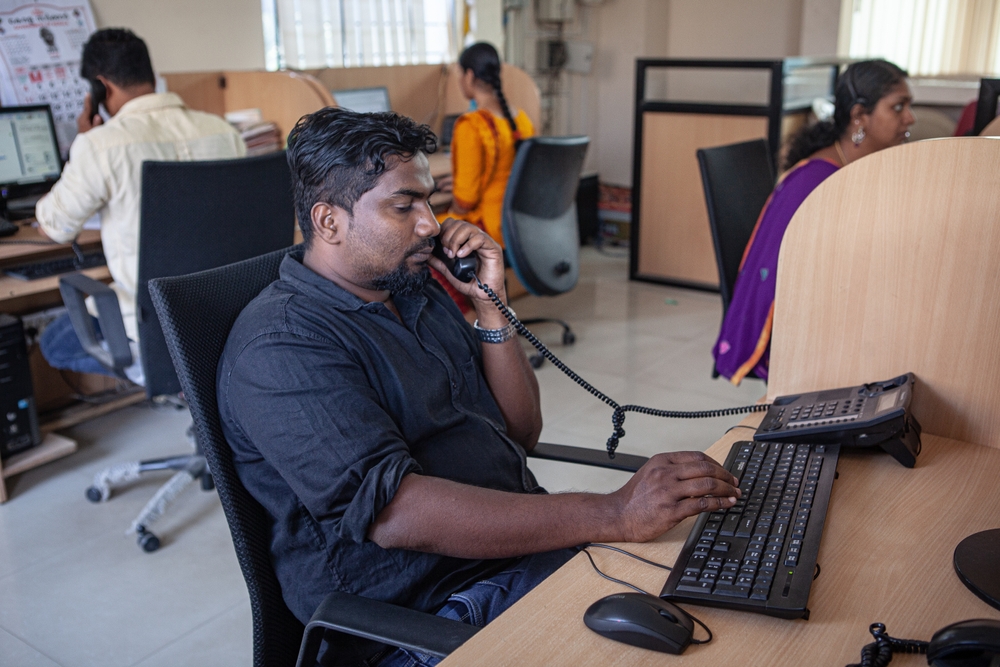
Workplace and personal pressures drive gender gaps in mental health among India’s call center employees.
In an OHT-collaborative study, researchers surveyed 2,698 call center employees in India to understand how professional and personal pressures affect employees’ levels of anxiety and depression. Women’s reported anxiety scores were almost 25 percent higher than men’s, highlighting the combined impact of personal and professional stressors on women’s mental health. The findings underline the need for targeted, gender-sensitive workplace policies to ensure psychological health and sustain productivity in India’s service industry. [PLOS Mental Health]
Fragmented HPV vaccination policies hinder China’s progress toward cervical cancer elimination.
A qualitative analysis of policy documents from China’s 31 provincial and central governments found that while screening and treatment have clear mandatory targets, human papillomavirus (HPV) vaccination policy remains fragmented and limited in scope, with only five provinces offering free vaccines. Most rely on awareness campaigns or pilot programs rather than nationwide mandates or funding, despite evidence that combining vaccination with screening is the most cost-effective prevention strategy. China remains far from the World Health Organization’s 90 percent vaccination target for 15-year-old girls by 2030. To close this gap, China should expand free school-based vaccination, accelerate approval and distribution of domestic vaccines, and implement a unified national HPV immunization policy. [Infectious Agents and Cancer]
Harnessing traditional healers’ influence could be key to stronger outbreak responses in Africa.
Traditional healers are the first point of contact for roughly 58 percent of Africans seeking healthcare, yet they are often excluded from formal health systems, contributing to delayed case detection, misinformation, and gaps in infection control. A 2025 viewpoint in PLOS Neglected Tropical Diseases argues that traditional healers represent a valuable opportunity for collaboration rather than an obstacle to formal healthcare. African governments could integrate them into outbreak preparedness and response by training healers to identify and refer cases quickly, equipping them with infection prevention tools, and establishing clear referral pathways. This structured collaboration could enhance surveillance and strengthen community trust in outbreak responses. [PLOS Neglected Tropical Diseases]
An inactivated vaccine safely reduces Toxoplasma parasite burden in pigs by over 95 percent.
A new inactivated vaccine for pigs sharply reduced Toxoplasma gondii infection, a leading cause of foodborne illness in humans. In trials with mice and piglets, the vaccine was safe and generated strong immune responses: vaccinated pigs had at least 95 percent fewer parasites in their muscles, and half showed no detectable infection. Unlike live vaccines that carry safety risks, this inactivated formulation provides a safer yet highly effective alternative. By preventing cyst formation in pork, it could substantially reduce human toxoplasmosis and strengthen global food safety under a One Health approach. [Veterinary Research]
Social inequalities and the uneven burden of antibiotic resistance in high-income countries
Increasing concerns about antibiotic resistance have shown that there are glaring disparities in who is most at risk of infection, even in high-income countries. This scoping review looked at how age, ethnicity, and socioeconomic status, all of which are linked to health inequality, affect the prevalence of antibiotic-resistant illnesses in developed nations. Black and indigenous communities have higher rates of infection, especially with methicillin-resistant Staphylococcus aureus (MRSA), according to a review of 18 studies from the United States, United Kingdom, Australia, and New Zealand. Across several bacterial species, higher prevalence of resistance was consistently connected with low-income and high-deprivation groups. The results show how factors associated with health inequalities can affect the risk of drug-resistant infections. [JAC-Antimicrobial Resistance]
Antibiotic resistance hotspots in India’s semi-urban drainage ecosystems
To comprehend how environmental factors spread antibiotic-resistant microorganisms, researchers evaluated bacterial communities in six semi-urban gutter locations in Roorkee, Uttarakhand, India. Analysis of the samples revealed high resistance to widely used antibiotic classes, such as cephalosporins, aminoglycosides, fluoroquinolones, antifolates, and penicillins. Nearly all samples had beta-lactamase activity, indicating broad resistance mechanisms. This study indicates that urban gutter water contains antibiotic-resistant bacteria, including those with resistant metabolic pathways and beta-lactamase genes, posing risks to human health and the environment. [Scientific Reports]
Emergence of mammalian-adapted H5N1 strains linked to tiger deaths in Vietnam
Researchers documented an increase in the host range of H5N1 avian influenza in tigers in Vietnam that died as a result of H5N1 infection. To track the source of the infections and find genetic modifications connected to mammalian vulnerability, researchers examined viral samples from 47 tigers and 3 leopards that died between August and October 2024. According to whole-genome sequencing, the virus belonged to clade 2.3.2.1e and was genetically related to strains that caused infections in humans in Cambodia. The tiger-associated H5N1 variation contained important changes known to improve replication in mammals, such as the E627K substitution in the PB2 gene. The results highlight the critical necessity for coordinated surveillance of flu viruses across animal and human populations. [Emerging Microbes & Infections]
Vaccine confidence as a determinant of readiness for new tuberculosis vaccines
The effectiveness of new tuberculosis (TB) vaccine rollouts are largely dependent on public trust in vaccination. To find trends that could influence future deployment plans, researchers examined data from the 2023 Vaccine Confidence Index across 18 high TB burden nations, which account for 65 percent of all TB cases worldwide. Most nations showed a high degree of confidence; over 80 percent of respondents in 14 countries concurred that vaccines are necessary for individuals of all ages. However, at 75.5 percent or less, South Africa, Russia, and Cameroon reported significantly lower levels of trust. The findings indicate that differences in trust in vaccination may impact the introduction of TB vaccines, highlighting the necessity for customized public engagement, advocacy, and communication strategies to increase uptake and maintain long-term immunization success. [BMC Global and Public Health]
Image from Shutterstock