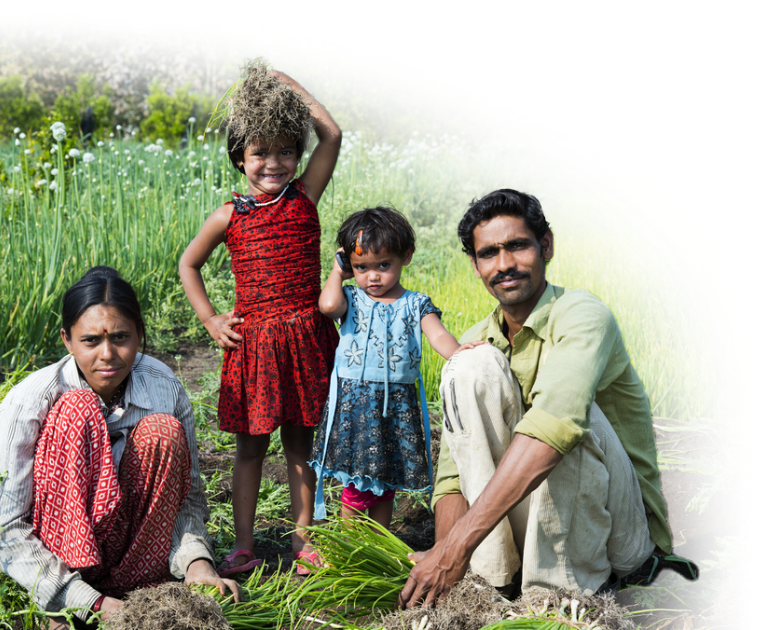

Fighting climate change can feel like a hopeless battle. Who can take on the giant fossil fuel companies when governments are not even bothering? How can countries act when every day temperatures rise, superstorms flood coastal areas, droughts devastate crops, and weather patterns bring insects and new diseases to areas previously spared?
But there is something powerful and important that each and every resident of this planet can do to improve the health of the planet and at the same time improve their own health: eat better.
A new report from the EAT-Lancet Commission lays out just how to do it and it details the benefits of what it calls the Planetary Health Diet. The current way people produce food contributes 30 percent of greenhouse gas emissions that are driving the warming of the Earth’s atmosphere, the report notes – and that in turn is causing the increasing disruption of weather systems. Even if the entire world stopped using fossil fuels tomorrow, if people keep producing food the way they do now, global warming would continue.
But a change in the way people eat can help stop it, and according to the commission, it would not be difficult or unpleasant.
The mostly plant-based diet the experts recommend would not be a radical departure from how many people around the world eat now and it is based on what research shows would reduce rates of the biggest killers of people in most high-income countries and increasingly in low- and middle-income countries – heart disease, cancer, and diabetes. It would mean eating mostly whole grains; fruits; vegetables; legumes, such as beans; tubers, such as sweet potatoes; and cutting out added fats and sugars. People could still eat some meat and dairy if they wanted to, but variety should replace ultra-processed foods.
This change in diet would drive a change in agriculture that would slow the destruction of forests that in turn could reduce pollution from burning and return biodiversity that nurtures a healthier environment, the report says. And moving away from intensive livestock farming could help stop the conditions that have fueled the rise of antimicrobial resistance – so-called drug-resistant superbugs – that evolve when farmers feed antibiotics to their animals.
In this episode, Dr. Patrick Webb, Professor of Food and Nutrition Economics, Policy, and Programs at Tufts University in Boston and an EAT-Lancet Commissioner, explains some of the ideas behind the report and why food is medicine, both for humanity and for the planet.
Maggie Fox 00:01
Hello and welcome to One World, One Health, with bite-sized insights from people working to solve some of the biggest problems facing our planet. I’m Maggie Fox. One Health means we’re all one — animals, plants, and people, and the climate and environment.
Nothing links us all like what we eat, and the latest report from the Lancet EAT Commission really makes that clear. It finds that the global food system contributes to 30 percent of greenhouse gas emissions, which affects the climate, biodiversity, and the freshwater supply. While the planet can produce enough food for all the people, half the world’s 8 billion people cannot reliably count on getting healthy food, living in a clean environment, or earning a living wage.
But the Lancet EAT Commission says there’s a way to fix this, and it’s as simple as changing what we eat. The planetary health diet isn’t even radical. It’s just a plant-based diet that many studies have shown can lower the risk of early death by 27 percent for people who follow it. If enough people did, that would mean 15 million fewer premature deaths a year, plus less stress on the climate, and a chance to stop the destruction of forests, the production of greenhouse gases, and a way to help create jobs for more people.
That seems like a lot of promises from something as simple as a diet, and here to tell us how it would work is Dr. Patrick Webb, a professor of food and nutrition, economics, policy, and programs at Tufts University in Boston. He’s one of the many commissioners who helped write their report. Patrick, thanks so much for joining us.
Patrick Webb 01:44
Thank you, Maggie. I’m really thrilled to be here.
Maggie Fox 01:48
This report starts out with some facts that could startle some people, even if the governments did the things they should do to meet climate goals, like dumping the use of fossil fuels, we missed the targets for slowing global warming enough because of the way we produce food. How could that possibly be right?
Patrick Webb 02:07
Well, it is startling. You’re absolutely right. Maggie, you know, we’re all focused on fossil fuels and trying to transition to cleaner ways of production, mainly in this case, because fossil fuels are the main contributor globally to greenhouse gas emissions, right? And a lot of the warming of the atmosphere is due to carbon dioxide and other emissions.
The challenge we are trying to highlight here is that it’s essential, but it’s not enough that while fossil fuels are a major problem, food systems, which is agriculture, production, and everything around that. It includes transportation, retail, refrigeration, and so on. Food Systems contribute to about a third of all greenhouse gas emissions. So even if we could wave a magic wand and fossil fuels disappeared, and we only used wind and renewable energies, we still wouldn’t hit the 1.5-degree target because this contribution from food systems wouldn’t have changed. It would still be 33 percent of the problem, right? And the climate community has been, we would argue, quite blind to this dimension of both the problem and the potential solution.
There are trillions of dollars going into climate mitigation and adaptation. Less than two percent of that goes to food systems transformation. So, we feel the world is, in a sense, missing a key lever for change if it continues to ignore the importance of changing our food systems, and one key component of that is changing our diets.
Maggie Fox 03:39
Okay, when you talk about transforming food systems, what does that look like?
Patrick Webb 03:44
It really means helping people make different choices at the family level, at the supermarket. It’s that, but it’s also helping farmers transition from one way of producing intensive livestock production, let’s say, to more sustainable systems that are less intensive, less polluting.
It also means enabling a reduction in food loss and waste, right? We produce more food today than we ever have in history around the world, but huge amounts of that never get to the consumer. So, food loss and waste are big ones to address. So, it’s a collection of things that together make food systems more efficient and transform them to achieve key goals, human health, planetary health, and societal health simultaneously, right? Rather than just, “Let’s produce more food.”
Maggie Fox 04:38
I’m struggling here to form a picture of what this diet looks like. It’s plant-based, but not vegetarian.
Patrick Webb 04:46
So, one important caveat is that it’s not a single diet for everyone. It’s a reference diet. So it’s a dietary pattern, right? And as you say, Maggie, it’s plant-heavy; it is not vegan. There is. Component thereof of meat from various kinds of fish, other seafood, animal source foods, including dairy. They’re all in there.
This reference diet was created based on what science tells us in terms of the role of foods and nutrients and human diseases. So, a huge amount of work has gone into nutrient disease analysis, most of which are chronic diseases growing around the world, like diabetes, stroke, heart disease, and so on, and our diet plays a major role in most chronic diseases.
This dietary pattern was optimized to enhance human health, right? So, if most people consumed more nuts and seeds and legumes and fruits and veg and a little bit of seafood, a little bit of meat, based on their own culture and dietary preferences and traditions and so on, then there would be far fewer deaths from those chronic diseases.
Maggie Fox 05:55
And people are curious about what the diet means to them. Can we tell them what it says about what they should eat?
Patrick Webb 05:59
Growing more of the things that most people don’t get access to, which are legumes, beans, peas, a variety of fruits and vegetables, ideally, ones that don’t have to be transported halfway around the world.
So a real focus on increasing key components where people don’t eat enough of them, and that’s in most high-income countries, but in low-income settings and low-income countries around the world, there’s still scope for some people to eat a little bit more meat, a little to have more dairy than they do today. So we’re not trying to constrain people. This is trying to liberate people by saying, “Here’s a science-based dietary pattern that suggests being more plant positive, to use that term, which can help you live longer. And so what’s not to like?” It means less chopping down of trees in the Amazon. For livestock farms, it means less cutting down trees in Indonesia for certain kinds of edible oil plantations that are not so good for you, palm oil, for example, it means a lot less reliance on ultra processed foods; foods that have been processed almost beyond recognition you can, in a lot of cases, you know, snack foods, salty or highly oiled and lot of sugar packaged where you no longer recognize what the foods were that went into those products. And the evidence is growing that they, too, contribute in a bad way to human health, directly, partly because you eat less minimally processed foods when you rely on those, but we need to see less consumption in high-consuming populations of red meat, especially processed red meat, which has very clear implications for heart disease and other chronic diseases.
So it’s going to be a combination of changing diets and changing production patterns, and then everything in between, the businesses, the markets that transform our foods also need to be promoting healthy choices, because it makes people more healthy, and they will live longer and buy more of their food.
Maggie Fox 08:06
And this food production system that focuses on farming animals also overuses water, and then there’s the destruction of biodiversity as well. Involved in all this,
Patrick Webb 08:18
Food systems contribute to a third of all greenhouse gas emissions. You can break that down into about three portions, three-thirds. One third is agriculture itself, which causes, for example, emissions, methane emissions from rice production, methane emissions from livestock, and ruminant production. One third of it is from land use change, which is what you’re talking about, the extension of agriculture into previously forested areas. So you’re liberating carbon dioxide, often burning forest and wood also carbon dioxide, and then growing food in ways that generate other emissions. The other third is non-agriculture, food systems, activities, the production of fertilizer, to transportation of fertilizer, and then after the farm, the transformation of those foods into things that people actually see in the supermarket, but also energy use in refrigeration and so on.
So, land conversion is a major part of this whole story. And one of the things that this Lancet report shows quite clearly is that with business as usual, land conversion will continue happening, and things will continue getting worse. But if we were able to shift to this planetary reference diet, then actually, land conversion would reverse. We would actually need to use about seven percent less in the future than we do today, with really important implications, because on that land, it goes back from agriculture to reforestation, maybe carbon sequestration, and so on.
Maggie Fox 09:53
And let’s talk about the benefits, because it looks like the benefits are actually quite substantial. It can lower the risk of premature death, right? And there is a lot of science behind this, right? Despite fad diets and everything else, there’s a lot of science!
Patrick Webb 10:09
Yeah, there’s a lot of science behind this. The science is being very large studies, very large populations, and not just in North America and high-income countries, but increasingly, from countries like Indonesia, Thailand, China, and so on.
So, we’re beginning to see a global picture which is very consistent, that diets that are too heavy in processed foods, red meats, too much dairy, and insufficient in whole grains, vegetables, legumes, and so on, carry real, real health risks. It’s funny how we all eat, if we can, every day, and what we eat and how much of it we eat, and in what form we eat, is a major contributor to our health or our ill health. More needs to be understood about the choices you make really matter to your health today, but also your mortality risk going forward. So, longevity is not in a pill, I’m afraid, it comes on our plate, and coupled with exercise and other good things, it’s something we can do to make ourselves healthier.
Maggie Fox 11:18
And this diet idea looks at feeding 9.6 billion people. Why that number?
Patrick Webb 11:27
Well, that’s the final number that does change a little bit. It’s what the United Nations projects the total world population to be in 2050, and most of the projections and the modeling for this report look to 2050, and that’s considered a peak. You know, some people rounded up to 10 billion. Right now, it’s about 9.6 billion, because, in fact, at that point, fertility rates are dropping dramatically, and the world population is likely to start shrinking after that time, that’s one could consider that to be a good thing, because in some ways that’s peak people on the planet, and so the use of resources, the demand for food and so on, will be at a peak there.
But there is, unfortunately, a side effect there, because if we are successful in reducing poverty and raising people’s incomes, then actually their demand for resources, power, for PlayStations, cars, and so the number of people may start declining, but the number of things those people use will likely increase.
As incomes increase, people like to diversify their diets. They like to feel comfortable with what they’re eating, and it reflects their wealth. And traditionally, that means more oil, more fat, more meat, more salt. And so, we’ve got to temper this peak people moment that we’ll reach in just a couple of decades with optimizing people’s demand for resources, including food.
Maggie Fox 12:55
The Commission also says that if the world switched to this diet, it would be more sustainable. Sustainable is one of these words that gets used a lot. What does that really mean?
Patrick Webb 13:06
Great point. It has multiple meanings in our report. It essentially means the systems that generate our diets can produce the right kinds of foods in the right kinds of way without transgressing boundaries.
So planetary boundaries, that’s a term the report uses a lot. Nine planetary boundaries relate to acidification of the oceans, relate to greenhouse gas emissions, biodiversity, and so on. We may actually have transgressed or exceeded at least six of those nine planetary boundaries already, and the more you transgress, you’re no longer in a safe operating space.
So the agricultural system, biological systems, ecological systems, and so on. Once they get beyond this safe operating space, they can start failing. The word tipping points is often used in this case. And if there are ecological systems, you know, our water, our temperature, our weather, if they start failing, then food systems are in deep trouble. And so, what we want to do is try and optimize the diet in such a way that the production of food and transformation and so on does not exceed planetary boundaries. It’s done in such a way that we don’t move ourselves towards tipping points where we make things even harder to produce food.
Maggie Fox 14:25
And then, if you want to get past the science a little bit, how does eating more simply and healthfully go hand in hand with equity and social justice, that word that some people really hate?
Patrick Webb 14:37
So, this is an important point. The first EAT Lancet report only talked about human health and planetary health. This one adds a third and equal pillar, which you can think of as societal health, if you like.
It’s a third pillar where we decided to treat it in the same way as the first two pillars. So, planet, humans, and society all need to be healthy. So the focus is on. Here’s the kinds of foods people should eat, and that word you raised earlier, sustainably, takes you very quickly into the field, the area of labor and labor justice and work conditions, and so on. Because some of the foods that we promote, which most people should eat more of, are actually associated in some countries with labor, discrimination, exploitation, and very dangerous work conditions.
You think of salmon aquaculture in Chile, for example, to 100 deaths in the last decade have been claimed to be associated with bad working conditions. A lot of the deep-sea fishing, as well, but also a lot of the fruit and veg production and picking, and packaging in many parts of the world is associated with child labor, with female exploitation, low wage rates, and so on.
So, the social justice part of it is saying that if we want sustainable, healthy foods to be available to everyone, that applies to how we get them to them as well. So, the food system has to look at very carefully what are minimum wages are, what are work conditions are, and what safeguards? How do you protect workers out in the fields in 140 degrees of heat? Where do we go in terms of really, almost modern slavery in some parts of the world, in terms of production and low pay, and human bondage?
So, this, we felt, was really important to add to the story, you can’t have a sustainable, just food system if people are being exploited to generate those foods.
Maggie Fox 16:35
And so, this report has solutions to it. What is the solution there?
Patrick Webb 16:39
I often think the least read part of the report is that, “here’s what you do about it.” You know, so many people focus much more on the planetary boundaries and the diet itself, but a lot of work has gone again, backed by science, we highlight 23 actions, right? Five actions that really relate to shifting diets, and then another eight relating to production within planetary boundaries, and then another set relating to the social foundations of justice. And there they are, things like ensuring guaranteed updated living wages that also close the gender gap. You know, these are mainly government policy things, a lot of training, a lot of legislation to protect, you know, workplace protections, developing legal and regulatory frameworks to protect workers in these areas. But it’s also none of these can really work on their own, and one of the things this report puts forward is that policy makers need to think of it in a sense of clusters or packages of actions that are appropriate to the local context. What are the relative prices? And how do you shift that?
You need to look at tax incentives, but you also need to look at technology solutions that reduce food loss and waste. But we really need to focus on how to raise people’s purchasing power, their income, right? So, this isn’t about making these foods cheaper, necessarily. Some foods, if they’re sustainably sourced and equitably sourced, may actually be more expensive than today. Many won’t because of the price effects, but raising purchasing power gives people more choice. You know, we’re talking about building livelihoods here so that people have more money in their pockets, including those workers in the farm system, so that everyone can make better choices, right?
It’s packages or clusters of interventions that you need to bring together so that people have more information, they have more money, and they have more access to the things that can make a difference, in this case, their diet. So, one of the things we emphasize in this report, compared to the first one, is planetary health diets, plural, not the planetary health diet. It’s a reference diet. And so what dietary pattern will look like varies quite considerably across the globe and also within countries, very much taking into account tradition and culture and cultural norms around foods.
But in fact, there is an EAT Lancet website, which is free to access. There is in some of the supplementary materials a whole gallery of photographs of what would constitute here. Here’s what a planetary health meal, or a set of dietary patterns, would look like in Indonesia, in Colombia, in South Africa, in Atlanta, Georgia, right? Compared to San Francisco. A whole series of beautiful photographs that try to get across the point that a healthy diet needs to be delightful, delicious. It’s not hard work, right? It shouldn’t be onerous to move to one of these diets. It’s something that we all crave is a delicious meal with our friends and family, and that should be the norm every day.
So, the D word delicious is really important. And if you go to the website and look at these different diets, that’s what I come away with, is, wow, look. This is like a giant menu of delicious meals. Yeah, sign me up!
Maggie Fox 20:06
That is a great note to go out on. Patrick, thank you so much for joining us.
Patrick Webb 20:12
Sure, sure, I’m very happy.
Maggie Fox 20:15
Listeners, if you enjoyed this podcast, please share it. And please have a look at the website at onehealthtrust.org, and if you have ideas for subjects, you’d like us to cover, please share them at owoh@onehealth trust.org. Thanks for joining us.
Guest
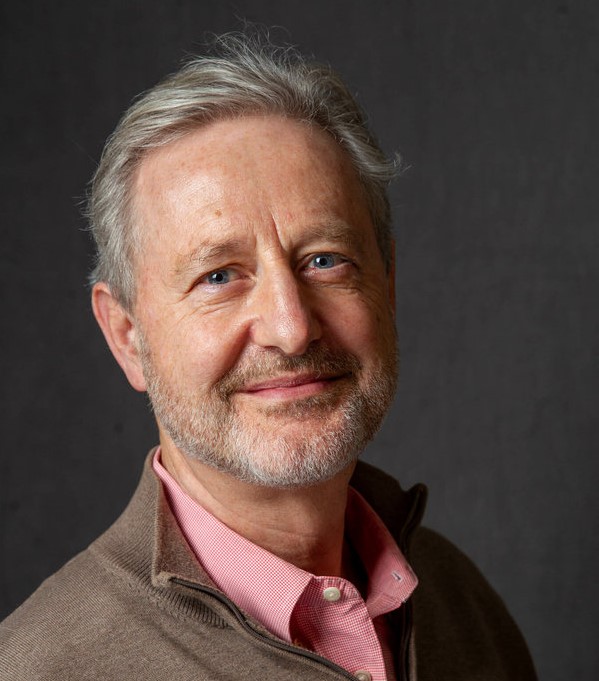
Dr. Patrick Webb works on food policy and climate change, health and nutrition, and has a PhD in Geography. He recently served on the High-Level Panel of Experts of the Committee on World Food Security and was a Commissioner for the Eat-Lancet 2.0 Commission. Previously, he was a member of the Science Council of the Consultative Group on International Agriculture Research and worked as Chief of Nutrition for both the World Food Programme and USAID. Today, he holds the MacFarlane Chair in food and nutrition at Tufts University’s Friedman School of Nutrition Science and Policy.
Credits
Hosted and written by Maggie Fox
Special guest: Patrick Webb
Produced and edited by Samantha Serrano
Music composed and sound edited by Raquel Krügel
Transcript edited by Namitha Prabhu