May 25, 2026
Vaccines to Control Antimicrobial Resistance in Bangladesh: Projections from mathematical models and evidence from clinical studies
Vaccines reduce the spread of drug-resistant infections and antibiotic use.
Typhoid Conjugate Vaccine (TCV)
- Typhoid is highly endemic in Bangladesh with an incidence of 252 cases per 100,000 people annually. Emergence and spread of antibiotic-resistant strains (MDR and XDR Salmonella Typhi H58) are making treatment more difficult and costly.
- In a cluster-randomized trial in Bangladesh more than 41,000 children aged 9 months to 16 years were vaccinated with a TCV, with an additional 20,000 children receiving catch-up doses. Over 17.1 months of follow-up, a single-dose regimen demonstrated 85% overall efficacy against typhoid fever.
- TCV was introduced into the national immunization program in Bangladesh through a nationwide campaign beginning in October 2025.
Pneumococcal Conjugate Vaccines (PCVs)
- For every 100 children aged 24–59 months, there are 19.5 cases of invasive pneumococcal disease and 28.1 cases of acute otitis media caused by Streptococcus pneumoniae, requiring antibiotics for treatment.
- PCVs are estimated to directly prevent 15.6 of these cases, reducing severe illness and antibiotic use in young children.
- While PCVs are routinely included in Bangladesh‘s national immunization program for children, adult vaccination, especially for older adults and people with chronic diseases, remains limited, with access concentrated in private and tertiary public healthcare facilities.
Rotavirus Vaccine
- Rotavirus causes approximately 13.5 antibiotic-treated cases of diarrhea per 100 children.
- An effective rotavirus vaccination program could prevent about 9 of these cases, representing roughly two-thirds of the burden.
- The rotavirus vaccine is not yet included in Bangladesh’s national immunization program.
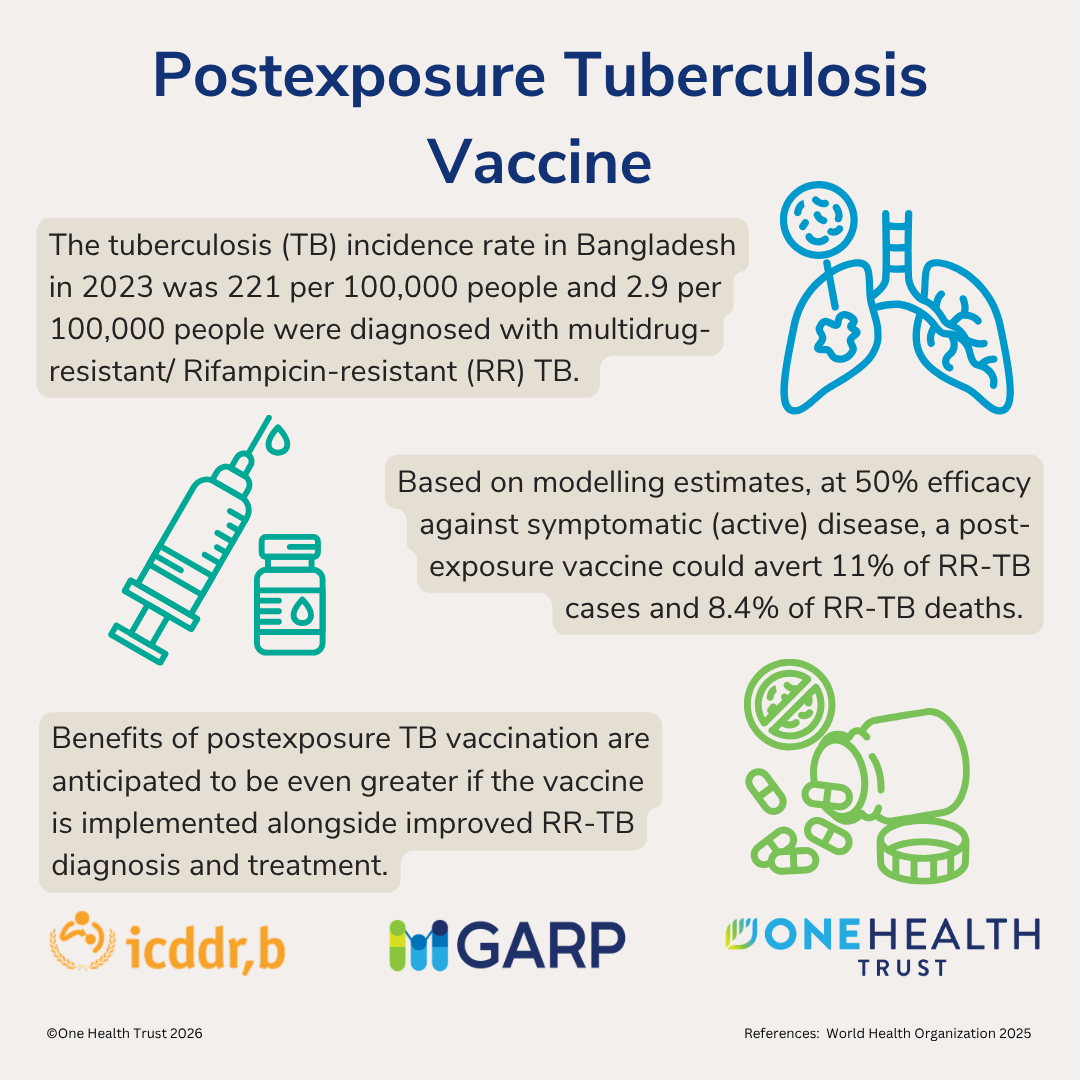
Postexposure Tuberculosis Vaccine
The tuberculosis (TB) incidence rate in Bangladesh in 2023 was 221 per 100,000 people and 2.9 per 100,000 people were diagnosed with multidrug-resistant/ Rifampicin-resistant (RR) TB.
Based on modelling estimates, at 50% efficacy against symptomatic (active) disease, a post-exposure vaccine could avert 11% of RR-TB cases and 8.4% of RR-TB deaths.
Benefits of postexposure TB vaccination are anticipated to be even greater if the vaccine is implemented alongside improved RR-TB diagnosis and treatment.