Rethinking Agricultural Subsidies
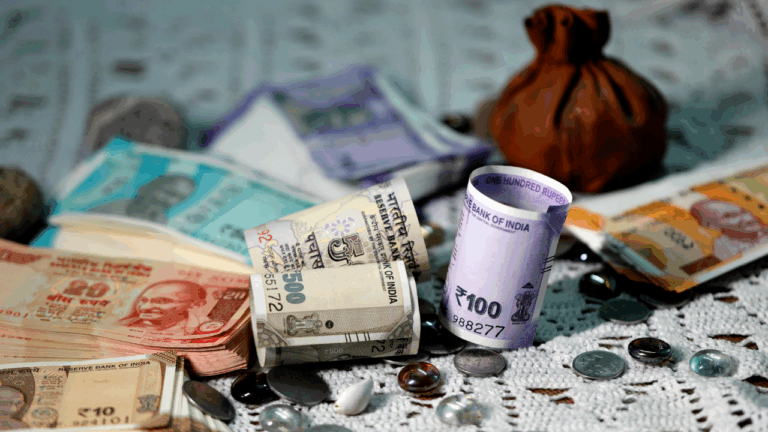
Rethinking Agricultural Subsidies for a Healthier, Climate-Resilient Future  

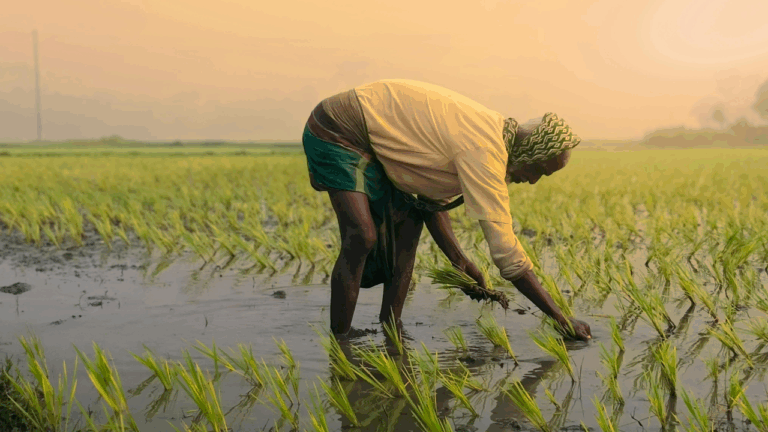
In his Hindustan Times column, Vital Signs, OHT’s Dr. Ramanan Laxminarayan writes that India’s agricultural subsidy system, once crucial for preventing hunger, now needs urgent reform to address today’s health and climate challenges.  India spends over US$50 billion (about 4 trillion INR) each year on agricultural subsidies, most of it supporting rice, wheat, and sugar. While […]

Read moreRead more Read More


  • Filter by:

  • Reset filters

  • Rethinking Agricultural Subsidies for a Healthier, Climate-Resilient Future  

    In his Hindustan Times column, Vital Signs, OHT’s Dr. Ramanan Laxminarayan writes that India’s agricultural subsidy system, once crucial for preventing hunger, now needs urgent reform to address today’s health and climate challenges.  India spends over US$50 billion (about 4 trillion INR) each year on agricultural subsidies, most of it supporting rice, wheat, and sugar. While […]

    Read moreRead more Read More Shape
  • What It Means for India to Truly Flourish

    In his Hindustan Times column, OHT’s Dr. Ramanan Laxminarayan asks a question that goes beyond economic growth: “Are Indians truly flourishing?” Drawing on ancient ideas such as Aristotle’s eudaimonia and Indian traditions such as dharma –a core idea in Indian philosophy that means living in alignment with what is right, ethical, and true – he argues that a good life rests on […]

    Read moreRead more Read More Shape
  • What Singapore teaches about development

    In his Hindustan Times column, One Health Trust’s Dr. Ramanan Laxminarayan reflects on what India can learn from Singapore’s development journey. When Singapore became independent, its income per person was only a few times higher than India’s; today, it is more than 30 times greater. This dramatic gap cannot be explained by size or circumstance alone.  Singapore’s leaders […]

    Read moreRead more Read More Shape
  • Health before growth: Lessons from the 1993 World Development Report

    In his Hindustan Times column, OHT’s Dr. Ramanan Laxminarayan revisits the World Development Report 1993, a landmark World Bank report that reshaped how development is understood. The report challenged the long-held belief that economic growth automatically leads to better health. Instead, it showed, using global evidence, that health is a precondition for development, not merely its outcome.  The report demonstrated that […]

    Read moreRead more Read More Shape
  • Can ayurveda contribute to population health?

    In his Hindustan Times column, OHT’s Dr. Ramanan Laxminarayan explores whether Ayurveda, a traditional medical system that originated in India and emphasizes prevention, lifestyle, and personalized care, can meaningfully contribute to population health. Ayurveda is widely used for everyday wellness and some forms of treatment, yet it remains largely outside formal public-health policy.  For global audiences, Ayurveda is not simply “alternative medicine.” […]

    Read moreRead more Read More Shape
  • Safe tap water as the real measure of development

    In his Hindustan Times column, OHT’s Dr. Ramanan Laxminarayan reframes how we think about development by pointing to one simple test: “Can people safely drink water straight from the tap?” Economic growth and rising incomes, he notes, mean little if basic public services fail. Without reliable access to clean, piped water, societies turn to private and unequal […]

    Read moreRead more Read More Shape
  • Health as the foundation of India’s development goals

    In his Hindustan Times column, OHT’s Dr. Ramanan Laxminarayan argues that India’s long-term economic ambitions cannot be achieved without much stronger investment in health. The government’s Viksit Bharat 2047 goal envisions India becoming a prosperous, self-reliant economy with living standards comparable to high-income nations. But Dr. Laxminarayan cautions that economic growth alone does not make a country “developed.”  Drawing […]

    Read moreRead more Read More Shape