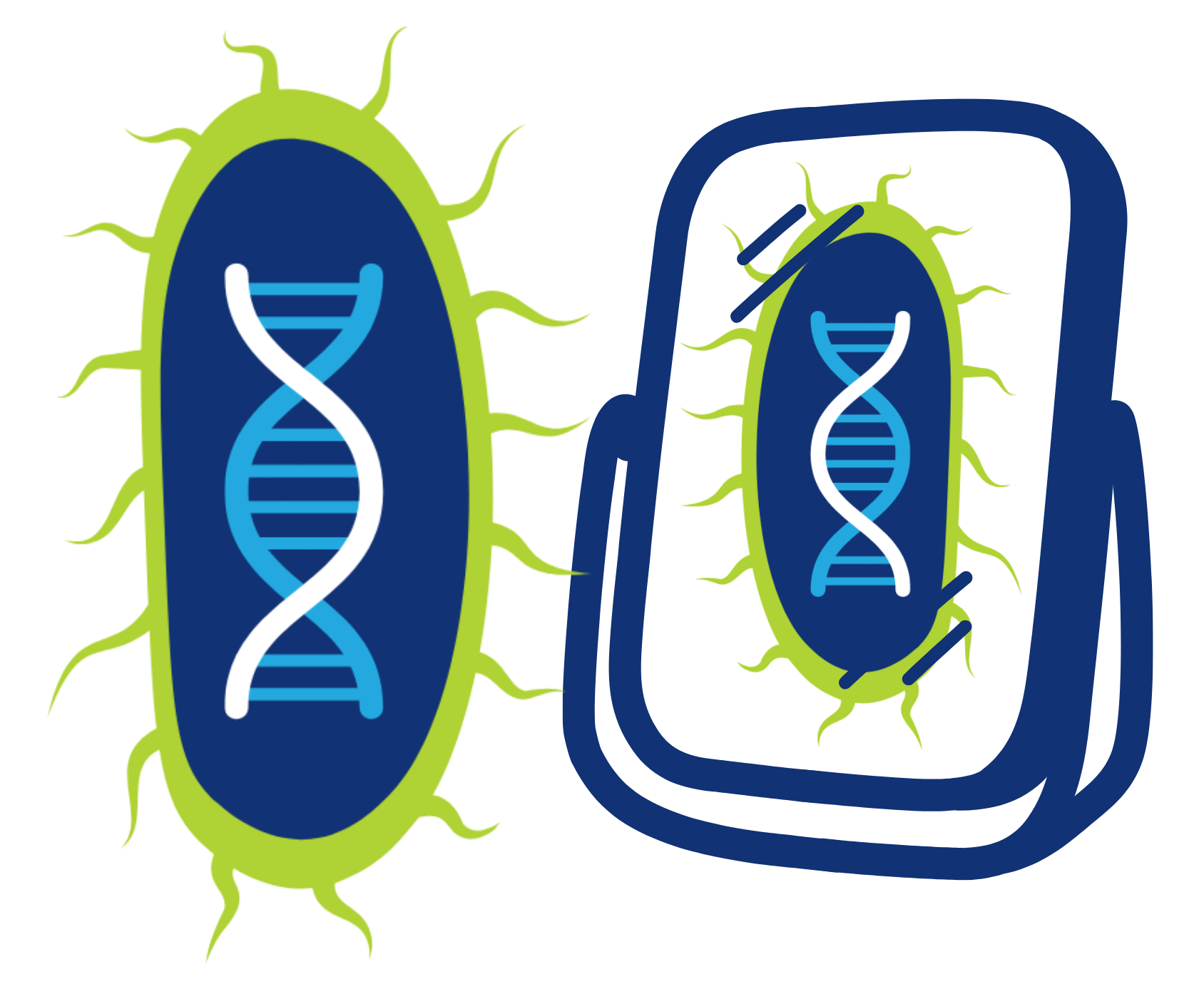
Imagine a life form identical to your own, only backwards.
At first, it would look normal. But just like when you try to use a mirror to read text on a page, it doesn’t quite translate.
For some reason, all of the DNA of life on Earth is right-handed. The double helix of DNA that codes for all life on the planet spirals to the right – a quality called chirality. But, in theory, scientists could build cells based on DNA that spirals to the left.
These mirror cells could defy some of the rules of biology. While it’s not clear how they might be useful, several labs sought to examine the possibility. Some of the U.S. scientists who took a look were startled by the implications and put together a team of 35 experts who studied the risks.
Mirror bacteria, in particular, scared them. Like an invasive plant that local animals don’t recognize as potential food, mirror bacteria could evade the immune systems of animals and people and cause life-threatening infections, they reported. They could wreak havoc on crops and even on entire ecosystems. The experts’ December 2024 report recommended halting all work on mirror cells.
In this One World, One Health episode, one member of that committee, Dr. Jassi Pannu, explains some of what the team found. Dr. Pannu is a Senior Scholar at the Johns Hopkins Center for Health Security and an Assistant Professor in the Department of Environmental Health and Engineering at the Johns Hopkins Bloomberg School of Public Health. Listen as she chats with host Maggie Fox about the potential risks of mirror bacteria and how scientists must voluntarily stop this research.
Guest

Dr. Jassi Pannu is a Senior Scholar at the Johns Hopkins Center for Health Security and an Assistant Professor in the Department of Environmental Health and Engineering at the Johns Hopkins Bloomberg School of Public Health.
Prior to joining the Center in 2025, Dr. Pannu spent a decade at Stanford University, where she completed her MD, residency training, and health policy subspecialty fellowship. Dr. Pannu is a licensed and board-certified internal medicine physician and served as a front-line physician during the COVID-19 pandemic. She also previously held an Ugandan medical license due to her work at multiple Ugandan national referral hospitals and clinics during the COVID-19 pandemic.
At the Center, Dr. Pannu’s primary areas of research include global health security and biosecurity, pandemic prevention and preparedness, and emerging technology security and governance.
Credits
Hosted and written by Maggie Fox
Special guest: Jassi Pannu
Produced and edited by Samantha Serrano
Music composed and sound edited by Raquel Krügel