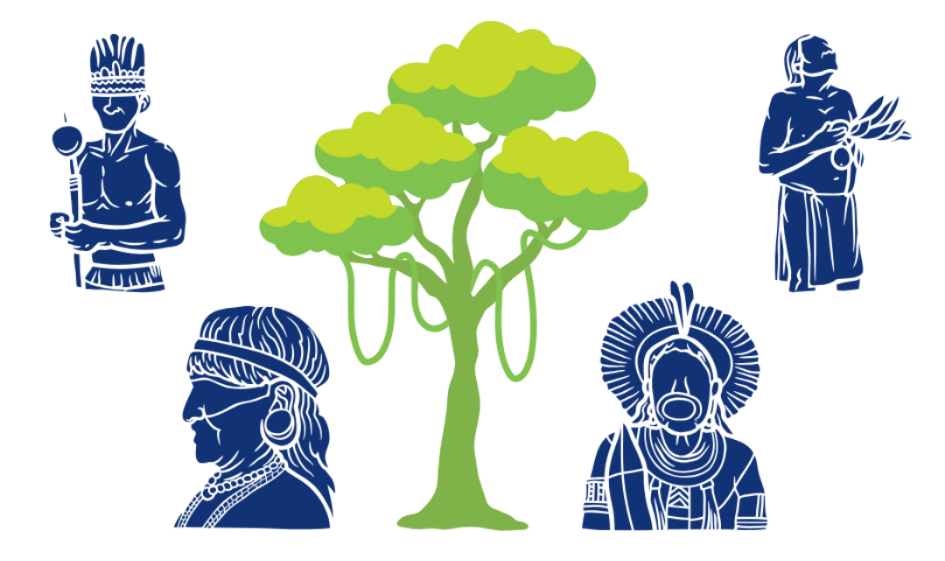
Of course, saving forests is good for the animals that live there and the environment. But saving forests where indigenous people live can have another surprising benefit. It can be good for the health of all of the people who live throughout the region, researchers have found.
That benefit seems to come not just because forests are healthier ecosystems in general, but because indigenous people are good at taking care of them, a new study showed.
Burning forests can cause heart disease, lung disease, skin conditions, and kill hundreds of thousands of people a year, according to numerous estimates. Destroying forests spreads out insects that carry malaria, yellow fever, and other infections that sicken and kill people.
Dr. Júlia Rodrigues Barreto of the Institute of Advanced Studies at the University of São Paulo in Brazil; Dr. Ana Filipa Palmeirim of the Federal University of Pará, Brazil and Université Libre de Bruxelles; and colleagues wanted to see if protection of indigenous land had an effect on health.
They looked at 20 years of data from the Amazon, which reaches into 9 South American countries and is the most biodiverse region on the planet.
As with everything involving biology, the picture is complicated. But if at least 45 percent of the forest cover was preserved in an indigenous territory – an area preserved for the people who originally lived there – nearby areas reported fewer diseases caused by fires, as well as vector-borne diseases such as malaria that are spread by insects.
They reported their findings in the journal Communications Earth and Environment. In this episode of One World, One Health, listen as they discuss what they found and what it could mean for everyone on the planet.
Maggie Fox 00:00
Hello and welcome to One World, One Health, where we chat with people working to solve the biggest problems facing our world. I am Maggie Fox. This podcast is brought to you by the One Health Trust with bite-sized insights into ways to help address challenges, such as infectious diseases, climate change, and pollution. We take a One Health approach that recognizes that we are all in this together, and everything on this planet — the animals, plants, people, and the climate and environment — is all linked.
Sometimes it’s hard to show this, but a team of scientists has done the hard work to demonstrate just how complicated these relationships can be and just how big the payoff can be when you recognize the links.
They looked at the Amazon; this seven-million-square-kilometer region of South America is the most biodiverse place on the planet and has half the world’s surviving tropical forests. Most people know that saving these forests saves the animals, plants, and other life in them, and that preserving the rights of the indigenous people to live there saves those people and also life in the region.
But this new study shows something more. Preserving the legal rights of the indigenous peoples of the Amazon region saves the lives of the other people living in the countries linked by the Amazon: Peru, Brazil, Colombia, Venezuela, and elsewhere. That’s because when you stop the destruction of the forest, you stop the burning, the mining, and the clear-cutting of the trees. You also stop the pollution from smoke! You limit the spread of insects that carry diseases, and so you improve the health of people who live in areas outside the Amazon.
In this episode, we’re chatting with Dr. Júlia Rodrigues Barreto of the Institute of Advanced Studies at the University of São Paulo in Brazil, and Dr. Ana Filipa Palmeirim of the Federal University of Pará, Brazil, and the Free University of Brussels in Belgium, who led the study team.
Júlia, Filipa, thank you for joining us.
Júlia Rodrigues Barreto 01:59
Thank you, Maggie, happy to be here.
Maggie Fox 02:03
You’ve done some important and interesting research that shows that preserving forests for the indigenous people who live there in the Amazon helps keep the people elsewhere in those countries healthier. Can you tell us how?
Júlia Rodrigues Barreto 02:17
Yeah, that’s great, right? We did! I’m so happy that we did, and all the studies started by thinking about how many important roles indigenous people play in the environment, and by diversity, and stopping deforestation, and a lot of things that science has been building evidence in the past years, and still those arguments haven’t been so effective to orient policy.
So, we kept thinking, and the team did great work on that, because we’re like multitudes from science, and we gathered a lot of aspects that can bring the subject together to ask if there’s also a role being played in human health. And we had some initial signs of it, like highlights and previous studies, and from all these teams that also had some experience, you also think about that. So, we then gathered everyone at one table in very, very gratifying, rich discussions. And I really think that one of the most important highlights of these studies is that we have so many important perspectives on the table about the Amazon. We tried together as many countries evolved, and I think we did in so many important areas. We have health scientists on that. We have a social scientist who can also talk more specifically about some particularities of indigenous people in their country.
So, this was a good effort to try to compile and deliver some knowledge on those roles that indigenous people play in health. And of course, there is another complicated layer. There is a change in environment, and we already know that the Amazon has so many important services or benefits to people that the forest provides when standing, but it’s not only about standing, because it matters. How is the forest? We also aggregate some information on forest fragmentation. So not only how many forests we have, but how is this distributed? How much edge does it have with other sorts of land use and with a good set of data? Huge, actually, effort from this great team that we had the chance together, so we could get these 20 years of data to reach data sets that we got out as well.
Some weeks before the study came out, we were able to publish the data set as well, so more questions can be asked about the evolution of health and in the whole of Amazon.
So, after 20 years of over 20 diseases in the Pan-Amazonian areas, we got this message that indigenous people play some kind of role in forests. How they take care of these forests can also provide benefits to people’s health, not only them, but also people who are elsewhere. Interesting! Interesting, and even more interesting if we take a look at what kind of indigenous territories we mean, and we saw that if this was with lands rights guaranteed and protected, if their governments recognized these lands, these benefits were even clearer.
Yeah, this was one of the best outcomes we could expect, and we are very happy to share that with the world and keep asking more questions and digging more into this.
Maggie Fox 05:23
It sounds like you measured several different things. You measured air quality, because the forests were not being burned, and what are known as vector-borne diseases, because when the forests aren’t damaged, there are fewer mosquitoes and other pests to carry diseases. And that got a little complicated. We’re not going to go into that so much, but you need a certain amount of preservation of the forest cover for that to work. But can you talk about what sort of diseases you looked at?
Ana Filipa Palmeirim 05:52
So, we looked at two, let’s say, big groups of diseases. So, we have fire-related diseases that can be like respiratory and cardiovascular diseases, and we think that those are somehow related to the number of pollutants people are exposed to that are released by forest fires.
And then we have zoonotic diseases, which are those diseases that are transmitted through animals. So, for example, mosquitoes and all those diseases somehow, they are somehow related to the forest. So, we did not consider diseases like dengue, which is more related to urban areas, for example.
Maggie Fox 06:34
And this is because when you have a broken forest edge, right when there’s some forest, it’s not entirely urban. For some reason, this is a really good area for the bugs to live in, right? And so, you either want a really thick forest, or you want a pure urban environment, when it’s half and half, somehow that’s better for the bugs.
Júlia Rodrigues Barreto 06:51
Exactly. It’s because of deforestation to the degree that you lose forests, or the degree that these forests are not well preserved, but this alters the niche of the vectors, well, actually for the host and the pathogens as well.
So, this messes up the community composition, the behaviors, the movements, and the whole spatial distribution. This is what we already know from previous studies. So, how the effect of deforestation in changing these landscapes can change, can make you expect to change the risk of these diseases. That is why we can directly think of forest integrity; how presumptive it is that it can play a better role in containing this risk of diseases.
Maggie Fox 07:31
So, is the reason for preserving the forest matter? Does it matter if you’re preserving it for the people or just for the sake of the forest?
Júlia Rodrigues Barreto 07:38
Yeah, this is something that we couldn’t directly test, but this is where our interpretation and discussion of the results go, because we couldn’t put in the same study how better indigenous lands are managed compared to other source protected territories, such as reserves and other sources of it.
While Brazil has plenty of this mapped data that we could have, on the broad scale that we try, we couldn’t get into that. But left over to grow forest, it doesn’t do as well as when there is indigenous there, and we tested forests elsewhere, and this wasn’t as well as including indigenous forests in the model. So, it helped explain better than other sorts of forests in general.
Ana Filipa Palmeirim 08:24
Yes. So, one way like to illustrate that is, for example, we know that deforestation rates are lower within indigenous lands, and that results in fewer forest fires happening. And we also know that the pollutants are released by forest fires. They travel like 1000s of kilometers; they know no borders. So, of course, that will impact not only the people living within indigenous lands, but also people living very far away from indigenous lands.
Maggie Fox 08:54
And that goes perfectly into my next question, because how far away do the benefits go? Were you able to measure that? Does it go as far away as, say, Lima in Peru, which we know is very far away from the Amazon, or Sao Paulo, where you are in Brazil? Do the benefits extend that far?
Júlia Rodrigues Barreto 09:11
What we saw was that we analyzed only the Amazon scale. So, we can say as far as Sao Paulo, but we can expect that, well, as we know, when, for example, the opposite happens when forest fires happen in the Amazon, we have this reflected in Sao Paulo.
I believe I was here four years ago when the high season of fires, actually at this time of the year, was happening. We got darker and 3 pm, which is not at all common in Brazil, and this was directly related to fires there. We can also expect these benefits to travel as well, in hope, of course. So, as we saw, at least forest pollutants can travel at least 500 kilometers, as our models showed.
Ana Filipa Palmeirim 09:53
This is quite similar to zoonotic diseases, because they go like this, peel over. Be very fast, and they could also travel. And we have seen that more or less recently. I was mentioning COVID-19. It goes like zoonotic diseases can spread quickly.
Maggie Fox 10:12
Can you tell us about some of the indigenous people whose land is being preserved and what it looks like?
Ana Filipa Palmeirim 10:19
I have been working in the Brazilian Amazonia for about 15 years. And one of the places where I used to work is a hydroelectric reservoir, a very big one. And in that area, before damming, there were two ethnic groups living there, the Waimiri and Atroari people. While I was doing field work, I used to find the ceramics left there, and I used to feel quite bad because they had been displaced so the dam could be constructed, and they were displaced. So, they were two separate ethnic groups. So, the story is quite sad, and they were displaced, and now they live together. So, they are the Waimiri-Atroari people now, so the indigenous land is very close to the place where I was working. And sometimes I used to see them moving from one side to another. And the people who were working with me, the field assistants, they were mostly fishermen, local fishermen.
And the way they speak about the indigenous lands, land, there was that they were so afraid of going there, but there were so many fish available, which were higher in the indigenous land than elsewhere, so they were very tempted to go fishing there. Then they were very afraid of being kicked off by the indigenous people. So, they were kind of really respecting the indigenous land. Because the indigenous people were indeed protecting their lands.
Maggie Fox 11:41
And this is interesting, because I think about the outside world, I don’t think people understand the number and diversity of different groups of people that live in the Amazon. How many different groups are you talking about?
Ana Filipa Palmeirim 11:53
In total, we are talking about 33 million people living in the Amazon biome.
Júlia Rodrigues Barreto 12:00
And 350 ethnic groups, so it’s quite a lot.
Maggie Fox 12:01
And back to the study itself. This is hard to demonstrate. You all did the hard work needed to do it.
Júlia Rodrigues Barreto 12:08
Yes, I hope we did this. It was like a lot of effort. Since that effort and since from temporal and spatial scale, this is a big effort that we had to make to get the sensors, and the data now is public, so future research can take a look at it, if one aims to research on the evolution of health in the Amazon for at least the past 20 years.
And this was not an effort that we had before that could compile on a pan-Amazonian scale. And it’s good to think that we sort of encourage future efforts to keep, I don’t know, growing this data so we can keep doing research like that. We see that having these indigenous lands it’s not enough, and solid legal protection, enforcement of these rights matter. But also, we talk about different sorts of forest cover and landscape structure as well. So, we talked about the effects of pigmentation, too.
Some way to say it is that protection may only work if we’re talking about forests that are well-taken care of. We could expect, of course, that the more intact forest would deliver better benefits over health, but these nonlinear trends and all these complex components that we included, and we found different answers from one to another. They’re all very interesting things that we gained some knowledge about.
Maggie Fox 13:27
And when you say a nonlinear trend in a simpler language, that means a little is good and a lot is better. You don’t mean that. What you mean is you have to get to a certain point before you get a good effect, right?
Júlia Rodrigues Barreto 13:39
Yeah, this is a good way to say so, for instance, if a forest has a lot of effects on fragmentation, and a low forest covers it. What we found is that health benefits may decline, and in some cases, the disease risk might even increase. So, we’re talking that there are different directions to these trends, so it can change.
So, when we talk about nonlinearity, it’s not only linear. Just go up or down. It’s either beneficial or not. No, it can change if you’re talking about the graded landscape or not. It was not long ago. Actually, it was very long ago, 10 years ago, in my master’s field work in the Amazon, and in the same forest that I was collecting in one day in the next month, we came back there to collect again, and there was no more forest to step into, and there were a lot of fire scars. And this was terrible. And we see people, not only indigenous, like we’re talking about the well, actually, the data that we have on general people, people that went to the health centers in the city, getting sicker and sicker. And of course, the people who work to stop these fires, people are having other sorts of impacts on health, like directly taking care of these fires. So, I think there’s not only a very broad health benefit message here, but we also see these people who are closer to forests and more local messages, too. We can talk about the vulnerable population and everything.
It’s really interesting to be not only closer to the climate discussions and international debates, such as the COP30 that is coming in Berlin, Brazil, but also these yearly effects that we see of the forest fires in the Amazon. And how can that travel distances and be here? Let’s try to keep forests as a buffer against air pollution and also not boost the spread of zoonotic or vector-borne diseases.
Maggie Fox 15:25
Julia Filipa, thank you so much for joining us.
Júlia Rodrigues Barreto 15:27
Thank you.
Ana Filipa Palmeirim 15:30
Thank you.
Maggie Fox 15:33
Listeners, if you enjoyed this podcast, please share it and please look at the website, at onehealthtrust.org, for more on this and other interesting subjects. And if you have ideas for topics you’d like us to cover, please share them at owoh@one health trust.org. Thanks for joining us.
Guest
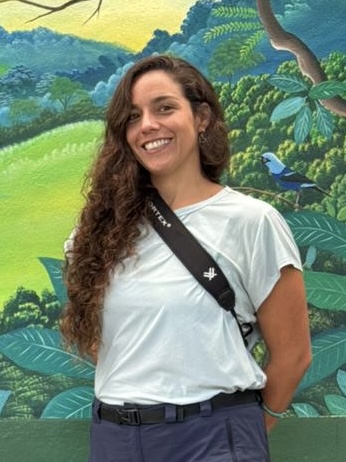
Dr. Júlia Rodrigues Barreto is a Brazilian researcher who holds an MSc and a PhD in Ecology, and an MBA in Data Science & Analytics from the University of São Paulo. Over the past decade, Júlia has worked at the crossroads of landscape ecology, conservation, and biodiversity, developing integrative approaches that combine ecological and socioeconomic data within a One Health perspective to guide more inclusive environmental policies. She is currently a postdoctoral fellow with the BIOTA Synthesis initiative at the Institute of Advanced Studies, University of São Paulo, where she explores how scientific knowledge can be co-produced to better serve society and public policy.
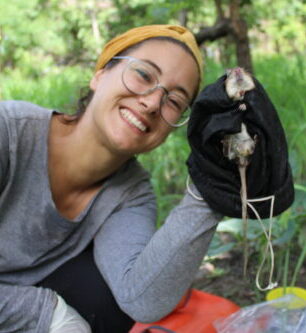
Dr. Ana Filipa Palmeirim holds a PhD in Ecology by the Federal University of Rio de Janeiro, Brazil. After a short postdoc at the same institution, Dr. Palmeirim moved to China, where she joined the Southern University of Technology. She was then granted an individual Marie Sklodowska-Curie fellowship at the University of East Anglia, United Kingdom. She was a postdoctoral researcher within the ERA Chair Tropibio project at the Research Centre of Biodiversity and Genetic Resources, in Portugal. She then worked for EcoHealth Alliance, U.S., and went on to hold a visiting professorship at the Federal University of Pará, Brazil. Currently, she is affiliated with the Université Libre de Bruxelles, Belgium.
Credits
Hosted and written by Maggie Fox
Special guests: Júlia Rodrigues Barreto & Ana Filipa Palmeirim
Produced and edited by Samantha Serrano
Music composed and sound edited by Raquel Krügel