Drug-resistant germs are hidden killers in more than one way. Not only are the microbes invisible to the human eye, in many places, they’re invisible because people simply are not looking for them systematically.
Doctors often do not know what infections their patients have and treat them based on best guesses, which allows for ineffective treatments and exacerbates drug resistance. Policymakers don’t know which infections are most common among populations and cannot make informed decisions about needed treatments or vaccines.
This is a major problem across Africa and a new report shows just how complex the problem is.
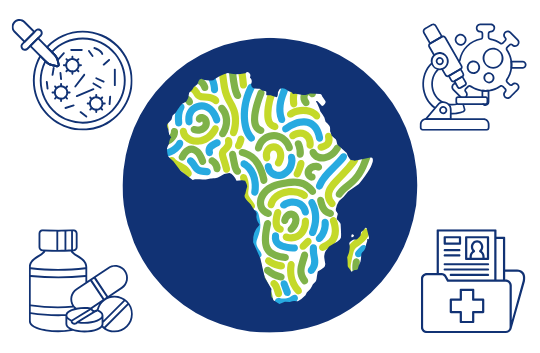
The Mapping AMR and Antimicrobial use Partnership (MAAP), which included the One Health Trust as well as the African Society for Laboratory Medicine; Africa CDC; the East, Central, and Southern Africa Health Community; Innovative Support to Emergencies, Diseases, and Disasters, a nonprofit focused on technology and communication; the clinical research group IQVIA; and the West African Health Organization, collected data from laboratories from 14 countries in Africa (Burkina Faso, Cameroon, Gabon, Ghana, Kenya, Eswatini, Malawi, Nigeria, Senegal, Sierra Leone, Tanzania, Uganda, Zambia, and Zimbabwe). “The study revealed significant gaps in bacteriology testing capacities,” the group, whose work was paid for by the UK government’s Fleming Fund, wrote in PLoS Medicine.
It’s the biggest survey yet of testing for antimicrobial resistance – AMR or drug resistance – in Africa.
Among the gaps: too little testing overall, a lack of laboratory capacities, and poor coordination and analysis of records. Many records were kept only on paper, which made them almost impossible to access.
None of this surprises Dr. Sabiha Essack, South African Research Chair in Antibiotic Resistance and One Health and Professor in Pharmaceutical Sciences at the University of KwaZulu-Natal.
In an ideal world, she says, a doctor, nurse or other professional should see a patient, test them to see what specific microbe is causing an infection, check to see which drugs will successfully fight that germ, and then treat the patient accordingly.
Cheap point-of-care tests should be available everywhere and the results of those tests should be entered into systems that officials can use to make policy decisions, she says. Listen as she tells One World, One Health host Maggie Fox other ways to improve our knowledge about the drug-resistant infections that lurk out there.
Want to know more? You can find One World, One Health episodes on drug-resistant infections in cancer patients; superbugs and microplastics; the personal toll of antibiotic resistance; one woman’s antibiotic resistance nightmare; how to prevent drug resistance, and more.
Maggie Fox 00:01
Hello and welcome to One World, One Health, where we chat with people working to solve the biggest problems facing our world. I am Maggie Fox. This podcast is brought to you by the One Health Trust with bite-sized insights into ways to help address challenges, such as infectious diseases, climate change, and pollution. We take a One Health approach that recognizes that we are all in this together, and everything on this planet — the animals, plants, people, and the climate and environment — is all linked.
Antibiotic resistance is a growing problem, one that’s threatening millions of people around the world. Antibiotics are lifesaving drugs, even miracle drugs, but the germs they fight have quickly developed the ability to resist their effects.
A new collaborative study from the One Health Trust and partners found that this is a particular threat across Africa. It’s the largest study to date looking at the continent, and it finds that in some countries, up to 70 percent of common causes of infection, such as Escherichia coli and Staphylococcus aureus, resist antibiotics used to treat them. Resistance rates are as high as 15 to 20 percent elsewhere, which means treatment is failing for patients. But that’s just where the data is available — and that’s part of the problem. There’s just not enough testing to even know what kind of infections people have in the first place.
In this episode of One World, One Health, we’re chatting with Professor Sabiha Essack, South African Research Chair in Antibiotic Resistance and One Health and Professor in Pharmaceutical Sciences at the University of KwaZulu-Natal in South Africa. She has 30 years of experience fighting drug-resistant germs, which is known as antimicrobial resistance (AMR), in countries with limited resources, much of which is based on surveillance.
Sabiha. Thanks so much for joining us.
Sabiha Essack 01:49
You’re very welcome. I look forward to our conversation.
Maggie Fox 01:53
You’ve had a look at this report, which is startling. What are some of the first things that struck you about it?
Sabiha Essack 02:00
Besides the high levels of resistance that were evident in bacteria or bugs that are commonly implicated in infections, the three things that stood out for me are the variability in bacteriological testing across countries.
The second part of it was the limited usability of the data that was generated, and thirdly, was the quality and the representation of the data, and when we speak about the variability in bacteriological testing, this shows that treatment is being given to patients without the benefit of knowing exactly which bug is causing the infection and whether that bug is going to be able to respond to the antibiotic treatment that is being given.
So that’s a bit scary for me in terms of not having diagnostic-informed treatment. Secondly, we don’t have too much data on the clinical aspect. “What was the patient diagnosed with? When was the sample taken? What was the age of the patient?” In some instances, “What was the gender of the patient?” And all of this is really important when we’re trying to use this type of data to determine what a standard treatment guideline should look like. So, AMR data informs treatment guidelines, and treatment guidelines will inform essential medicines lists that the Ministry of Health will have to have in stock in terms of treating infections of this sort.
The third one was the quality assurance aspects of it, and quality assurance is really important, especially in laboratory processes. This tells us that when we read the result of so much percentage of resistance in E.coli implicated in urinary tract infections, then that is something that we can rely on, because all of the processes in the laboratory were absolutely perfectly undertaken, and that is an accurate result.
Maggie Fox 03:48
All this sounds like it would require a lot of resources and capacity. I can see why the problem would be so bad across a continent as large and diverse as Africa is.
Sabiha Essack 03:59
Absolutely! It’s having the infrastructure available. So, when you do diagnostics, a microbiology lab has to have special infrastructure. It has to have specially equipped technical people, such as the lab technicians, etc. It has to have the operational or the running expenses that allow you to have an uninterrupted supply of the laboratory reagents. And all of these things are essential for a diagnostic service to work optimally. In Africa, the infrastructure has been upgraded quite a bit because of funding, for example, from the Fleming Fund that has really built up surveillance infrastructure in many low- and middle-income countries, a large number of them being in Africa.
The Fleming Fund is supported by the UK Government, and it is basically put into place to assist low- and middle-income countries in Africa and Southeast Asia, in the main, with developing an AMR surveillance program and a system.
So, this funding sets up laboratories that are equipped to undertake AMR surveillance. It also trains the technicians within laboratories so that they’re able to undertake AMR surveillance competently and confidently. And they also have regional grants, for example, looking to external quality assurance for the data that is being generated in these labs in different countries. It has been focusing mostly on southeast Asia and Africa, where there is a disproportionate burden of AMR.
Maggie Fox 05:23
Is this going to be enough to kind of help solve the problem, or is more needed?
Sabiha Essack 05:27
Surveillance is meant to be longitudinal, and it has to be consistent. The Fleming Fund is time-bound, so it will cease at some time. At this time, the country governments must take ownership and fund the surveillance efforts going forward.
Maggie Fox 05:44
And do they need help doing that? You say, take responsibility. But you know, that sounds great in words. How hard is it to actually bring it about?
Sabiha Essack 05:53
So, I think that the country governments are very well aware that AMR surveillance is imperative to, first of all, determine the nature and extent of AMR within a country, but also to assess the success of interventions to reduce AMR in a country.
So we need to know what or how bad the problem is and whether it’s improving, if we have made any efforts to mitigate it or into any interventions to address AMR.
Last year, we had the second political declaration on AMR, and all countries signed up to make an effort to reduce AMR going forward. So, we had the heads of state who have signed up to it, and surveillance has been key to one of the commitments that they’ve signed up to. What happens is that there has to be a health case, an economic case, a societal case, and a policy-related case for AMR surveillance to continue.
So, policymakers and governments need to understand that AMR is really important to ensure the health of the population. Maggie, you’ll understand that the most common ailment any one of us has had has been an infection, whether it has been a mild infection or whether it has been a serious infection.
We all have infections, and we’ve all relied on antibiotics to treat those infections. So, it’s really important for the health of the country and its people to have effective antibiotics to treat infections, whether they are mild whether they be serious. So that’s the health case.
The second part of it is the economic case. So once somebody is sick, they stay away from work. And in low- and middle-income countries, no work means no pay, so the person is losing income, but the industry or the economy in which the person is working is also losing out from the lack of a person working in that industry. So, it has an impact on a broader economic area, such as the gross domestic product (GDP) of a country, and then we think about the societal aspects of it.
So should a mother, for example, be taken ill? So much depends on a mother running the home, doing the school rounds, preparing the meals, etc. So, it also has a societal impact. And then in terms of the policy and the political impact, our politicians have signed on to this. They’ve also signed on to other declarations that have an impact on AMR.
So it becomes imperative that all of these cases are made, people are made aware of these cases, and the government is made aware of these cases, and they then have the motivation to actually invest in AMR surveillance for the reasons, for the health reasons, for the economic reasons, for the societal reasons.
Maggie Fox 08:26
So, you were talking a lot about surveillance — makes me think about somebody going around in sunglasses or something to hide what they’re looking at, but what you’re talking about is looking for what’s out there. You have recently changed your focus and what you’re doing, keeping an eye out for what kind of drug-resistant bacteria are out there. Tell us a little bit about what you’ve changed your focus to, what you’re doing, and how you’re keeping an eye out.
Sabiha Essack 08:50
Sure. So, when we think about conventional surveillance, it is lab-based surveillance. It requires an invasive, painful sample to be taken from a patient which then goes into the lab and then goes through the entire process, and it takes two to three days, etc, when the results come out, what we know is that this patient has an infection caused by this bacteria, and this bacteria is susceptible or will respond to this antibiotic.
So, it tells us what the bacteria are, as well as which antibiotic it is will work against them. So that’s the patient level, and together with this data, if we accumulate all of this data, it gives us trends in the bacteria, it gives us trends in the type of disease, in terms of antimicrobial resistance. But this is really, really costly, and it’s only possible in laboratories, in tertiary hospitals in urban areas, and so we’re not getting all of the information that we need countrywide, and we are especially not getting information from the rural areas where there are no labs. So, what we decided, and we sort of piggybacked on the wastewater-based surveillance that was undertaken for COVID-19, but also what is being routinely done in low- and middle-income countries for polio.
So, we take wastewater to identify the poliovirus with SARS‑CoV‑2. But what we said is, if you could just fill up two additional lab tubes for us, we would like to process this in our labs. What we’re doing is finding in the wastewater what bugs are present, and we’re also finding out what antibiotics would work against them. So, when you do wastewater surveillance, it’s far cheaper. It’s piggybacking on already existing surveillance. And what it does is it tells you, on a population level, that in this particular bug, this is the level of resistance to this particular antibiotic. It does not tell you that, on a patient level, this antibiotic should be used to treat this patient, but it does tell you that resistance is increasing or decreasing to a certain antibiotic class, and if hospitals in that area are using that antibiotic, then perhaps they should change to another antibiotic class. So, this is cheaper. It is piggybacking on existing surveillance.
In fact, every single country does water quality surveillance, so we can even piggyback on water quality surveillance as one of the options, and this gives us population-based levels of antimicrobial resistance, and it gives us an overview of what’s working or what should be working and what’s not. And the healthcare facilities in that area can then decide on whether they should continue using a particular class of drug or they should change to another one, because resistance levels are increasing.
Maggie Fox 11:23
So I could imagine this would even help if clinicians are forced to do what’s called empirical prescribing, their best guess, if they have the wastewater surveillance data, they could know that, for instance, there’s a particular strain of bacteria out there that’s resistant, they could say, well, I know that there’s a lot of this particular thing out there, so if a patient comes in with these particular symptoms, it’s more likely that it would otherwise have been that that’s what they’re infected with, absolutely. And according to the report, there’s a technology gap too. A lot of these records are still on paper.
Sabiha Essack 12:03
The best way in which we can compare resistance rates over time is if we can visualize them electronically or in a digital format. Once you have databases created, even in a simple as simple as an Excel sheet, it gives you the ability to create graphs and compare trends over time. If you have this in writing, it really becomes difficult to identify differences over time if it’s in a notebook or in a manual form, and so having digital records of AMR or having electronic records is going to make it much, much easier. We have the WHO net software that is very useful, but we have also used simple Excel spreadsheets and have also visualized our data really well in bars and graphs, trends, etc. That has worked very well. So, it is difficult to look at changes over time, to look at escalation or de-escalation over time, if it’s in notebooks and if it’s not, sort of translated into visual areas that can show us differences over time.
Maggie Fox 13:05
Why, in Africa in particular, is this problem so bad?
Sabiha Essack 13:09
So we have a perfect storm for AMR in Africa, we have high levels of infectious diseases because of poor socio-economic conditions of the people in Africa, and we have poor access to effective antibiotics, on the one hand, because not all the antibiotics that are available are actually registered in low- and middle-income countries. On the other hand, we have an over-the-counter supply of antibiotics without a prescription, so those that are available are not used correctly. They’re not made available on prescription only, and then we have very, very little diagnostic support, so that the value of diagnostics is not really appreciated very much on the African continent.
So what this means that clinicians are often prescribing on Best guess without the benefit of diagnostic tests and drug resistant bacteria can survive and thrive to worsen the situation in low-and-middle-income countries in Africa, disease or infection spread very easily because we don’t have the best infection prevention and control processes in hospitals, and we have poor water sanitation and hygiene infrastructure and practices in communities.
Maggie Fox 14:18
Is there something we can do to make it easier, to give countries better capacity to diagnose and test
Sabiha Essack 14:25
So Maggie first, there must be an appreciation of the value of diagnostics, and this appreciation has to be by the clinicians, the doctors working in the hospitals, the hospital management who control the budgets, as well as the Ministries of Health.
If we want to ensure that antibiotics will remain effective as long as possible, then antibiotic prescribing must be informed by diagnostics, whether this is simple microbial culture and susceptibility testing, or if this is by rapid diagnostic tests. And diagnostics have two purposes. One, it allows you to choose the correct treatment to cure the patient. And secondly, if you aggregate diagnostics, you get really good AMR surveillance data. So once we agree to the importance of antibiotics, we then require well equipped and well maintained labs, technically competent lab personnel, digital lab information systems that allow us to visualize increases or decreases in AMR in electronic way, and then we need running expenses and operational budget to provide a consistent service in urban areas as well as rural areas, at primary care level as well as in tertiary hospitals.
Maggie Fox 15:33
And who is going to make and distribute all these lovely, inexpensive tests?
Sabiha Essack 15:40
As I mentioned before, I think it is ideally the responsibility of the country governments on who’s going to decide who’s going to make and distribute. We need research and development into diagnostics as much as we need research and development into new antibiotics. So we need pharmaceutical companies, small and medium enterprises, university academics, everybody to pitch in, to really make an effort to not only do research and research into new antibiotic molecules, but also diagnostics that are going to be rapid in terms of their results, that are going to be working equally in low-and-middle-income countries that may have different sort of sporadic electricity, working in high temperature countries on the equator as well as the colder countries.
So, it’s a responsibility of a number of people in terms of the research and development aspect to make efforts into therapeutics, diagnostics, as well as vaccines, and in terms of who’s going to buy them and who’s going to supply them. We have good examples in terms of pooled procurement. So, some countries are getting together, negotiating with suppliers to give them lower prices. Because of the lower prices, the country can afford the diagnostics and antibiotics and make them available to the population that needs them the most.
Maggie Fox 17:01
Sabiha, thank you so much for joining us. We much appreciate it.
Sabiha Essack 17:06
Thank you very much for having me. It’s been a pleasure to share my information and my passion for AMR with you.
Maggie Fox 17:14
Listeners. If you enjoyed this podcast, please share it. You can learn more about this podcast and other important topics at onehealthtrust.org, and let us know what else you would like to hear about at [email protected]. Thanks for joining us.
Guest
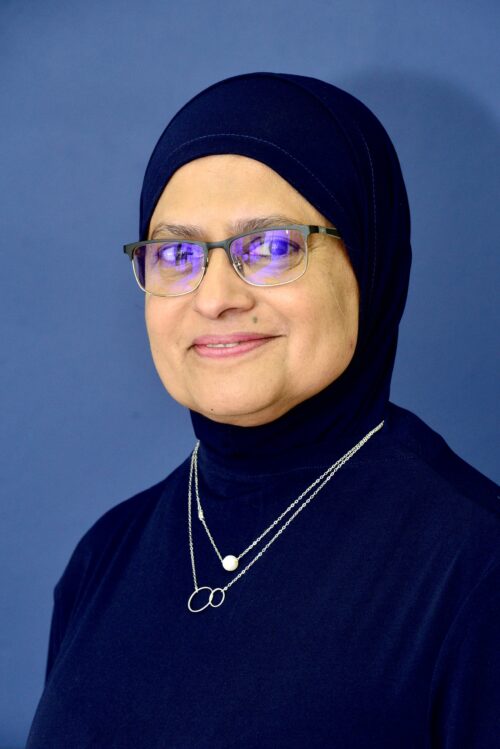
Dr. Sabiha Essack is the South African Research Chair in Antibiotic Resistance and One Health and Professor in Pharmaceutical Sciences at the University of KwaZulu-Natal. She is the lead of the Multi-Stakeholder Partnership Platform Action Group on “Stewardship across the Lifecycle of Antimicrobials: a One Health Approach” and member of the WHO Strategic and Technical Advisory Group for AMR (STAG-AMR). Sabiha serves as the Senior Implementation Research Advisor to the International Centre for AMR Solutions (ICARS) based in Denmark and chairs the Global Respiratory Infection Partnership (GRIP). She is a member of the World Economic Forum Global Futures Council for AMR, member of the International Pharmacy Federation (FIP) AMR Commission, member of the Wellcome Surveillance and Epidemiology of Drug Resistant Infections Consortium (SEDRIC), and she serves on the Advisory Board of the Combating Antibiotic Resistant Bacteria Biopharmaceutical Accelerator (CARB-X) and the Fleming Fund Expert Advisory Group. Her research focuses on the molecular epidemiology of AMR using next generation sequencing and bioinformatics as well as One Health systems strengthening in the context of AMR.
Credits
Hosted and written by Maggie Fox
Special guest: Sabiha Essack
Produced and edited by Samantha Serrano
Music composed and sound edited by Raquel Krügel
Transcript edited by Namitha Prabhu