June 19, 2026
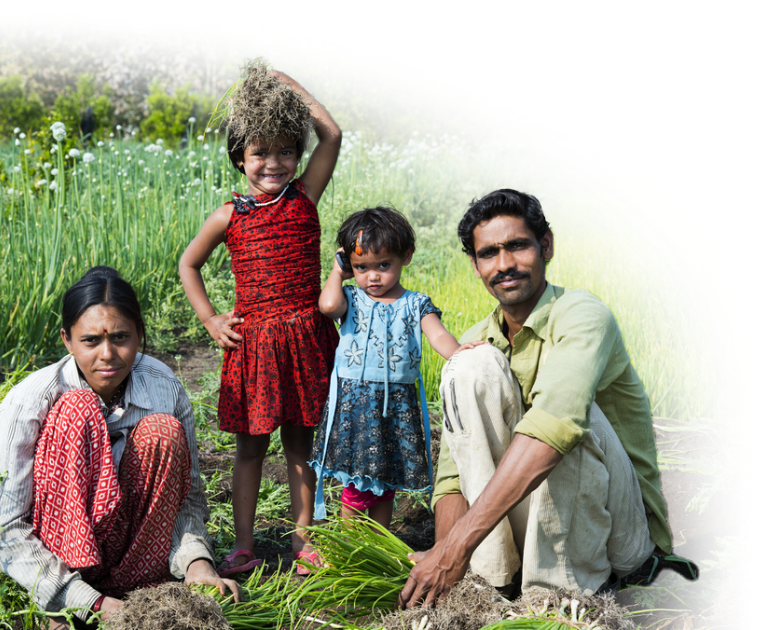
In his Hindustan Times column, Vital Signs, OHT’s Dr. Ramanan Laxminarayan discusses how a farming program in Andhra Pradesh in India, is helping farmers adopt more sustainable agricultural practices. The initiative, called Community Managed Natural Farming, recently received the Food Planet Prize, a major international award recognizing efforts to transform food systems.
The program encourages farmers to reduce the use of synthetic fertilizers and pesticides and instead rely on natural, locally available inputs that support soil health. Rather than requiring an immediate shift, farmers are encouraged to try natural farming on a small portion of their land and expand only if they are satisfied with the results.
Over the past decade, around 1.8 million farming families have joined the program. Research shows that crop yields have generally remained stable, while farmers have been able to increase their profits by spending less on agricultural inputs. Studies have also reported benefits for biodiversity and soil health.
Dr. Laxminarayan notes that the program’s success is rooted in farmer training, peer-to-peer learning, and the involvement of women’s self-help groups. The Andhra Pradesh experience demonstrates that sustainable farming can be scaled up when farmers are given the support, knowledge, and time needed to make the transition.” Instead of dams, fertiliser factories, and input distribution networks, it depends on farmer-trainers, demonstration plots, local experimentation, social networks, and support during transition years. If governments were willing to invest heavily in the institutions that enabled the first Green Revolution, there is no reason they cannot invest in those required for a second one.”
Read it here.