
Having a baby should be safe. Yet it’s far too often a death sentence for both the mother and the baby. An estimated 260,000 women died in 2023 during and right after giving birth, and those numbers will have risen with the loss of United States global aid dollars.
There are ways to improve this – better prenatal care is an obvious one. According to the World Health Organization, women giving birth most often die from severe bleeding, infections, or other complications. Pregnant women also die from high blood pressure or from unsafe abortions or complications of miscarriage.
If women can get the right medical care during pregnancy, delivery, and after childbirth, the risk of death plummets. But doctors and nurses can be scarce, especially in lower-income countries. Women also often fear going to hospitals or clinics, mistrust them, or simply lack the money to make use of them.
A much easier solution is a properly trained midwife. The International Confederation of Midwives supports groups that train and advocate for midwives who can help ensure safe births.
Some countries even have programs to train and license midwives. Professor Doreen Kaura of the University of the Western Cape in Belville, South Africa heads one such program. She also conducts research into the effects of midwifery practice.
Not only can well-trained midwives provide high-level medical care for pregnant and delivering women, but they can take into account cultural beliefs and practices that earn trust and ensure that women show up for the lifesaving care they need, Kaura has found. “Respectful care is not optional,” she says.
Listen here as she tells One World, One Health about the benefits of midwives and how they can save both lives and money.
Sign the petition discussed by Dr. Kaura in this episode for one million more midwives globally here.
Maggie Fox 00:00
Hello and welcome to one world, one health, with bite-sized insights from people working to solve some of the biggest problems facing our planet. I’m Maggie Fox. One Health means we’re all one — animals, plants, people, and the climate and environment.
Childbirth should be safe these days, but it often isn’t. More than 700 women die every day, on average, because of some preventable pregnancy or childbirth-related cause or condition, according to the World Health Organization.
The good news is that the ratio of deaths of women who have just given birth has dropped by 40 percent in the past quarter-century, but still, too many women die in or just after childbirth, 90 percent of them in low or lower-middle-income countries. What are the causes? Often, it’s uncontrolled bleeding, infection, or high blood pressure. Good care by skilled health professionals can make all the difference. This could be a doctor, a nurse, or a midwife.
In this episode, we’re chatting with Professor Doreen Kaura of the University of the Western Cape in South Africa. She heads graduate programs at the School of Nursing there. She’s also a member of the Society of Midwives of South Africa and the Midwives’ Association of Kenya. Professor Kaura says, “No woman should give birth without someone skilled to help her.”
Professor Kaura, thank you for joining us.
Doreen Kainyu Kaura 01:32
It’s also my pleasure to be here today.
Maggie Fox 01:36
Professor Kaura, childbirth should be safe in 2025, but it actually isn’t. Are things getting any better?
Doreen Kainyu Kaura 01:46
Childbirth absolutely should be safe in 2025. We have the knowledge, the evidence, the tools, and even most maternal and neonatal deaths should be preventable because of all the technology that we have. But the reality remains that it is very concerning, especially within my context, which is Africa. So, if you look at Africa, it accounts for more than 70 percent of global maternal deaths. So, most of all, this is preventable, honestly. Maternal mortality has decreased. I can give that to Africa, because since 2000, it has decreased by 40 percent, which shows progress, but that’s not enough. So, to answer your question, we’ve made huge gains, but not nearly at the pace we need to keep making them. So, when women don’t even die, they’re living with the consequences of severe maternal mortality, or what we call maternal near-miss cases, and that’s not safe for our women.
Maggie Fox 02:47
And why so slow? Why is it so hard to make these goals when people know what they can do?
Doreen Kainyu Kaura 02:53
There’s a lot of complex issues, and one of the things is we have not acknowledged that we have support systems within our context, we have educated midwives, and especially midwifery, because a lot of women, or a lot of midwives at the core of the community, where we have the largest number of women giving birth, if midwives are supported within this context, they would support better the reduction of maternal mortality, although now what we are focusing on is the tertiary level of care, which is important, but that tertiary level of care, not all women are going there only maybe 20 to 10 percent so how do we improve on the bigger component, which is 80 percent of women who need our midwives, As opposed to the 10 percent who require high risk care. So that is one of the complexities within our context that has influenced high maternal mortality.
Maggie Fox 03:50
Are you saying it’s more dangerous to go somewhere, like a hospital, and deliver, or are you saying that you need to have care kind of more diffuse out into the communities? I’m not quite understanding why delivering in a hospital isn’t the safest thing to do.
Doreen Kainyu Kaura 04:06
What I’m saying is it’s not like it’s more dangerous to deliver in hospitals. What I’m trying to say is that the communities we said pregnancy is, firstly, a normal physiological process, so if we can manage that better, then we have fewer women getting complications and ending up in hospitals.
So, what we would rather do is ensure that most women who come and go into labor or are taken care of during pregnancy effectively can end up delivering within the communities, especially, say, the context of South Africa, where we have midwifery-led units.
So, if we manage pregnancy better, a lot of women can deliver in the midwifery-led units. But if we don’t manage the pregnancy better, a lot of these women end up in hospital, where most of them undergo cesarean sections, and our cesarean section raised to. Be honest, it is very high in a country where such resources are really hard to find. So how can we improve the low-risk pregnancies and keep them low risk instead of them transitioning to high-risk pregnancies?
Maggie Fox 05:13
So, let’s talk about what midwives do. You work with the International Confederation of Midwives and other groups. Tell us about what a midwife does.
Doreen Kainyu Kaura 05:23
Midwives are essential healthcare providers. You know, they are educated, and they have the competencies to provide 90 percent of sexual reproductive health, including family planning. They also support women during pregnancy, birth, and postpartum. And when I say that is pregnancy, birth, and after birth, during motherhood, they also support women there.
The care that women provide during early pregnancy, throughout childbirth, and the postnatal period is very important for a midwife to be there, because they have this relationship with a woman, and that improves the outcome of the pregnancy.
So, this is why the International Confederation of Midwives (ICM) is now, I don’t know if you know about that campaign, Maggie, the “1 million more campaign”. It’s a global call for governments to actually grow, support, and sustain the midwifery workforce, because this is the backbone of sexual reproductive health and maternal health. So, the goal is to secure about a million signatures by ICM, and we want governments to educate more midwives. We want to create more decent jobs for midwives, ensure fair pay, and also provide safe working conditions, because these are things that make midwives run away from the much-needed profession.
Maggie Fox 06:44
Well, I think some people still think of a midwife as something that’s kind of old-fashioned and not properly educated. They’re not quite medical. But that’s not really true, is it?
Doreen Kainyu Kaura 06:55
Absolutely not! Modern midwives are highly educated. They have the knowledge, the skills, and the behavior, and they are regulated professionals. In every country, we have a lot of midwifery regulations, and they are sent through to ensure safe maternity care. In fact, many countries with the best maternal outcomes rely heavily on their midwives. For example, Finland has the lowest if none, no maternal mortality, their cesarean section rate is almost negligible, 10 percent Why do we have that is because they have emphasized so much on midwifery care, and midwives are not a nice to have, and people need to realize that they are scientifically proven to reduce maternal deaths and prevent complications and ensure women receive respectful, evidence based care, so they’re actually the cornerstone of our public health.
Maggie Fox 07:50
Now you’ve done some research yourself, also on making sure that modern medical practices can take into account the cultural beliefs and practices that women will sometimes bring with them. Can you tell us a little bit about that?
Doreen Kainyu Kaura 08:04
Yes, culture profoundly, essentially shapes how we understand pregnancy, pain, risk, and also the birthing process. When health professionals ignore cultural beliefs or dismiss traditional practices, women may delay seeking care or feel disrespected and not involved in their care in the health facilities.
So, in the research that I have done is it is seen that when providers take a culturally sensitive approach, whether that’s accommodating vast positions or acknowledging rituals or involving family members appropriately, women essentially feel safer. They feel more respected and more supported, and that directly improves outcomes. Women are actually capable individuals. When we think about what it means to engage them holistically, they need to tell us what they want. So, the research that I’ve been involved in is, what do women really want? I want to hear women’s voices in the care that is being given to them.
Maggie Fox 09:14
What are some examples that women have brought with them that they believe actually work?
Doreen Kainyu Kaura 09:20
Not every traditional practice is unsafe, but if we emphasize on aspects of care, such as integrating the traditional birth attendant and what they do, for example, one of the research that we did in Kenya was the fact that women would come for antenatal care, and then during birth, they would go to the traditional birth attendant because they think that person respects their culture.
So, in essence, after the woman comes from the traditional birth attendant, after birth, she goes back to the health facility to receive more care. So, what we were asking ourselves is, how can we collaborate? Between what the woman does and the healthcare facilities, so that we give the best, effective care, and the collaboration means she can come with this traditional birth attendant and can be her doula or her support at the hospital during her birth. That way, she has a safe space in her health facility to receive the safe care that she receives, because sometimes they end up with a lot of infections when they go to birth with a traditional birth attendant. But this traditional birth attendant being involved will encourage the woman to come and receive that care within a health facility. So, more essentially, you will receive more women coming to the health facility for both pregnancy and birth care, and then we can reduce these deaths that are caused by just ignoring those small aspects of traditional practices.
So essentially, modern systems should simply not dismiss traditional practices, but we should learn from them and integrate the safe elements that could be respectful to maternity care.
Maggie Fox 11:04
Are any of these things that governments can put into, into policies that might help save lives, any of these things that you’ve learned?
Doreen Kainyu Kaura 11:14
Absolutely! You know, there is, I was actually discussing it just the other day, and there is a lot of, even within the South African context, a lot of traditional herbs that women use, although we have not chemically proven what is in these herbs, they will take them quietly because they don’t want to expose themselves to us. But when they come, their birth is effective. They don’t need us to give them anything to improve their contractions. So, they come, and they are in the labor ward, and the next thing, they are giving birth, and they go home safely. They have another herb that they will take. And so, what we learn is that we might not have medically proven these herbs, but they will tell you that they have been using this for 100 years. Their grandmother used them. But there is also that collaboration of effective communication between the woman and you with the traditional birth attendant. There, we learned that we communicate better, because what we can tell the woman, we are not telling her for her to go and pass it on to the traditional birth attendant. Both of them can be there present, and they hear us. We are both teaching and we are also learning from them.
So it is a give-and-take process where we can learn from each other, from both traditional practices. Of course, I don’t say that some of these practices are not harmful. Some are absolutely harmful. Get where they give women medication for them to clean their stomachs, and the women end up with diarrhea, which is risky for pregnancy, but we can only educate them if they come to us, and we integrate what safe practice is with what is unsafe practice. We can take that away through education of not just women, but also the traditional birth attendees.
Maggie Fox 12:58
Are any of these things that governments can put into policies that might help save lives? Any of these things that you’ve learned
Doreen Kainyu Kaura 13:08
In most African countries, people are not resistant to learning from traditional birth attendants. A midwife can advocate for governments to consider things like, for example, collaboration between community care and community health workers, including them, in the care of women within the community. These are things that the government has taken up. And who are these community health workers? They are those who are previously traditional birth attendants, but now they are community health workers helping us identify even women at risk within the communities who have not attended pregnancy, birth, and postpartum.
So, we can learn from that. But it requires advocacy through our midwifery society and associations to be able to collaborate and also form advocacy groups of the traditional birth attendants or traditional healers that can come and tell us what they can do safely to prevent endangering women in the community.
Maggie Fox 14:10
And I know all of this requires funding at the end, and because we’re living in these times, have you personally seen any effects of the tremendous changes being made because the U.S. has stopped helping and funding international public health efforts.
Doreen Kainyu Kaura 14:28
Yes, unfortunately, many maternal health programs rely on global partnerships, and when major funders scale back, the ripple effects appear very quickly. Stock out of contraceptives, fewer community outreach programs like what I’m saying now, the integration of traditional birth attendance with the community health workers, gaps in education of midwives, and reduced support of front-line workers. So, when funding. The first to suffer are women and newborns, and there goes our healthcare. So, we needed this kind of money to even advocate for policies such as educating more midwives with international standards. We can’t do that without further funding. We need to create decent jobs for midwives.
So what is happening? Instead of finding money to even improve the funding for the midwives within the primary care and rural areas, we have to cut that funding. The safe spaces we were creating for midwives to be able to advocate for policy and decision making is no longer there. So governments have put funding cuts in healthcare areas, and this is also increasing the maternal and neonatal deaths, because now we are not even winning where we were. We had started making such wins.
Maggie Fox 15:50
That’s really sad to hear.
Doreen Kainyu Kaura 15:53
It is! And if there are any listeners here, they can support us by adding their name to [email protected]. This will help us call out for leaders to actually act, because when there is a funding shortage, when there is no support from governments, then the demands that we have on healthcare are the ones that are really suffering. They’re understaffed, they’re underpaid, they’re unsupported. For this change is essential, but who will support us if we are not being supported by our leaders? So ICM actually launched this global petition calling for exactly this: 1 million more midwives worldwide. But how can we have 1 million more midwives worldwide without necessarily having government support? So yes, we have policies, yes, we have issues in place, but funding is essential, and the single biggest thing that governments can do is invest in more well-trained and well-supported midwives.
Maggie Fox 16:57
Doreen, is there anything unexpected you have learned, and all the places you have worked, and all the study you have done?
Doreen Kainyu Kaura 17:05
One of the most unexpected lessons is how much dignity. And I say that often dignity matters. Women remember how they are treated every time, more vividly than any technical procedure, you can inject them. You can do a forceps. They just remember that dignity, so respectful care is not optional. It is life-saving.
So another lesson is how much wisdom sits within communities. We must listen to women and families and design better healthcare systems that support women so that maternal and child health, although it has been advocated widely, although we are making imprints, it has still not been felt, because we have not afforded the communities the dignity that they deserve.
We need to have the experiences that remind them that solutions don’t always come with us throwing money, but they also need to be humane. They need to be culturally grounded and also consistent, because one day we have it, and then the next day we don’t have it because we have run out of funds. We are forgetting that the community is still there and the women still need this care. Yes, dignity matters.
Maggie Fox 18:25
I can’t think of anything more important to say. Doreen, thank you so much for joining us.
Doreen Kainyu Kaura 18:31
Thank you very much.
Maggie Fox 18:34
Listeners, if you enjoyed this podcast, please share it. And please have a look at the website at onehealthtrust.org, and if you have ideas for subjects you’d like us to cover, please share them at [email protected]. Thanks for joining us.
Guest
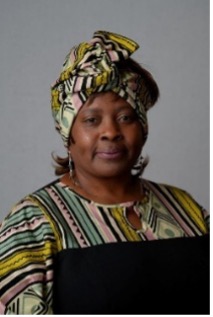
Professor Doreen Kainyu Kaura is a professor in the Faculty of Community Health Sciences at the University of the Western Cape, South Africa. Renowned for her contributions to sexual reproductive, maternal, and neonatal health (SRMNH), Prof. Kaura’s work focuses on improving continuity and care coordination within the SRMNH continuum, with an emphasis on women’s experiences, health equity, and digital innovation. With a doctorate in technology (informatics), a master’s in maternal and neonatal care, and additional qualifications in management and education, Prof. Kaura is a trailblazer in academic and healthcare circles. Currently, she is a section editor for maternal and neonatal care in the African Journal of Primary Care and Family Medicine. She serves in writing the World Health Organization (WHO) maternal health norms and mentors academics across Africa for the Horizons Mentoring Programme. She is also a technical advisor for the Melinda Gates Foundation on Midwifery Sprint Analysis in Africa.
Credits
Hosted and written by Maggie Fox
Special guest: Doreen Kainyu Kaura
Produced and edited by Samantha Serrano
Music composed and sound edited by Raquel Krügel